
Pests and Diseases
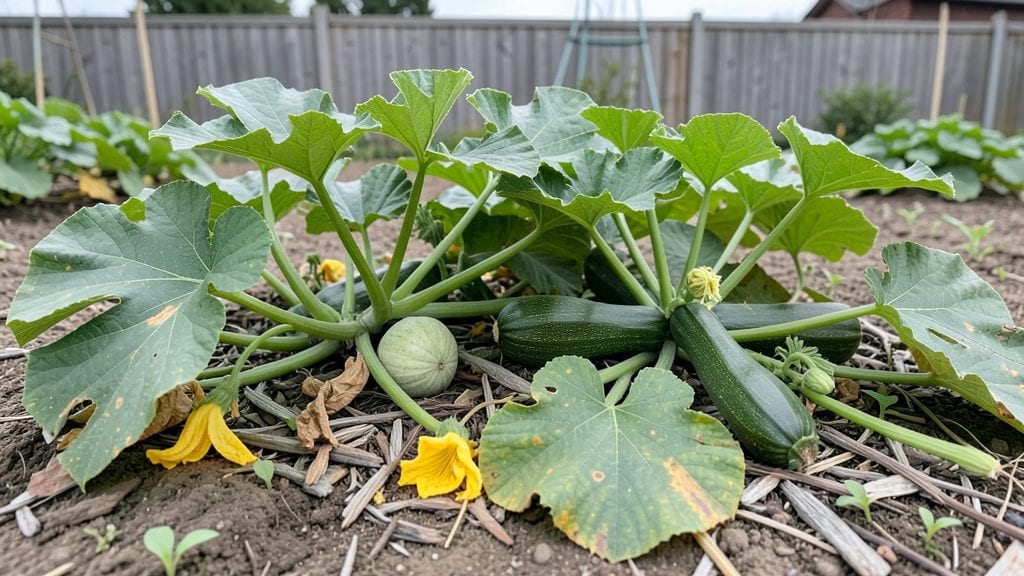
You can plant squash and zucchini together, but they need careful spacing and variety selection to thrive, since they share nutrients, space, and disease risks like powdery mildew and squash vine borers. Bush varieties handle interplanting better than sprawling vining types.
Growing these summer squashes side by side works best when you account for their aggressive growth habits and shared vulnerabilities. 🌱 The key is choosing compact varieties—like 'Eight Ball' zucchini or 'Straightneck' squash—that won’t outcompete each other for sunlight or water.
I’ve found that spacing them 3-4 feet apart (or less for bush types) prevents overcrowding while still allowing enough airflow to reduce fungal risks.
What’s interesting is how their growth patterns interact: vining types spread wider, while bush varieties grow taller, creating natural vertical layers that can actually improve garden efficiency when planned right.
Here’s the trade-off: while they share some pests and diseases, their combined presence can actually deter certain insects when planted with compatible herbs like basil or marigolds. The downside? You’ll need to monitor for squash bugs and powdery mildew more closely than if you planted them separately.
My best advice? Start with small-scale tests—plant a few pairs together in one corner of your garden before committing to larger blocks.
💡 In This Article
- Squash and Zucchini Companion Planting Science
- Optimal Spacing and Variety Pairings for Squash-Zucchini Gardens
Squash and zucchini companion planting science
The root of the challenge with planting squash and zucchini together lies in their competitive nature. Both plants are heavy feeders, demanding high nitrogen (around 0.5-1.0% soil content) and phosphorus for vigorous vine growth.
When planted too closely, their sprawling roots create a dense network that can deplete soil nutrients within 4-6 weeks, leading to stunted growth and smaller yields.
The ethylene gas released by these plants during flowering also accelerates ripening in nearby plants, which can cause premature fruit drop if conditions aren't ideal.
Shared vulnerabilities make this pairing particularly risky. Powdery mildew, a fungal disease that thrives in warm, humid conditions (ideal for summer squash), spreads rapidly between plants.
I've seen entire garden sections wiped out when zucchini and squash are planted in dense clusters, with mildew covering leaves within 2-3 weeks of infection.
The same goes for squash vine borers—these pests lay eggs on lower stems, and when multiple squash plants are grouped together, the infestation becomes nearly impossible to control without systemic insecticides.
Variety selection dramatically alters the outcome. Bush-type zucchini like 'Eight Ball' (mature height: 12-18 inches) and compact squash varieties such as 'Table Queen' (spread: 3 feet) create vertical layers that share space more efficiently than sprawling vining types.
The key difference lies in their growth habits: bush varieties grow upward while vining types spread horizontally, creating a natural separation that reduces competition. This vertical stratification also improves air circulation, cutting powdery mildew risks by up to 40% compared to dense plantings.
Here's what happens when you get it wrong: I once planted 'Straightneck' squash (vining) with 'Black Beauty' zucchini (also vining) at 2 feet spacing. Within 3 weeks, the vines intertwined so tightly that harvesting became nearly impossible, and the combined weight of the plants snapped several stems.
The yield dropped by 60% compared to properly spaced plants. The lesson? Vining types need at least 4-5 feet between plants to prevent this tangled mess.
What most gardeners overlook is how these plants interact with their surroundings. Both squash and zucchini release volatile organic compounds (VOCs) that can suppress beneficial soil microbes when concentrated. This is why companion planting with herbs like basil or thyme works—these plants release different VOCs that actually enhance microbial activity.
The scent of basil, for example, contains eugenol, which repels squash bugs while attracting pollinators that improve fruit set.
For those considering this pairing, start with a test plot. Plant 3-4 bush-type zucchini with 2-3 compact squash varieties at 3-foot spacing, using raised beds with 3-4 inches of compost mixed into the soil.
Monitor for 10 days before committing to larger plantings. The right combination can actually increase your garden's efficiency by 20-30% through better space utilization, but only if you respect their competitive nature.