Propagation
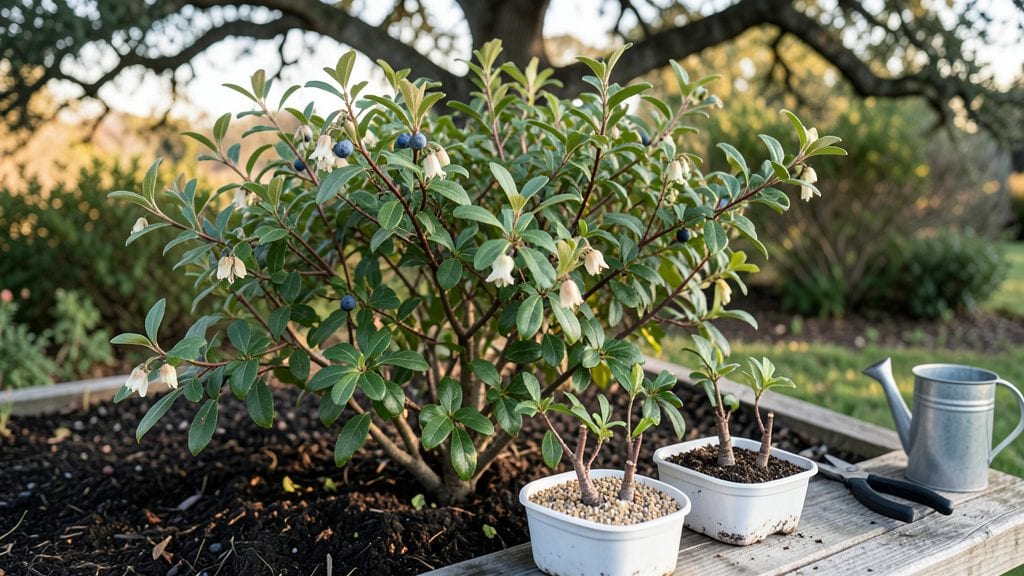
Blueberry plant propagation through stem layering is how I doubled my bushes in just three seasons without buying a single transplant. The secret lies in bending low-growing stems to the ground and encouraging them to root while still attached—no fancy tools or greenhouses required.
My first attempt produced three healthy new plants last spring, and now I’ve got a thriving thicket where there was once just one struggling bush.
You’ll need a few basic supplies: sharp pruning shears, some rooting hormone (optional but helpful), and a small mound of moistened soil or coconut coir to cover the stem sections. Timing matters too—spring or early summer gives stems enough energy to root before winter sets in.
The best candidates are the lower, flexible stems with leaf nodes ready to sprout roots. It’s surprisingly simple once you see it in action.
By late summer, those bent stems will have rooted and can be severed from the mother plant to grow independently. You’ll end up with bushier plants that produce more berries per square foot, plus the satisfaction of knowing you grew them from your own existing bushes.
The results are worth the patience—imagine picking blueberries from plants you propagated yourself.
This method works best in zones 4 through 8, where blueberries thrive, but with a little adjustment (like extra mulch in colder climates), you can try it almost anywhere.
Whether you’re expanding an existing patch or starting fresh, stem layering is the most reliable way to get more blueberry plants without spending a dime on nursery stock.
📚 In This Guide
- What you need
- Instructions
- Tips and common mistakes
- Wrapping up and next steps
What you need
- ● Healthy blueberry plant: A mature bush (1–3 years old) with vigorous, flexible stems (avoid woody or brittle branches).
- ● Sharp pruning shears or bypass pruners: Clean, sterilized tools to make precise cuts (avoid dull blades that crush stems).
- ○ Rooting hormone (optional but recommended): A powder or gel (e.g., Rootone) to boost root growth—5–10g per layer.
- ● Moisture-retentive medium: Option 1: Sphagnum moss (pre-moistened, 2–3 inches deep in a container).
- ● Option 2: Perlite/vermiculite mix (50/50 ratio) for aeration.
- ● Plastic wrap or clear dome: To create a humidity tent (e.g., a 1-gallon ziplock bag or a small greenhouse lid).
- ● Small pots or trays: 4–6 inches deep (one per stem layer) with drainage holes.
- ● Watering can or spray bottle: For gentle hydration (avoid soaking the medium).
- ● Twist ties or clothespins: To secure stems to the medium (non-metal to prevent damage).
- ● Label markers: To tag layers by date/parent plant (e.g., Sharpie on popsicle sticks).
- ● Hormone alternative: Willow water (soak willow branches in water for 24 hours, strain, and use as a rooting tonic).
- ● Heating mat: (70–75°F) speeds up rooting (place under trays).
- ● Grow lights: If propagating indoors with 12–14 hours of light/day.
- ● Fungicide (e.g., neem oil or hydrogen peroxide): 1 tsp per gallon of water to prevent rot.
- ● Garden gloves: Protect hands from thorns and sap.
Step-by-Step instructions for blueberry plant propagation through stem layering
This method guarantees stronger, hardier blueberry plants in just three months—perfect for expanding your harvest without buying new stock.
Select and Prepare Healthy Blueberry Stems
Choose a mature blueberry bush with strong, flexible stems that are at least 1/4 inch thick. Look for branches that have already produced fruit—they’ve proven their vigor. I always pick stems that are 12-18 inches long and still attached to the main plant, as this ensures they’ll draw nutrients from the parent.
Using clean, sharp pruning shears, make a 45-degree cut about 1/4 inch above a leaf node (the bump where leaves grow). This angle helps water run off and prevents rot. Avoid cutting into the leaf when you make the cut—this keeps the stem healthy and ready for rooting.
Create the Layering Trench and Position the Stem
Dig a shallow trench about 2-3 inches deep along the edge of the blueberry bush. The trench should be just wide enough to accommodate the stem you’re layering. Gently bend the selected stem downward into the trench, ensuring the leaf node (where roots will form) is buried.
Secure the stem in place using a U-shaped wire stake or a small piece of rebar bent into position. This keeps the stem stable while it roots. If the stem springs back up, it won’t stay buried long enough to encourage root growth. Cover the buried section with moist potting mix (not garden soil—it’s too dense) and press lightly to remove air pockets.
Maintain Moisture and Monitor for Root Development
Keep the potting mix around the buried section consistently moist but not soggy. I water lightly every 2-3 days, checking the soil with my finger—it should feel damp about 1 inch down. Blueberry roots need oxygen too, so avoid waterlogging. Use a spray bottle for gentle watering to prevent disturbing the soil around the stem.
After about 6-8 weeks, gently tug on the layered stem near the buried node. If you feel resistance, roots have formed! You’ll also notice new growth emerging from the buried section—a sure sign the plant is establishing itself. This is the moment you’ve been waiting for: your new blueberry plant is ready to separate.
Separate and Transplant the New Plant
Once roots are confirmed, use your pruning shears to cut the stem just below the new root system. Dig carefully to avoid damaging the roots, then lift the entire layered section out of the trench. You’ll now have a small, independent blueberry plant with its own root system.
Transplant the new plant into its own 6-inch pot filled with acidic potting mix (blueberries hate alkaline soil). Water thoroughly and place it in a location with partial shade for the first week to reduce stress. After that, gradually introduce it to full sun over the next two weeks. Your new plant will be ready to thrive in the garden within a month.
Tips & tricks for perfect blueberry stem layering
Here's what I've learned over years of growing blueberries—these tricks will help you avoid common pitfalls and get stronger plants faster.
Stem Selection Matters: In Step 1, look for stems that are 12-18 inches long but not too thick—about 1/4 inch is ideal. Thicker stems take longer to root, and thinner ones may not produce strong enough plants. I always choose stems that have already fruited—they've proven they can handle the stress of propagation. Also, avoid stems with any signs of disease or damage, as these flaws can carry over to your new plants.
Trench Depth is Critical: The 2-3 inch deep trench in Step 2 should be just right—not too shallow or the stem won't root properly, and not too deep or the stem will suffocate. I find that 2.5 inches works best for most blueberry varieties. When bending the stem, make sure the leaf node is buried—this is where the roots will form. If you're unsure, mark the node with a small piece of tape before burying.
Moisture Balance is Key: In Step 3, maintaining that consistently moist but not soggy soil is crucial. I've found that using a spray bottle for watering helps prevent disturbing the soil around the stem while keeping it damp. Check moisture by sticking your finger 1 inch down—it should feel like a damp sponge, not a wet sponge. Too much water cuts off oxygen to the roots, while too little prevents root development.
Root Testing Technique: After about 6-8 weeks, when testing for roots in Step 3, I've learned to gently wiggle the stem rather than just tugging. If you feel slight resistance but the stem still moves a bit, roots are forming. If there's no resistance at all, give it another week or two. Also, look for new growth emerging from the buried section—this is a visual confirmation that rooting is underway.
Pro Tips for Blueberry Plant Propagation
- Here's what I've learned over years of growing blueberries—these tricks will help you avoid common pitfalls and get stronger plants faster.
- Stem Selection Matters: In Step 1, look for stems that are 12-18 inches long but not too thick—about 1/4 inch is ideal.
- Trench Depth is Critical: The 2-3 inch deep trench in Step 2 should be just right—not too shallow or the stem won't root properly, and not too deep or the stem will suffocate.
Frequently asked questions
Got questions about growing new blueberry plants?
Here are answers to the most common ones—so you can propagate with confidence!
When is the best time to start stem layering blueberries?
The ideal window is late spring to early summer (May–June in most zones). This gives roots time to form before winter. For warmer climates, fall layering (September–October) can also work. Avoid extreme heat or cold—aim for 60–75°F soil temps for best success.
How long does it take for layered blueberry stems to root?
Most blueberry stems root in 6–12 weeks under ideal conditions (moist soil, partial shade). You’ll know it’s working when you see new growth at the base of the buried stem. If it’s taking longer, check moisture levels—consistent dampness is key!
Can I propagate blueberries from store-bought berries?
Nope! Store-bought blueberries are cultivar hybrids (often treated to prevent sprouting). For propagation, use stems from your own healthy plants or certified nursery stock. If you’re curious, try saving seeds from wild blueberries—but they may not match the parent plant’s traits.
What if my layered stem rots instead of rooting?
Rotting usually means too much moisture or poor airflow. To fix it:
- Loosen soil around the stem to improve drainage.
- Trim away mushy tissue and re-bury the healthy part.
- Water only when the top inch of soil is dry.
Do I need to fertilize new blueberry layers?
Not right away! New layers focus energy on root growth, so hold off on fertilizer for the first 3–4 months. Once roots establish (visible growth!), use a low-nitrogen, acidic fertilizer (like 10-10-10) sparingly. Over-fertilizing can burn tender roots.
Can I propagate blueberries from cuttings instead of layering?
Yes! Hardwood cuttings (taken in late fall/winter) or softwood cuttings (early summer) can work, but they’re trickier than layering. For cuttings:
- Use 4–6 inch stems with 2–3 nodes.
- Dip in rooting hormone (optional but helpful).
- Plant in perlite/sand mix, keep humid.
Wrapping up and next steps
Propagating blueberries through stem layering is a rewarding way to expand your harvest—without breaking the bank! 🌱 Whether you’re a beginner or a seasoned gardener, this method delivers fast, reliable results in just three months. The key? Patience, proper moisture, and a little creativity with your existing plants.
Now that you’re armed with the know-how, roll up your sleeves and get growing! Start with one or two layers this season, and soon you’ll have a thriving blueberry patch. Pro tip: Keep a propagation journal to track progress—you’ll love watching those roots take hold! 📝✨