
Fertilization
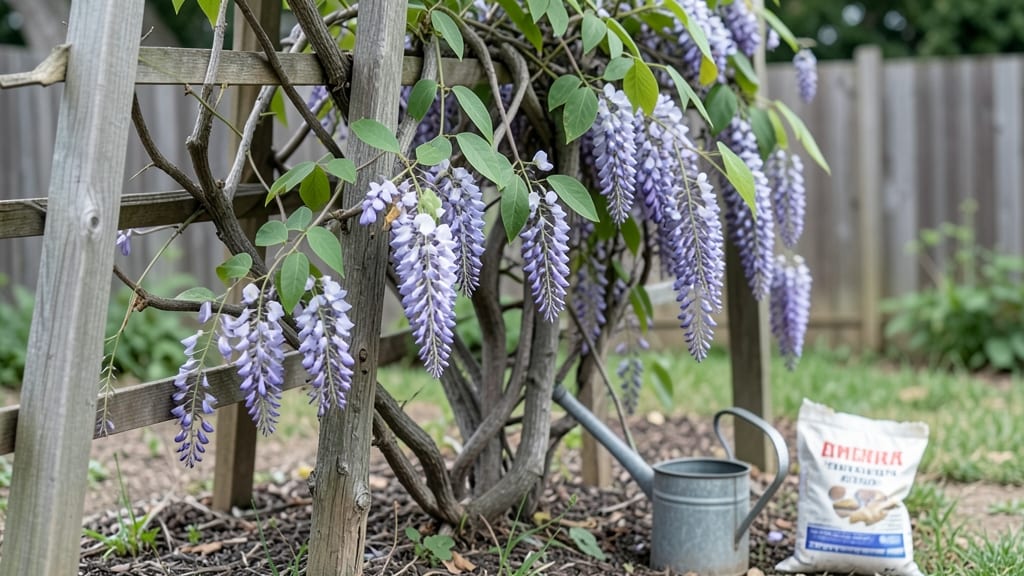
Feeding your wisteria 🌸 the right plant food is the game-changer between a vine that sprawls wild with no flowers and one that bursts into fragrant, cascading blooms every spring.
Struggling to get your wisteria vines to bloom abundantly or grow vigorously? The secret lies in feeding them the right nutrients—but many gardeners get the nitrogen-phosphorus-potassium (NPK) balance wrong, stunting growth or triggering leafy messes instead of stunning flowers.
Wisteria thrives on a balanced approach, especially in USDA Zone 6a, where spring planting sets the stage for summer’s showstopper blooms. Too much nitrogen? You’ll get lush leaves but no flowers. Too little phosphorus? Your vines might struggle to set buds at all.
In this guide, I’ll walk you through the optimal NPK ratios for each growth stage, how to pick the best organic or synthetic fertilizers, and the timing tricks that make all the difference—so you can finally enjoy that dreamy, fragrant wisteria you’ve been waiting for.
Optimal nitrogen-phosphorus-potassium ratios for wisteria growth stages
Wisteria thrives when fed the right NPK ratios at each growth stage—too much nitrogen can mean lush leaves but no flowers, while too little phosphorus stunts root development. Understanding these ratios ensures your vines grow strong, bloom abundantly, and survive dormancy.
The key is adjusting the nitrogen-phosphorus-potassium balance based on whether your wisteria is pushing new growth, flowering, or resting.
During early spring growth, wisteria needs equal parts nitrogen and phosphorus to build root systems and vine length. A 10-10-10 fertilizer provides this balance, encouraging rapid but controlled growth.
Too much nitrogen here can lead to weak stems that struggle to support heavy flower clusters later. Think of this phase as laying the foundation for your wisteria’s future blooms.
When flower buds form in late spring, phosphorus becomes critical to support energy transfer for blooming. Switch to a 5-10-10 ratio to reduce nitrogen while maintaining phosphorus and potassium.
This shift prevents leafy overgrowth and directs energy toward flower production. Many gardeners overlook this adjustment, resulting in vines that look healthy but fail to flower.
In summer and fall, wisteria enters dormancy, and its nutrient needs change dramatically. A low-nitrogen fertilizer like 2-4-3 supports root health without encouraging new growth. This phase is about root strengthening and preparing for winter. Over-fertilizing now can stress the plant and weaken its ability to survive cold temperatures.
Here’s a quick reference for the ideal NPK ratios at each stage, along with what each number means for your wisteria’s health:
<summary-table>| Growth Stage | Recommended NPK Ratio | Nitrogen Role | Phosphorus Role | Potassium Role | Best Time to Apply |
|---|---|---|---|---|---|
| Early Spring Growth | 10-10-10 | Builds leafy growth and vine length | Strengthens root development | Enhances overall plant health | March-April |
| Flowering Stage | 5-10-10 | Reduced to prevent leafy overgrowth | Supports flower bud formation | Boosts bloom quality and fragrance | May-June |
| Dormancy Stage | 2-4-3 | Minimal to avoid new growth | Supports root storage for winter | Strengthens cold resistance | September-October |
Many gardeners make the mistake of using the same high-nitrogen fertilizer year-round, which leads to leafy but non-flowering wisteria. The trick is to adjust NPK ratios based on the plant’s natural cycle.
For example, a 10-10-10 fertilizer in early spring promotes vigorous growth, while a 5-10-10 in late spring ensures energy goes toward flower production instead of foliage.
Potassium is often overlooked, but it plays a crucial role in stress resistance and flower quality. During the flowering stage, potassium helps wisteria produce fragrant, long-lasting blooms.
In dormancy, it strengthens the plant’s cold hardiness. Always ensure your fertilizer includes potassium, even if nitrogen and phosphorus are the stars of the show.
To apply these ratios correctly, start with a soil test to check current nutrient levels. If your soil is already rich in phosphorus, you may need to adjust the 5-10-10 ratio to 5-5-10 to avoid overloading.
Wisteria is sensitive to excess phosphorus, which can lead to poor flowering and weak stems. Think of your soil test as a roadmap—it tells you exactly what your wisteria needs to thrive.
For organic gardeners, consider using composted manure or fish emulsion for nitrogen in early spring, bone meal for phosphorus during flowering, and wood ash for potassium in dormancy.
Synthetic fertilizers like 10-10-10 granular or 5-10-10 liquid are also effective but require careful measurement to avoid over-application. Always follow the package instructions and dilute liquids as directed.
One final tip: Water deeply after applying fertilizer to help nutrients penetrate the soil and reach the roots. Wisteria has a deep root system, so aim for 1-2 gallons of water per application.
This ensures the fertilizer doesn’t just sit on the surface but gets absorbed where your vines need it most. With the right NPK balance and proper watering, your wisteria will reward you with vibrant blooms and strong, healthy vines for years to come.
How to choose the best wisteria plant food: organic vs. synthetic options
Choosing the right wisteria plant food can transform your vines from sparse leafy stalks into fragrant, flower-laden giants. But with so many options—from organic compost to synthetic NPK blends—it’s easy to pick the wrong one.
Organic fertilizers like fish emulsion or bone meal feed soil microbes, while synthetic granules deliver precise nutrient ratios fast. Both have pros and cons, and your choice depends on your soil health goals and bloom priorities.
Wisteria thrives on a balanced NPK ratio (like 10-10-10), but too much nitrogen can mean lush leaves and no flowers. Organic options improve soil structure over time, while synthetics offer quick results.
I’ll break down the trade-offs so you can feed your vines like a pro—and watch those cascading blooms explode in spring.
Organic vs. Synthetic Wisteria Fertilizers
Organic Fertilizers
- ✅ Pros:
- Improves soil health long-term
- Encourages microbe activity for nutrient uptake
- Slow-release nutrients reduce burn risk
- Safe for composting and eco-friendly
- ❌ Cons:
- Results take weeks to months to appear
- May require larger quantities for equal NPK
- Can attract pests (e.g., fish emulsion smells)
Synthetic Fertilizers
- ✅ Pros:
- Precise NPK ratios for targeted growth
- Fast-acting for quick blooms and greenery
- Easy to measure and apply
- Works in poor or compacted soil
- ❌ Cons:
- Can burn roots if overapplied
- Depletes soil organic matter over time
- May require frequent reapplication
- Less beneficial for soil microbes
For organic options, I recommend starting with composted manure (like cow or horse) mixed into the soil at planting. It provides a steady stream of nitrogen and phosphorus while improving drainage—critical for wisteria’s deep roots.
In early spring, a fish emulsion (5-1-1 NPK) boosts growth without overpowering the plant. For flowering, add bone meal (3-15-0) to encourage root development and phosphorus-rich blooms.
Synthetic fertilizers shine when you need immediate results. A granular 10-10-10 blend applied in early spring gives your wisteria a balanced kickstart. For established vines, switch to a lower-nitrogen formula (like 5-10-10) in late spring to prioritize flower production over foliage.
Always water thoroughly after applying synthetics to prevent root burn.
Pro tip: Test your soil pH first—wisteria prefers 6.0 to 7.0. Organic amendments like wood ash (for acidic soil) or sulfur (for alkaline soil) can save you from wasting fertilizer on ineffective soil. Pair your fertilizer choice with regular pruning (after blooms) to redirect energy into next year’s flowers.
Remember, less is often more with wisteria. Over-fertilizing leads to leafy monsters with no flowers, while under-feeding stunts growth. Start with a light application (half the recommended dose) and monitor your vine’s response. Adjust based on whether you see healthy leaves, strong stems, or abundant blooms.