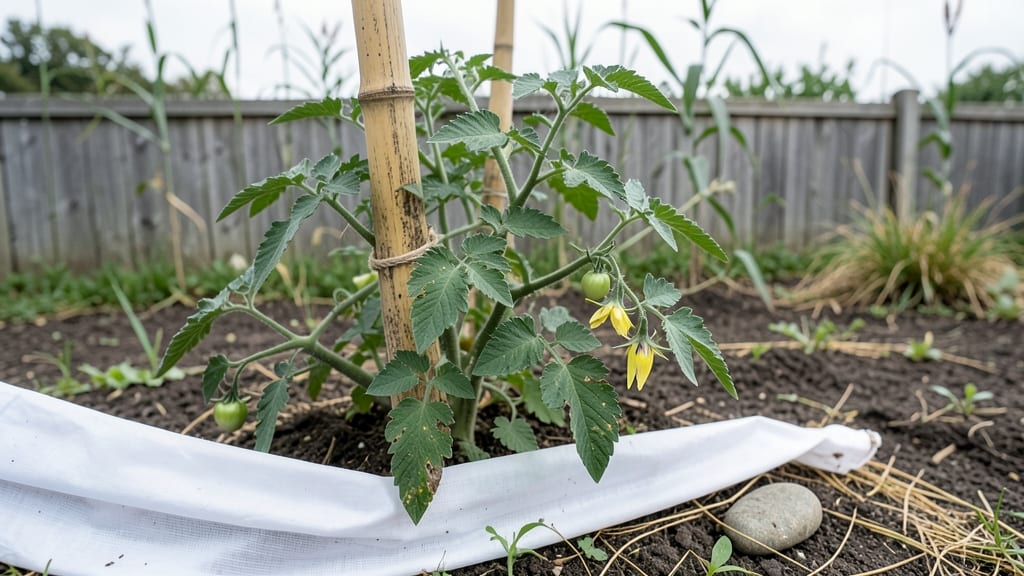
Covering tomato plants at the right time saves your harvest from frost damage—most gardeners in Zone 6 should protect them when nighttime temperatures dip below 50°F (10°C), typically around mid-April.
Tomato plants are tender and can’t handle even a light frost—yet many gardeners lose their harvests every year by waiting too long to protect them. Knowing exactly when to cover your 🍅 plants means the difference between a thriving vine and a wasted season.
In Zone 6, where last frost usually hits around April 15, seedlings may need temporary protection a week or two before that date, while mature plants can handle slightly cooler nights. The key is reading the forecast and acting before the damage starts.
Below, I’ll walk you through the best methods for covering tomatoes, from lightweight row covers to mulch, and how to adjust your timing based on your local frost dates and plant stage.
Critical frost dates for covering tomato plants by US growing zones
Tomato plants are frost-sensitive, and even a light freeze can kill them or stunt growth. The critical frost dates for your region determine when to cover your plants—whether you're protecting seedlings in spring or mature plants in fall.
These dates vary dramatically across USDA zones, so knowing your zone is key to avoiding frost damage.
In Zone 3, gardeners face the earliest frost risks, with last spring frosts often as late as May 15 and first fall frosts arriving by September 15. Meanwhile, Zone 11 gardeners rarely need frost protection, but even there, unexpected microclimates can create cold pockets.
Understanding these frost windows helps you adjust planting and covering strategies for early or late varieties.
Below is a zone-by-zone breakdown of when to cover tomato plants, including last frost dates and first frost dates to guide your timing. These dates are averages, so always check your local frost maps or historical weather data for precision.
For example, in Zone 5, covering tomato plants in late May is often necessary to protect seedlings from late frosts, while in Zone 8, you might only need coverage in early October.
Adjust your timing based on whether you're growing early-maturing varieties or late-season tomatoes, as these can extend your growing window.
Here’s how to use this guide: Identify your USDA zone, then match your planting timeline to the frost dates listed. If you’re planting early varieties, you’ll need to cover earlier than if you’re planting late-season tomatoes.
Always err on the side of caution—one night of frost can ruin weeks of growth.
🌱
| USDA Zone |
Last Spring Frost |
First Fall Frost |
When to Cover Seedlings |
When to Cover Mature Plants |
| 3 |
May 15 |
September 15 |
Late May - Early June |
Mid-September |
| 4 |
May 1 |
October 1 |
Late April - Early May |
Late September |
| 5 |
April 15 |
October 15 |
Late April - Early May |
Early October |
| 6 |
April 1 |
November 1 |
Early April - Mid-April |
Mid-October |
| 7 |
March 15 |
November 15 |
Late March - Early April |
Late October |
| 8 |
February 15 |
December 1 |
Early March |
Early November |
| 9 |
January 15 |
December 15 |
Late February |
Mid-November |
| 10 |
December 15 |
January 1 |
Early February |
Stage-by-stage guide: when to cover tomato plants at each growth phase
Tomato plants are sensitive to cold at every stage of growth, but their vulnerability changes as they mature. Seedlings need protection from even light chills, while mature plants can handle cooler nights—if you know the exact thresholds.
The key is understanding when to use temporary covers (like row fabric) versus permanent protection (like greenhouses) based on your plant's stage and local climate.
I’ve learned this the hard way—my first year, I lost half my harvest because I waited until the last possible night to cover my flowering plants.
Now, I monitor nighttime temperatures and act before signs of stress appear. Here’s my stage-by-stage guide to covering tomato plants, so you can avoid my mistakes.
When to Cover Tomato Plants by Growth Stage
-
🌱 Seedling Stage (Before Transplanting)
Cover seedlings if nighttime temps drop below 50°F (10°C). Use a mini greenhouse or row cover to protect young roots and leaves. Remove covers during the day to prevent overheating.
-
🌿 Transplanting (First 2-3 Weeks)
Cover newly transplanted seedlings if nights are below 55°F (13°C). Use cloches or lightweight fabric to shield tender stems. Watch for purpling leaves, a sign of cold stress.
-
🌸 Flowering Stage (4-6 Weeks After Transplant)
Protect flowering plants if temps drop to 50-55°F (10-13°C). Use floating row covers to allow pollination while shielding blooms. Remove covers during the day to prevent heat buildup.
-
🍅 Fruiting Stage (After First Harvest)
Cover mature plants only if nights are below 45°F (7°C). Use heavyweight fabric or mulch to insulate roots. Avoid plastic, which can trap too much moisture and cause rot.
-
🌡️ Late Season (Approaching Frost)
If frost is forecasted, cover plants 24-48 hours ahead with thick blankets or plastic tunnels. Remove covers during the day to prevent fungal diseases from excess humidity.
One of the biggest mistakes I see is gardeners waiting until they spot cold damage (like yellowing leaves or stunted growth) before covering their plants. By then, it’s often too late. Instead, I recommend checking your local frost dates and preparing covers before the first cool snap.
For example, in Zone 6, I start monitoring temps in late April and keep covers handy until mid-October.
For container-grown tomatoes, which are even more vulnerable, I use insulated grow bags or move pots to a garage or shed if nights are forecasted to drop below 40°F (4°C). Containers lose heat faster than in-ground plants, so extra protection is a must.
If you’re in a cooler climate, consider cold-hardy varieties like 'Siberian' or 'Stupice', which can tolerate light frosts with proper covering.
Remember, the goal isn’t just to keep your tomatoes alive—it’s to protect their productivity. A plant under stress will drop flowers or fruit, so timing your covers just right ensures a bountiful harvest.
Start early, monitor temps closely, and don’t hesitate to adjust your strategy as the season progresses. Your future sunny-side-up tomatoes will thank you! 🍅
★★★★★4.5(11 reviews)