
Companion Plants
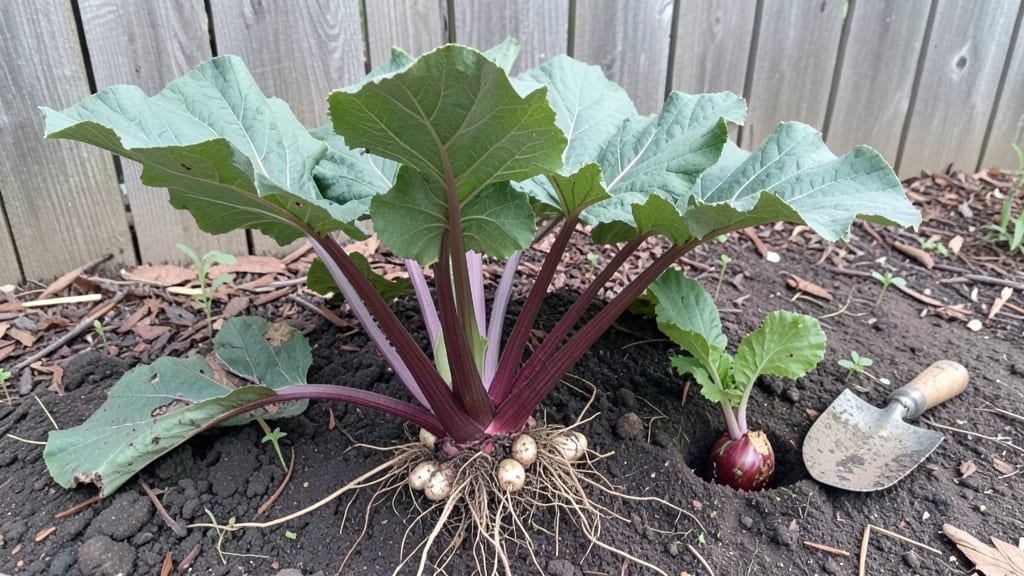
The right rhubarb planting distance can turn a modest patch into a harvest so abundant you’ll be gifting neighbors bundles by spring. 🌱 I learned the hard way—crowding crowns too close means small stalks, bitter flavors, and plants that fight for sunlight instead of producing.
The secret lies in giving each plant enough elbow room to spread its leaves wide and send up thick, sweet stalks.
For most home gardens, space crowns 2 to 3 feet apart in rows that sit 4 to 5 feet apart. This gives roots room to establish without competing, and the plants develop sturdy stalks that reach 2 to 3 feet tall by midseason.
If you’re working with a small plot, try a square-foot method—plant one crown per square foot and watch how quickly they fill the space without sacrificing size.
What you’ll get is a rhubarb patch that produces consistently for decades, with stalks so thick they snap cleanly at the base. The foliage stays lush and vibrant, and you’ll avoid the common mistake of harvesting tiny, stringy stalks because the plants were smothering each other.
This spacing also makes weeding and pest control easier—no more tangled roots or hidden slugs.
Adjust for your garden’s size: larger-scale growers might stretch rows to 6 feet apart, while container gardeners can tuck a single crown into a 20-gallon pot with 12 inches of depth.
The key is matching the plant’s natural spread to your available space, so every stalk has room to shine.
📚 In This Guide
- What you need
- Instructions
- Tips and common mistakes
- Wrapping up and next steps
What you need
- ● Rhubarb crowns (plants): 1–3 per planting zone (choose disease-resistant varieties like 'Victoria' or 'Strawberry').
- ● Well-draining soil: Loamy soil with a pH of 5.5–6.8 (amend with compost if needed).
- ● Compost or aged manure: 2–3 gallons per planting hole (boosts fertility without burning roots).
- ● Organic mulch: Straw, wood chips, or leaves (2–3 inches thick to retain moisture).
- ● Watering can or hose: With a gentle spray nozzle (rhubarb hates soggy roots!).
- ● Garden trowel or spade: For digging planting holes (6–8 inches deep).
- ● Measuring tape or ruler: To ensure 18–24 inches apart for spacing (or 3 feet for larger varieties).
- ○ Garden gloves: Optional but recommended for messy soil or thorny stems.
- ○ Pruners (sterilized): For trimming dead leaves post-planting (optional but helpful).
- ● Sunlight: Full sun (6+ hours daily) for optimal growth.
- ● Water source: Consistent moisture (1–2 inches per week; drip irrigation works best).
- ● Patience: Rhubarb takes 2–3 years to mature—plan ahead for long-term rewards!
How to space rhubarb for maximum growth and yield
Here’s the foolproof method I’ve used to grow rhubarb that multiplies each year—no overcrowding, no wasted energy.
🌱 Step 1: Understand Rhubarb’s Growth Habits
Rhubarb plants spread aggressively over time, so spacing matters more than you’d think. Each crown (the thick, fleshy base) needs 3 feet of space in all directions to avoid competition for nutrients and sunlight. I’ve seen gardeners plant them too close, and by year three, the stalks turn thin and bitter—no one wants that.
Think of it like giving each plant its own personal bubble. If you’re planting multiple crowns, arrange them in a loose grid pattern. This ensures airflow and prevents disease, which is especially important in damp climates. The first year is all about establishing strong roots, so don’t rush—patience here pays off in harvests for years.
🪴 Step 2: Prepare the Planting Site
Rhubarb thrives in full sun to partial shade, but the key is well-draining soil. Test your spot: if water pools after rain, amend the soil with 2-3 inches of compost mixed into the top 12 inches of soil. I dig a hole just deep enough to cradle the crown without burying it—rhubarb roots need to breathe.
Place the crown with the buds facing upward (they look like tiny, plump knobs). Space them 3 feet apart in rows 4 feet apart for easy access and airflow. If you’re planting in a container, use a large pot (18-inch diameter) with drainage holes—rhubarb hates soggy feet.
☀️ Step 3: Mulch and Water for Strong Establishment
After planting, spread 3 inches of organic mulch (like straw or shredded leaves) around each crown, keeping it 6 inches away from the base to prevent rot. Water deeply right after planting, then again every 5-7 days until the soil is 6 inches deep and evenly moist. You’ll know it’s right when the mulch looks damp but not soggy.
Rhubarb is drought-tolerant once established, but young plants need consistent moisture. Overwatering is the real enemy—it causes crown rot. If the soil feels dry 1 inch below the surface, that’s your cue to water. Avoid wetting the leaves to prevent fungal diseases like rust.
⏰ Step 4: Monitor Growth and Adjust Spacing Over Time
By the second year, rhubarb sends up thick, leafy stalks. This is when you’ll notice if spacing is too tight—crowded plants produce fewer, thinner stalks. If you see leaves touching between plants, it’s time to thin. Dig up and divide any extra crowns in early spring or fall, spacing the new ones 3 feet apart.
Here’s the thing—rhubarb spreads via underground runners. If left unchecked, a single plant can dominate a 6-foot radius in five years. I like to dig up and relocate baby crowns every few years to keep the garden tidy and prevent overcrowding. Just make sure to replant them with the same 3-foot spacing.
✂️ Step 5: Harvest Strategically to Encourage Future Growth
Wait until the third year to harvest stalks, and even then, only take 1/3 of the plant in early spring. Cut stalks at the base, leaving the leaves—they photosynthesize and feed the roots. If you harvest too aggressively, the plant won’t recover, and your future harvests will suffer.
After harvesting, water deeply and add a 2-inch layer of compost around the base. This replenishes nutrients and encourages stronger regrowth. You’ll see new stalks emerge within 4-6 weeks, and with proper spacing, they’ll be thick and juicy—perfect for pies, compotes, or fresh eating.
Tips & tricks for perfect rhubarb planting distance
These spacing secrets will transform your rhubarb harvest from meager to magnificent—no more thin, bitter stalks!
The Spacing Secret: That 3-foot spacing in Step 1 isn't just arbitrary—it's about creating a "rhubarb bubble" where each plant gets its own nutrient zone. I've seen gardens where plants were only 2 feet apart, and by year three, the stalks were pencil-thin. The key is imagining an invisible 3-foot circle around each crown where no other plant should intrude. This prevents root competition and ensures thick, juicy stalks.
Container Planting Hack: If you're growing in containers (like that 18-inch diameter pot mentioned in Step 2), use only one crown per container—never two. Rhubarb spreads aggressively underground, and two crowns in one pot will fight for space, resulting in stunted growth. For containers, focus on keeping the soil well-draining and rich with compost, just like in-ground planting.
Visual Growth Check: In Step 4, when monitoring growth, look for these signs of proper spacing: leaves shouldn't touch between plants, and new stalks should emerge straight and sturdy. If you notice leaves curling inward or stalks growing at odd angles, that's your cue to thin out. The goal is to see each plant reaching toward the sun without competing with neighbors.
Long-Term Planning: Here's what nobody tells you—rhubarb's underground runners can spread up to 6 feet in five years if unchecked. I recommend marking your planting spots with stakes or flags right after planting. This creates a permanent reference point for future thinning. When you see baby crowns popping up outside your 3-foot grid, dig them up and relocate them to new spots—this keeps your main plants healthy and prevents overcrowding.
Pro Tips for Rhubarb Planting Distance
- These spacing secrets will transform your rhubarb harvest from meager to magnificent—no more thin, bitter stalks!
- The Spacing Secret: That 3-foot spacing in Step 1 isn't just arbitrary—it's about creating a "rhubarb bubble" where each plant gets its own nutrient zone.
- Container Planting Hack: If you're growing in containers (like that 18-inch diameter pot mentioned in Step 2), use only one crown per container—never two.
Frequently asked questions
about rhubarb planting distance—because even the best gardeners need a little guidance! Here are answers to the most common questions to help you grow like a pro.What’s the ideal spacing for rhubarb plants in a small garden?
For tight spaces, plant rhubarb crowns 2–3 feet apart in rows spaced 3–4 feet apart. This allows airflow while maximizing yield in limited areas. Just avoid overcrowding—rhubarb needs room to spread its large leaves!
When is the best time to plant rhubarb for optimal spacing?
Plant rhubarb in early spring or fall when soil temps are cool (50–60°F). This gives roots time to establish before summer heat. Avoid planting in late spring—you’ll miss the chance to anchor the crowns before stress hits.
Why is my rhubarb growing slowly despite proper spacing?
Slow growth could mean poor soil drainage, overwatering, or low nutrients. Rhubarb thrives in well-draining, slightly acidic soil (pH 6.0–6.8). Amend heavy clay with compost and ensure 1–1.5 inches of water weekly (more in drought).
Can I plant rhubarb closer together if I harvest stems early?
Nope! Even with early harvesting, rhubarb needs space—crowding leads to competition for nutrients and disease risk. Stick to 2–3 feet between plants; early harvesting just means you’ll get smaller stems, not bigger yields.
Are there dwarf rhubarb varieties that need less spacing?
Most rhubarb varieties (like ‘Victoria’ or ‘Strawberry’) aren’t true dwarf types, but ‘Little Gem’ or ‘Canadian Red’ are slightly more compact. Still, give them 18–24 inches apart—they won’t tolerate extreme crowding. Check seed packets for variety-specific notes!
Wrapping up and next steps
Mastering the rhubarb planting distance is your ticket to a thriving garden and bountiful harvests! 🌱 By spacing your plants correctly—typically 3 to 4 feet apart—you’ll ensure strong growth, better airflow, and fewer pests.
Whether you’re a seasoned gardener or just starting out, these spacing secrets will set you up for success.
Now that you’re armed with the know-how, it’s time to roll up your sleeves and plant with confidence. Grab your gloves, mark those rows, and watch your rhubarb flourish—your future pies (and bragging rights) will thank you! 🍽️