
Diseases
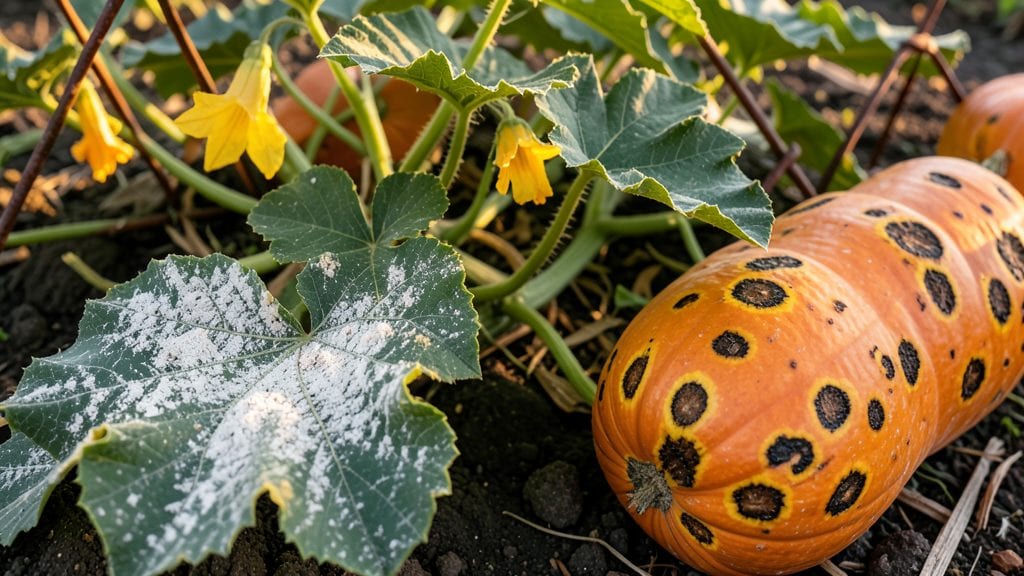
Pumpkin plant diseases can turn your sprawling vines into a sad, spotted mess if you don’t catch them early. 🌱 I’ve seen powdery mildew turn healthy green leaves into dusty white blankets and bacterial wilt collapse plants overnight—both heartbreaking to watch.
The good news? Most of these issues have clear warning signs, and organic fixes work better than you’d think.
These problems usually start with poor airflow, overwatering, or planting too close together. Powdery mildew loves humidity and thrives when vines touch each other, while bacterial wilt spreads through contaminated soil or tools.
Even downy mildew—those yellow, greasy spots—can be stopped with the right spacing and cleanup habits. The key is acting fast before the disease takes hold.
You’ll learn to spot the first signs—like tiny white specks or wilting stems—and use simple fixes like neem oil sprays, copper fungicides, or even baking soda mixtures. Crop rotation, removing infected leaves, and keeping tools clean will save your next harvest. No more mystery illnesses ruining your pumpkins.
Whether you’re growing giant pie pumpkins or small sugar pumpkins, these strategies work for all varieties. Let’s get your vines back to their healthy, sprawling best before the season ends.
Root Causes Of Pumpkin Ailments
Pumpkin plants, like all living organisms, are vulnerable to diseases when their balance is disrupted. Understanding why these issues arise helps gardeners take proactive steps. Below, we break down the key triggers—from microbial invaders to environmental stress—that turn your thriving pumpkin patch into a battleground.
Pumpkin diseases often start with pathogenic microbes—fungi, bacteria, or viruses—that exploit weak spots in plants. These invaders don’t appear out of nowhere; they thrive when conditions favor their growth.
- Fungal Foes (Powdery Mildew, Downy Mildew, Phytophthora) - Moisture + Warmth = Fungal Feast 🌡️ Fungi like Pseudoperonospora cubensis (downy mildew) and Erysiphe cichoracearum (powdery mildew) spread rapidly in humid, stagnant air (75–85°F with high humidity).
Poor airflow between vines creates the perfect breeding ground. - Soilborne Threats (Phytophthora, Pythium) Waterlogged soil starves roots of oxygen, weakening defenses. Phytophthora capsici (a soil-dwelling oomycete) thrives in saturated, compacted soil, rotting roots and stems within days.
- Bacterial Bullying (Bacterial Wilt, Soft Rot) - Wounds + Bacteria = Disaster ⚔️ Erwinia tracheiphila (bacterial wilt) enters through insect bites (e.g., cucumber beetles) or pruning cuts.
Once inside, it clogs vascular tissue, cutting off water supply. - Overwatering = Bacterial Buffet Excess moisture softens plant tissue, making it easy prey for Pectobacterium (soft rot bacteria), which breaks down cell walls like a Pac-Man through a salad.
Pumpkins are hardy, but extreme or inconsistent conditions cripple their immune response, making them susceptible to diseases.
- Temperature Swings (Too Hot or Too Cold) - Heat Stress (Above 90°F) High temperatures denature enzymes in pumpkin leaves, reducing photosynthesis and stunting growth.
Weakened plants can’t fight off Alternaria (a fungal leaf spot) as effectively. - Cold Snaps (Below 50°F at Night) Chilling injury disrupts cell membranes, leaving plants vulnerable to secondary infections like Fusarium wilt. Young seedlings are especially at risk.
- Poor Airflow & Overcrowding
- Vines Touching = Disease Highway 🚦 Dense plantings trap moisture, creating ideal conditions for powdery mildew (which spreads via windborne spores). Aim for 3–4 feet between hills to improve circulation.
- Nutrient Imbalances (Too Much or Too Little) - Nitrogen Overload = Soft, Disease-Prone Tissue Excess nitrogen produces lush but weak growth, making leaves more susceptible to fungal infections.
A soil test can reveal if your pumpkins are getting too much N (look for dark green, spindly vines). - Deficient Phosphorus/Potassium = Weak Roots Without enough P (phosphorus) or K (potassium), roots struggle to absorb water and nutrients, leaving them prone to root rot from Pythium.
Some diseases hitchhike on insects, turning your pumpkin patch into a microbial free-for-all.
- Cucumber Beetles (Aphidoidea & Diabrotica)
- Vectors of Bacterial Wilt & Mosaic Virus 🦟 These striped beetles don’t just chew leaves—they inject bacteria (Erwinia) and spread viruses (e.g., zucchini yellow mosaic virus) as they feed. A single beetle can infect an entire plant in days.
- Aphids & Whiteflies (Sap-Sucking Menaces)
- Honeydew = Fungal Magnet 🍯 These pests excrete sticky honeydew, which attracts sooty mold (Capnodium)—a black, fuzzy fungus that smothers leaves, reducing photosynthesis.
Even the most resilient pumpkin can succumb to human errors that create disease entry points.
- Overwatering or Underwatering
- Too Much Water = Root Rot Pumpkins need 1–2 inches of water weekly, but daily watering (especially overhead) keeps foliage damp, inviting Phytophthora and Alternaria.
- Drought Stress = Open Wounds Wilting plants develop cracks in stems, giving bacteria and fungi a direct path inside.
- Contaminated Tools & Soil
- Dirty Pruners = Disease Spread ⚠️ Pruning shears contaminated with Pseudomonas (a bacterial pathogen) can transmit infections when cutting vines. Sanitize tools with 70% alcohol between uses.
- Reusing Infected Compost Old compost with fungal spores (e.g., Rhizoctonia) can reinfect new plantings. Sterilize soil with solarization (clear plastic sheets in summer sun) or compost at 140–160°F for 3+ days.
- Ignoring Crop Rotation
- Same Spot, Same Problem 🔄 Planting pumpkins (or other cucurbits) in the same soil year after year allows pathogens like Fusarium to build up. Rotate with non-cucurbit crops (e.g., beans, grasses) every 3 years.
Not all pumpkin seeds are created equal—susceptibility to disease can be baked into the DNA.
- Hybrid vs. Heirloom Risks
- Heirlooms = More Vulnerable While heirloom varieties often have better flavor, they may lack the disease-resistant genes bred into hybrids (e.g., ‘Howden’ or ‘Jackpot’ pumpkins resist powdery mildew).
- Old or Damaged Seeds Seeds stored in high humidity or exposed to fungi (e.g., Aspergillus) can carry pathogens straight into your garden. Test viability by soaking seeds in water—sunk seeds may be compromised.
Many diseases start subtly. Check for:
- Yellowing leaves (nutrient deficiency or bacterial wilt)
- White powder (powdery mildew)
- Water-soaked spots (fungal or bacterial rot)
- Stunted growth (viral infection or root issues)
Act fast—catching problems early (before spores spread) is your best defense!
Quick Fixes for Common Pumpkin Ailments
If your pumpkin plants are showing signs of distress, don’t panic—most issues have simple, organic solutions! Below, we’ve mapped the most common diseases to their fixes, along with prevention tips to keep your vines thriving. These methods are easy to follow, budget-friendly, and safe for your garden (and the planet!).
Cause: Fungal spores thrive in humid, crowded conditions. Fix:
- 🔥 Remove Infected Leaves: Snip off heavily mildewed foliage and dispose of it in the trash (not compost).
- 🍳 Homemade Spray: Mix 1 tbsp baking soda + 1 tbsp horticultural oil + 1 tsp dish soap + 1 gallon water. Spray on leaves every 7–10 days (especially undersides).
- 🌡️ Boost Airflow: Prune vines to improve circulation and space plants 3–4 feet apart.
Prevention Tip: 💡 Plant mildew-resistant varieties like ‘Howden’ or ‘Jack Be Little’ and water early in the day so leaves dry quickly.
Cause: Another fungal foe that loves wet foliage and cool nights. Fix:
- 👨🍳 Copper Fungicide: Use copper sulfate spray (1 tbsp per gallon of water) at the first sign of yellowing leaves with fuzzy growth.
- 🥘 Pull and Replace: If downy mildew spreads, remove the entire plant to prevent spores from lingering in the soil.
- ⏰ Rotate Crops: Avoid planting pumpkins in the same spot for 3+ years to break the fungus’s life cycle.
Prevention Tip: 🌱 Interplant with marigolds—their scent repels spores!
Cause: Bacteria (Erwinia tracheiphila) clogs vascular tissue, causing sudden wilting. Fix:
- 🔪 Destroy Infected Plants: There’s no cure—burn or bag affected vines immediately to stop the spread.
- 🌡️ Sterilize Tools: Clean pruners with 70% rubbing alcohol or a 10% bleach solution between cuts.
- 🎯 Quarantine New Plants: Inspect cucurbit seedlings (pumpkins, squash, melons) for symptoms before planting.
Prevention Tip: ✨ Use certified disease-free seeds and avoid planting near old infected debris.
Cause: Fungal spots (dark rings with yellow halos) spread via water splashes. Fix:
- 🍳 Neem Oil Spray: Mix 1 tbsp neem oil + 1 tsp mild soap + 1 quart water. Spray weekly until new growth appears.
- 🥘 Prune for Light: Remove lower leaves touching the soil to reduce humidity near the plant base.
- 🔪 Clean Up Debris: Rake and remove fallen leaves after harvest to eliminate spore sources.
Prevention Tip: 💡 Water at the base (not overhead) and avoid overhead irrigation.
Cause: Overwatered or poorly drained soil suffocates roots, inviting fungi like Phytophthora. Fix:
- 🔥 Improve Drainage: Amend soil with compost or perlite and mound soil around the stem to encourage new root growth.
- 🌡️ Reduce Watering: Let the top 1–2 inches of soil dry out between waterings.
- 🍳 Hydrogen Peroxide Soak (Optional): For early-stage rot, soak roots in 3% hydrogen peroxide solution (1 part peroxide to 20 parts water) for 10 minutes before replanting.
Prevention Tip: 🌱 Plant in raised beds or hills to prevent waterlogging.
Cause: These striped pests spread bacterial wilt while chewing leaves. Fix:
- 🔪 Handpick Beetles: Drop them into soapy water (they’re easy to spot on yellow flowers).
- 🍳 Beer Trap: Bury a cup filled with beer near plants—beetles drown in it overnight.
- 🌡️ Row Covers: Use floating row covers early in the season to block adults.
Prevention Tip: ✨ Plant trap crops like radishes or nasturtiums to lure beetles away.
💡 Pro Tip for All Diseases: Healthy plants fight better! Boost immunity with:
- Compost tea (weekly foliar spray)
- Fish emulsion (1 tbsp per gallon of water, every 2 weeks)
- Silica-rich supplements (like kelp meal) to strengthen cell walls
⚠️ When to Call It Quits: If 50%+ of your plants are beyond saving, focus on preventing spread to next season’s crop. Sometimes, a few strong vines are better than a whole field of struggling ones!
Frequently asked questions
What are the first signs of powdery mildew on pumpkin leaves?
Look for tiny white or gray powdery spots on the upper leaf surfaces—these spread quickly in humid conditions. The undersides may develop fuzzy growth as spores multiply. Act fast by removing infected leaves and applying a baking soda spray (1 tbsp baking soda + 1 tbsp oil + 1 tsp soap per gallon of water).
Can I save a pumpkin plant with bacterial wilt?
Unfortunately, bacterial wilt (Erwinia tracheiphila) has no cure. Once symptoms appear (sudden wilting, yellowing), destroy the entire plant immediately to prevent spread. Sterilize tools with 70% alcohol and avoid planting cucurbits in that spot for 3 years.
How do I prevent downy mildew in my pumpkin patch?
Start with proper spacing (3–4 feet between vines) and water at the base early in the day. Interplant with marigolds to repel spores and use copper fungicide at the first sign of yellowing leaves. Rotate crops annually to break the fungus's life cycle.
Why do my pumpkin leaves turn yellow and wilt suddenly?
This could signal bacterial wilt (from cucumber beetles) or root rot from overwatering. Check stems for dark streaks (bacterial wilt) or mushy roots (rot). For bacterial wilt, remove infected plants immediately. For root rot, improve drainage and reduce watering frequency.
Are there disease-resistant pumpkin varieties?
Yes! Look for hybrids like 'Howden' (powdery mildew resistant) or 'Jackpot' (tolerates downy mildew). Heirloom varieties often lack these resistances, so choose disease-resistant seeds if your climate is prone to fungal issues.