
Diseases
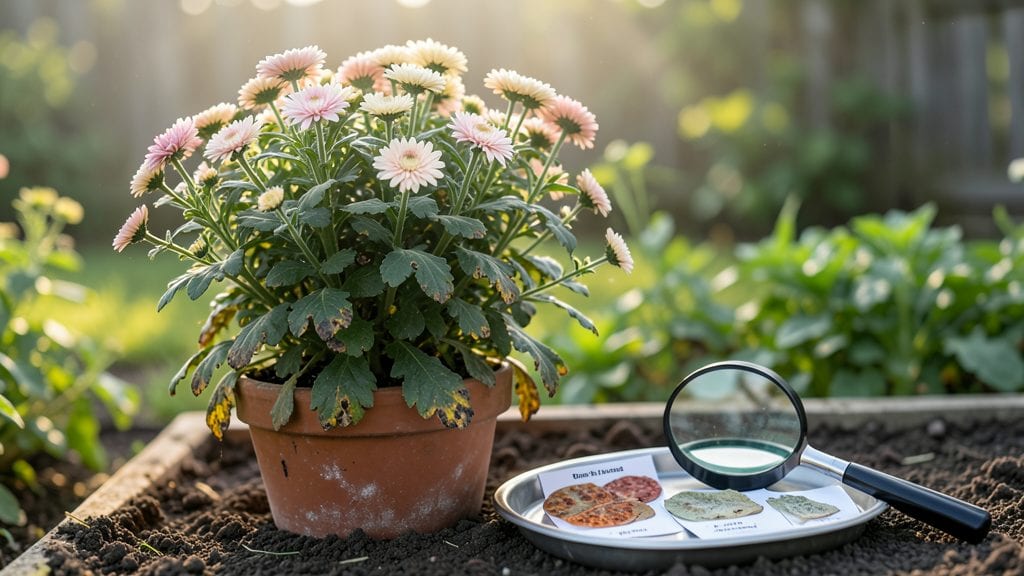
Your chrysanthemum plant diseases are turning those bright blooms into a sad, spotted mess—but don’t panic. 🌿 I’ve battled every fungal foe that can ruin your garden, and here’s how to diagnose, treat, and prevent them before they ruin your garden.
Powdery mildew, leaf spot, and rust are the usual suspects, and they all thrive in the same conditions: damp leaves, poor airflow, and crowded plants. The good news? Most can be stopped with simple adjustments—like spacing plants properly, watering at the base, and cleaning up fallen debris.
I’ve tested organic sprays like neem oil and baking soda mixtures, plus chemical options when needed.
You’ll learn to spot early signs (yellowing leaves, white fuzz, or dark patches) and act fast—before the whole plant checks out. With the right mix of prevention and treatment, your chrysanthemums can bounce back stronger than ever, ready to put on their usual fall show.
Works for both garden beds and container-grown mums, so no matter where your plants live, these fixes will keep them thriving. Let’s get those blooms back to their best!
The Hidden Triggers Behind Fungal Foes
Fungal infections in chrysanthemums don’t just appear out of thin air—they thrive when specific conditions align like a perfect storm. Understanding why these diseases take hold is the first step to stopping them in their tracks.
Let’s break down the key culprits that turn your vibrant blooms into a battleground for pathogens.
Chrysanthemums love space, and when they’re packed too tightly, their leaves and stems create a humid, shadowy microclimate—fungi’s dream playground. Poor airflow traps moisture, giving spores the perfect conditions to germinate and spread.
- Why it happens: Dense plantings block sunlight and slow evaporation, keeping foliage damp longer. Fungal spores, like those causing gray mold (Botrytis) or powdery mildew, latch onto wet surfaces and multiply rapidly.
- Actionable fix:
- Space plants 12–18 inches apart to improve airflow.
- Prune lower leaves to reduce humidity at soil level.
- Use drip irrigation instead of overhead watering to keep foliage dry.
Fungi need water to grow, and chrysanthemums are particularly vulnerable when their roots sit in soggy soil. Overwatering or poor drainage creates the ideal breeding ground for root rots (Phytophthora) and leaf spots (Septoria).
| Cause | How It Harms Chrysanthemums | Signs to Watch For |
|---|---|---|
| Frequent watering without drying cycles | Encourages Pythium and Rhizoctonia fungi to infect roots and stems. | Yellowing leaves, mushy stems, and wilting despite moist soil. |
| Compacted or clay-heavy soil | Prevents drainage, leading to waterlogged roots and fungal invasion. | Stunted growth, blackened roots, and a foul odor from the soil. |
| Watering late in the day | Leaves remain wet overnight, promoting Botrytis and downy mildew. | Gray fuzzy patches on buds/leaves or white/yellow spots on undersides. |
Pro Tip: 🌡️ Always water in the morning so foliage dries by evening. Test soil moisture by sticking your finger 1–2 inches deep—water only if it’s dry.
A chrysanthemum that’s stressed—whether from poor nutrition, pests, or environmental shock—has lowered defenses against fungal invaders. Think of it like a person with a weak immune system catching every cold that comes their way.
- Key stressors:
- Nitrogen deficiency: Yellowing leaves signal weak growth, making plants more susceptible to rust fungi.
- Potassium deficiency: Brown leaf edges weaken cell walls, inviting Septoria leaf spot.
- Pest damage: Sap-sucking insects (like aphids) create entry points for fungal spores.
- Actionable fix:
- Fertilize with a balanced 10-10-10 formula before blooming season.
- Add compost or aged manure to improve soil health and plant resilience.
- Monitor for pests and treat early with neem oil or insecticidal soap.
Fungal spores are tiny but tenacious. They hitchhike on pruners, gloves, and even garden soil, waiting for the right moment to infect your plants. If you’ve had infected chrysanthemums before, spores may linger in your tools or garden beds.
- How it spreads:
- Pruning infected stems without sterilizing tools transfers spores to healthy plants.
- Reusing contaminated potting mix or planting in the same spot year after year exhausts soil defenses.
- Wind or water splashes carry spores from diseased plants to nearby healthy ones.
- Actionable fix:
- ✨ Sterilize tools with 70% rubbing alcohol or a 10% bleach solution between uses.
- Rotate planting locations every 2–3 years to break the fungal cycle.
- Use fresh, sterile potting mix or solarize soil (cover with clear plastic for 4–6 weeks in summer) to kill spores.
Fungi love heat and humidity—ideal conditions for chrysanthemums in late summer and fall. When temperatures hover around 70–80°F (21–27°C) with high moisture, fungal spores explode in growth, leading to outbreaks of powdery mildew, rust, or leaf blight.
Pro Tip: 🎯 If your region has a history of humid summers, choose disease-resistant varieties (like ‘Bright Golden Anne’ or ‘Dakota Gold’) and consider shade cloth to reduce stress on plants.
Quick Fixes for Sick Chrysanthemums
When your chrysanthemums start showing signs of distress—whether it’s yellowing leaves, black spots, or wilted stems—acting fast can save your plants. Below are practical, step-by-step solutions tailored to the most common chrysanthemum diseases, plus prevention tips to keep your garden thriving.
**🔥 Remove Infected Foliage Immediately Cut off severely infected leaves (especially those with white powder or dark spots) using sterilized pruners (wipe with rubbing alcohol between cuts). Dispose of them in the trash—do not compost—to prevent reinfection.
🍳 Apply Fungicidal Sprays
- Baking soda spray: Mix 1 tsp baking soda + 1 tbsp vegetable oil + 1 tsp dish soap + 1 gallon water. Spray every 7–10 days on dry, calm mornings.
- Neem oil solution: Combine 1 tbsp neem oil + 1 tsp mild soap + 1 quart water. Shake well and spray directly on undersides of leaves (fungi love hiding there!).
- Store-bought fungicides: For stubborn cases, use copper-based or sulfur sprays (follow label instructions).
🌡️ Boost Airflow & Light
- Space plants 12–18 inches apart to reduce humidity buildup.
- Avoid overhead watering—use a drip irrigation system or water at the base early in the day.
- Prune nearby plants to improve airflow around chrysanthemums.
✨ Prevention Tip Rotate your plants every 2–3 years to prevent soil-borne fungi from establishing. Solarize soil in late summer (cover with clear plastic for 4–6 weeks) to kill fungal spores.
👨🍳 Blast Off Pests with Water
- Strong spray: Hold plants under a hose nozzle for 10–15 seconds to knock off aphids and mites.
- Soapy water wash: Mix 2 tbsp castile soap + 1 gallon water and spray early in the morning (avoid direct sun to prevent leaf burn).
🔪 Introduce Beneficial Insects
- Ladybugs (eat aphids) or lacewings (devour mites) can be purchased online or at garden centers.
- Plant companion flowers like marigolds or alyssum nearby to attract natural predators.
🎯 Use Sticky Traps for Whiteflies Hang yellow sticky traps near plants to monitor and reduce whitefly populations.
💡 Prevention Tip
- Inspect new plants before bringing them home (quarantine for 2 weeks if possible).
- Avoid over-fertilizing with nitrogen—soft, new growth attracts pests.
⏰ Adjust Your Watering Schedule
- Check soil moisture before watering—stick your finger 1–2 inches deep. Water only when dry.
- Improve drainage by amending soil with perlite or coarse sand (20% mix).
- Raise containers on pot feet or bricks to prevent waterlogging.
🌱 Repot Affected Plants
- Gently remove the plant from its pot and trim away mushy, black roots with sterilized scissors.
- Repot in fresh, well-draining soil and hold off on watering for 3–5 days to let roots recover.
🌡️ Prevention Tip
- Use pots with drainage holes (even for ground-planted mums, consider raised beds).
- Mulch lightly (1–2 inches) to retain moisture without suffocating roots.
- Fertilize lightly with a balanced 10-10-10 or fish emulsion to restore nutrients.
- Trim back dead growth to encourage new, healthy shoots.
- Move to a sunnier spot (chrysanthemums need 6+ hours of sunlight daily).
- Avoid stress—don’t transplant or prune heavily during extreme heat or cold.
💡 Pro Tip Keep a garden journal to track when diseases appear, what treatments worked, and weather patterns. This helps you spot problems early before they spread!
By following these targeted fixes, your chrysanthemums can bounce back—stronger and more resistant** to future issues. 🌼💪
Frequently asked questions
What are the most common chrysanthemum diseases I should watch for?
The top culprits are powdery mildew (white powdery coating), leaf spot (dark brown/black spots), and rust (orange pustules on undersides). These thrive in humid conditions and can spread quickly if left untreated.
Can I save a chrysanthemum with fungal leaf spots?
Yes! First, remove all infected leaves and sterilize your pruners. Apply a baking soda spray (1 tsp baking soda + 1 tbsp oil + 1 gallon water) every 7-10 days. For severe cases, use a copper fungicide following label instructions.
Why does my chrysanthemum get powdery mildew even when I water at the base?
Powdery mildew often appears due to poor airflow, not just watering habits. Space plants 12-18 inches apart and prune lower leaves to improve circulation. Morning watering helps foliage dry faster, but airflow is key to prevention.
Is it safe to use neem oil on chrysanthemums?
Neem oil is excellent for treating fungal diseases and pests. Mix 1 tbsp neem oil + 1 tsp mild soap + 1 quart water and spray on leaves (especially undersides). Apply in the evening to avoid leaf burn from sunlight.
How can I prevent diseases in chrysanthemums next season?
Start by rotating planting locations every 2-3 years to break fungal cycles. Use sterile potting mix and solarize soil (cover with clear plastic for 4-6 weeks in summer) to kill spores. Choose disease-resistant varieties like 'Bright Golden Anne'.