Watering
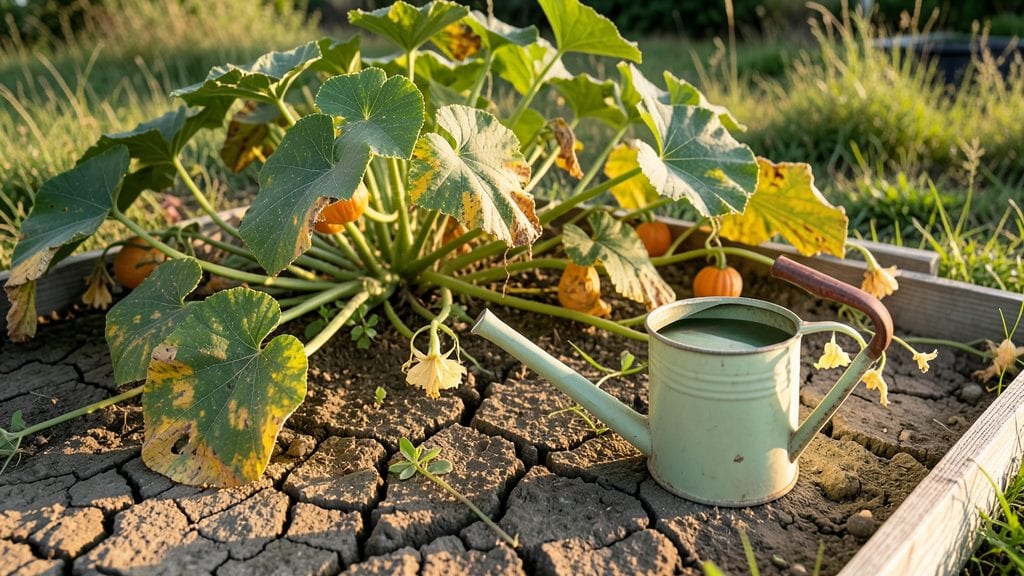
This underwatered pumpkin plant is desperate for hydration—its drooping leaves and stunted vines are begging for a rescue. 🌱 The moment they start curling like sad parchment and growth stalls, it’s not too late to save them.
I’ve nursed back more than a few underwatered pumpkins, and the fix is simpler than you think.
Wilting, yellowing leaves, and dry soil an inch below the surface are the classic signs. Pumpkins need 1-2 inches of water per week, but sandy soil drains too fast, while clay holds too much moisture.
The first step? Stick your finger in the soil—if it’s dry past your first knuckle, you’ve been neglecting them.
Within 48 hours of proper watering, you’ll see new vigor: leaves unfurling, vines stretching toward the sun again. Deep watering—soaking the roots—beats frequent shallow drinks. A mulch layer keeps moisture locked in, and adjusting your schedule to early morning or evening cuts evaporation.
Prevent future drama by checking soil moisture weekly and upgrading to drip irrigation if your hose can’t keep up. Trust me, your pumpkins will thank you with heavier fruit and fewer sad faces by harvest time.
Root Causes Of Thirsty Vines
Understanding why your pumpkin plant is underwatered starts with recognizing the hidden triggers that rob its roots of the moisture they desperately need. Pumpkins are heavy drinkers—especially during their rapid growth phase—and when their water supply falters, the consequences appear fast. Let’s break down the science behind the stress.
Pumpkin plants thrive when their root zone stays consistently damp (not soggy, not dry). Here’s why shallow or irregular watering leads to wilting:
- Root Zone Depth Matters: Pumpkin roots can spread 3–4 feet wide and dive 12–18 inches deep for water.
If you’re only watering the top 2 inches of soil, the roots starve while the top layer dries out. - Soil Type Plays Trick: Sandy or rocky soils drain too quickly, while clay holds water but suffocates roots.
A loamy, well-draining mix (60% soil, 30% compost, 10% perlite) is ideal. - Surface Evaporation: In hot climates, up to ¼ inch of water evaporates daily from the soil surface. Relying on rain or light sprinkles won’t penetrate deep enough.
💡 Pro Tip: Use a moisture meter or the "finger test"—stick your finger 3 inches down. If it’s dry, it’s time to water deeply (not just a quick sprinkle).
Pumpkins hate watering whiplash—alternating between drought and over-saturation confuses their root systems. Here’s how inconsistent habits backfire:
- Shallow Root Development: Frequent light watering encourages roots to stay close to the surface, making them vulnerable to drought stress when the topsoil dries. - Osmotic Stress: When soil dries out, roots shrink slightly, creating tiny gaps that disrupt nutrient uptake.
Rewatering too late can cause fertilizer burn as concentrated salts enter the roots. - Heat Stress: During peak sun hours (10 AM–4 PM), pumpkin leaves transpire rapidly. If the soil isn’t replenished, wilting within hours is inevitable.
⚠️ Warning Sign: If your pumpkin’s leaves curl upward (like a question mark) or feel paper-thin, it’s a classic sign of chronic underwatering.
Even with perfect watering, external factors can accelerate moisture loss. These silent culprits often fly under the radar:
| Factor | How It Affects Pumpkins | Solution |
|---|---|---|
| High Winds | Blows away humidity, increases evaporation | Use windbreaks or mulch heavily |
| Low Humidity | Dries leaves faster, forces roots to work harder | Group plants together or use shade cloth |
| Extreme Heat | Soil bakes hard, roots can’t absorb water | Water early morning (before 8 AM) |
| Poor Mulching | Sun beats down on soil, speeds up drying | Apply 4–6 inches of straw or wood chips |
🔥 Hot Tip: Mulch isn’t just for looks—it retains 30% more soil moisture by blocking sunlight and reducing evaporation.
Pumpkins aren’t picky neighbors, but crowded roots or aggressive companions can steal their water supply:
- Overplanting: Pumpkins need 50–100 sq ft per vine.
If planted too close, roots compete for water, leading to stunted growth. - Weed Pressure: Weeds consume 20–30% of available moisture before your pumpkin even gets a sip. - Shallow Root Crops Nearby: Plants like radishes or lettuce have shallow roots that dry out the topsoil, leaving pumpkins high and dry.
🎯 Fix It: Space vines 8–10 feet apart and remove weeds within a 3-foot radius of the base.
Even the best-intentioned gardener can fall victim to hidden watering disasters:
- Clogged Drip Lines: Mineral buildup or debris can reduce flow by 50%, leaving patches underwatered.
- Uneven Sprinkler Coverage: If your sprinkler skips spots, pumpkins in dry zones wilt while others get drenched.
- Low Water Pressure: A weak hose or long tubing delivers a trickle, not a deep soak.
🔧 Quick Check: Run a bucket test—place a 5-gallon bucket under your sprinkler/drip line. If it fills in <20 minutes, your system is likely underperforming.
Mother Nature doesn’t always cooperate. Drought conditions (even in rainy seasons) can sneak up on pumpkin growers:
- False Rainfall: A 0.1-inch downpour might feel like a lot, but pumpkins need 1–2 inches per week during fruiting.
- Dry Winds: Chinook or Santa Ana winds can dry soil 3x faster than normal.
- Late Planting: Pumpkins planted after June often miss the early-season moisture their roots crave.
🌧️ Solution: Install a rain gauge and supplement with deep watering during dry spells.
Revive your pumpkin vines fast
Now that you know the signs and causes of an underwatered pumpkin plant, it’s time to take action! The good news? Pumpkins are resilient, and with the right care, you can nurse them back to health—even if they’re looking a little sad right now.
Below are practical, step-by-step solutions tailored to the most common causes of wilting, plus prevention tips to keep your vines thriving.
If your pumpkin plant is thirsty, surface watering won’t cut it. Pumpkins have deep, sprawling roots that need a good soak to recover.
How to do it: ✅ 🔥 Water deeply, not frequently – Aim for 1–2 inches of water per week, delivered in one long session (not daily light sprinkles). Use a hose with a gentle spray nozzle or a soaker hose to penetrate the soil evenly. ✅ 👨🍳 Check soil moisture – Stick your finger 2–3 inches deep into the soil. If it’s dry, water again. If it’s still damp, wait a day or two. ✅ 🥘 Improve drainage – If water pools on top, your soil may be too compacted. Mix in compost or perlite to help water absorb better.
💡 Pro Tip: Water in the early morning to reduce evaporation and fungal risks. Avoid evening watering—wet leaves overnight can invite pests.
Pumpkin plants lose water quickly through evaporation, especially in hot climates. A thick mulch layer acts like a moisture blanket.
How to do it: ✅ 🔪 Apply 2–3 inches of mulch – Use straw, shredded leaves, or grass clippings around the base (but keep it away from the stem to prevent rot). ✅ 🌡️ Choose the right mulch – Dark mulches (like black plastic or compost) absorb heat and warm roots, while light mulches (straw) keep soil cooler. ✅ 🎯 Replenish as needed – Mulch breaks down over time, so check it every few weeks and add more if it’s thinning.
✨ Bonus: Mulch also suppresses weeds, which compete for water and nutrients!
Not all soil holds water the same way. Sandy soil drains fast, while clay soil can suffocate roots if overwatered.
How to adapt:
| Soil Type | Watering Adjustment | Signs It’s Working |
|---|---|---|
| Sandy | Water more often, but deeply (every 1–2 days in heat) | Soil stays moist 2–3 inches down |
| Clay | Water less frequently, but in long sessions (every 3–4 days) | No puddles; top inch dries slightly between waterings |
| Loamy | Follow the 1–2 inch weekly rule | Even moisture, no crusting |
💡 Pro Tip: If your pumpkin leaves curl upward (a sign of drought stress), give it a deep watering immediately and monitor closely for 2–3 days.
Once your pumpkin plant recovers, consistent care will prevent future stress.
🔹 🌡️ Monitor weather shifts – Afternoon heat waves?
Increase watering temporarily. 🔹 📊 Use a moisture meter – A cheap soil moisture sensor ($10–$15) takes the guesswork out of watering. 🔹 🥗 Pair with companion plants – Grow bush beans or marigolds nearby—they improve soil structure and retain moisture. 🔹 🍎 Prune strategically – Too many vines?
Trim excess growth to reduce water demands on the plant.
Final Thought: Pumpkins are forgiving, but act fast—wilting leaves can mean blossom drop or stunted fruit if ignored. With these fixes, your vines should perk up in 3–7 days, and you’ll be on your way to a bountiful harvest! 🎃💦
Frequently asked questions
What are the first signs my pumpkin plant needs more water?
Watch for drooping leaves that feel dry and crispy to the touch, especially in the morning. Younger leaves often wilt first, and the vines may appear limp. Check soil moisture by sticking your finger 2–3 inches deep—if it’s dry, it’s time to water deeply.
How often should I water pumpkin plants to prevent wilting?
Pumpkins need 1–2 inches of water per week, but adjust based on soil type and weather. Sandy soil may need daily watering in heat, while clay holds moisture longer. Water early morning to reduce evaporation, and always soak the root zone—not just the surface.
Can I save a pumpkin plant that’s already wilted from underwatering?
Yes! Give it a deep watering immediately (soaking the soil 12–18 inches deep) and monitor for 24–48 hours for recovery. If leaves stay crispy, trim the most damaged foliage to redirect energy to roots. Mulch heavily to retain moisture and prevent future stress.
Why do my pumpkin leaves curl upward when underwatered?
This classic "question mark" curl happens when roots can’t supply enough water to leaves. The plant tries to reduce water loss by curling edges upward, but it’s a distress signal. Act fast—deep watering and mulching can reverse this within 3–5 days if roots are still healthy.
What’s the best mulch to keep pumpkin soil moist longer?
Use straw or shredded leaves (2–3 inches thick) to block evaporation while keeping soil cool. Dark mulches like compost absorb heat, while light mulches reflect sunlight. Avoid piling mulch against the stem to prevent rot—keep it 3 inches away.