
Watering
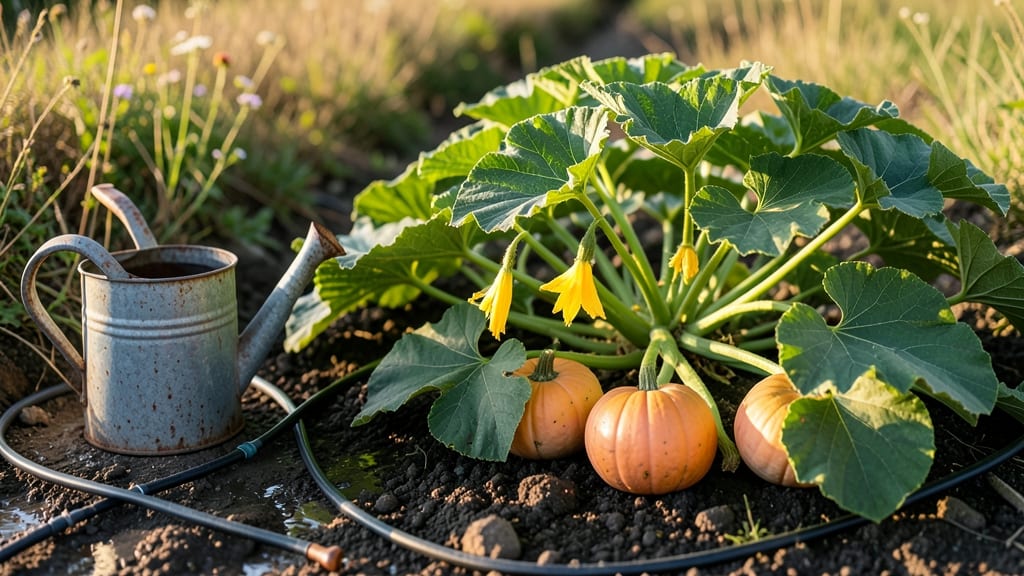
Watering pumpkin plants correctly is the secret to turning weak seedlings into sprawling vines loaded with heavy, sweet fruit.
Pumpkins thrive on consistency—but get the watering wrong, and your sprawling vines or prized fruits will suffer. Too little, and the vines wilt; too much, and you risk rot or fungal infections.
Finding that sweet spot between soggy soil and dry roots is what separates a bountiful harvest from a sad disappointment.
In Zone 6a, where spring planting kicks off in March, your watering schedule will shift as the season changes. Early on, seedlings need gentle moisture to establish roots, while flowering and fruiting stages demand deeper, more frequent soaks.
The key? Keeping the soil evenly moist—not drenched, not parched—so the vines grow strong and the pumpkins swell with flavor.
Below, I’ll break down exactly how often to water, the best methods to avoid disease, and how to adjust when summer heat or unexpected rain throws your routine off track.
How much water do pumpkin plants need for optimal growth?
Pumpkin plants demand consistent moisture to thrive, but their water needs shift dramatically as they mature. Seedlings require gentle care, while flowering vines and fruiting plants need deep hydration to support heavy pumpkins. Understanding these stages ensures your plants grow strong and produce bountiful harvests.
Overwatering can drown roots, while underwatering stresses plants and leads to blossom end rot or stunted growth. The key is maintaining 1-2 inches of soil moisture at all times, adjusting only for weather extremes. Let's break down the exact watering schedule your pumpkins need at each growth phase.
📌 Pro Tip: Always water at the base of plants in the morning to prevent fungal diseases like powdery mildew from evening moisture. Avoid wetting leaves, especially during humid weather.
Here’s a stage-by-stage breakdown of your pumpkin’s watering needs, including soil moisture targets and warning signs:
<summary-table>| Growth Stage | Watering Frequency | Soil Moisture Target | Water Volume (per plant) | Signs of Overwatering | Signs of Underwatering |
|---|---|---|---|---|---|
| Seedling (0-3 weeks) | Every 2-3 days | 1 inch topsoil moist | ½ gallon (1.9L) | Yellowing leaves, mushy stems | Wilted leaves, stunted growth |
| Vine Expansion (3-6 weeks) | Every 3-4 days | 2 inches topsoil moist | 1 gallon (3.8L) | Root rot, leaf yellowing | Drooping vines, crispy edges |
| Flowering (6-8 weeks) | Every 2-3 days | 2-3 inches topsoil moist | 1.5 gallons (5.7L) | Wilting flowers, blackened stems | Dropped flowers, small fruits |
| Fruiting (8+ weeks) | Every 2-4 days | 3 inches topsoil moist | 2 gallons (7.6L) | Soggy soil, mold growth | Hard, shriveled fruits, cracked rinds |
During the seedling stage, focus on keeping soil evenly moist but not soggy. Use a spray bottle or gentle watering can to avoid disturbing delicate sprouts. Overwatering at this stage can cause damping-off disease, while underwatering leads to weak stems that struggle to support later growth.
As vines begin expanding rapidly (3-6 weeks), increase water volume to encourage strong root development. Aim for 1 gallon per plant every 3-4 days, soaking the soil deeply. Yellowing leaves or slow vine growth signal you’re overdoing it, while crispy leaf edges mean it’s time to water.
The flowering phase (6-8 weeks) is critical—pumpkins need consistent hydration to set fruit. Water deeply every 2-3 days, ensuring 2-3 inches of soil moisture. Dropped flowers or small pumpkins often mean underwatering, while wilting blossoms suggest overwatering or poor drainage.
When fruits appear (8+ weeks), your pumpkins are heavy and need maximum support. Water every 2-4 days, delivering 2 gallons per plant to maintain 3 inches of soil moisture. Cracked rinds or hard, shriveled pumpkins are classic signs of inconsistent watering during this stage.
To monitor soil moisture like a pro, stick your finger 2 inches deep—if it feels dry, it’s time to water.
For container-grown pumpkins, check moisture daily, as pots dry out faster. Mulch heavily (3-4 inches) to retain moisture and regulate soil temperature, reducing your watering frequency by up to 30%.
Adjust your schedule based on weather and soil type. Sandy soil drains quickly, while clay holds moisture longer. In hot, dry climates, water early in the morning to minimize evaporation, while rainy seasons may require temporary pauses to avoid waterlogged roots.
By matching your watering routine to your pumpkin’s growth stage, you’ll avoid common pitfalls and harvest plump, disease-free pumpkins that rival the grocery store—without the chemicals. Happy growing! 🎃
Best watering techniques to prevent pumpkin diseases and blossom end rot
Watering pumpkins correctly isn't just about keeping the soil damp—it's about creating the perfect balance to prevent blossom end rot and fungal diseases like powdery mildew. I’ve learned that inconsistent watering stresses plants, leading to cracked fruits or weak vines.
The key lies in consistent moisture, proper timing, and smart irrigation methods that protect your pumpkin patch from common pitfalls.
Pumpkins need 1-2 inches of water per week, but the method matters just as much as the amount. Drip irrigation delivers water directly to the roots, reducing leaf wetness that invites fungal spores.
Hand-watering can work too, but only if you water at the base of the plant and avoid wetting the foliage. Even small mistakes—like watering in the evening—can turn a thriving vine into a disease magnet.
⚠️
🌱 Overwatering causes root rot and weak vines. Underwatering leads to blossom end rot and stunted growth.
💧 Watering at night keeps leaves damp, promoting fungal infections like powdery mildew.
🌿 Inconsistent moisture stresses plants, making them vulnerable to pests and diseases.
🔹 Solution: Use mulch to retain moisture and water early morning (6-9 AM) for best results.
For drip irrigation, I recommend setting up a system that delivers water slowly at the soil surface. This keeps the roots hydrated without soaking the leaves, which is critical for preventing powdery mildew.
If you’re hand-watering, focus on the soil around the base and avoid splashing water onto the leaves. A soaker hose is another great tool—it waters deeply without disturbing the soil or encouraging disease.
Mulching is a game-changer for pumpkin watering. A 3-4 inch layer of straw or wood chips locks in moisture, reduces evaporation, and keeps the soil cool. This is especially helpful during hot summer days when pumpkins need consistent hydration.
I’ve seen mulched plants thrive even in dry spells, while unmulched plants struggle with moisture loss and stress.
Timing your watering is just as critical as the method. Always water in the early morning (between 6-9 AM) to give leaves time to dry before evening. Wet foliage at night creates the perfect environment for fungal spores to take hold.
If you must water in the evening, do it at least 3-4 hours before sunset to minimize risk.
Watch for signs of overwatering (yellowing leaves, mushy stems) or underwatering (wilted vines, cracked fruits). Adjust your schedule based on weather—water more frequently during heatwaves and reduce slightly during rainy periods. With the right approach, your pumpkins will grow strong, disease-free, and ready for harvest.