
Pruning
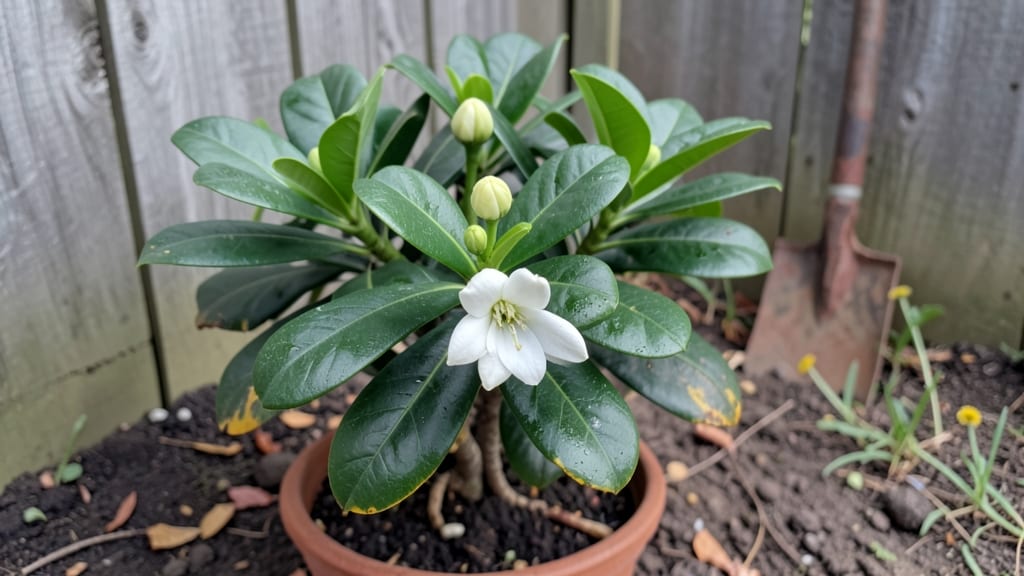
Planting a gardenia tree requires timing in spring or early fall, well-draining acidic soil with a pH of 5.0-6.5, and full sun exposure for 6-8 hours daily. Choose a sheltered spot to protect from harsh winds, and water deeply after planting to encourage root establishment.
Gardenias are fussy but rewarding plants—they demand acidic soil because their roots struggle to absorb nutrients in alkaline conditions. 🌿 The right pH unlocks their signature fragrance and vibrant blooms, while consistent sunlight triggers their flowering cycles.
I’ve found that coastal climates suit them best, but container growing works too if you mimic their natural humidity needs with regular misting.
Pro tip: Amend your soil with sulfur or pine bark fines to maintain that critical 5.0-6.5 pH range. And don’t skimp on the shelter—wind stress weakens the plant before it even establishes roots.
The first year is all about patience; deep watering every 3-4 days (more in heat waves) sets the foundation for years of fragrant blooms.
💡 In This Article
- Optimal Conditions for Gardenia Tree Growth
- Step-by-Step Gardenia Tree Planting Guide
Optimal conditions for gardenia tree growth
Gardenias thrive in acidic soil because their roots can't efficiently absorb nutrients like iron and phosphorus when the pH rises above 6.5. At this ideal 5.0-6.5 range, the soil chemistry allows these essential elements to remain soluble in water, making them readily available for uptake.
Think of it like dissolving sugar in tea—acidic conditions keep the "sugar" (nutrients) suspended so the plant can drink it up. Without this acidity, gardenias develop chlorosis (yellow leaves) and weak growth, even if other conditions seem perfect. 🌱
The 6-8 hours of direct sunlight daily isn't just about photosynthesis—it's the trigger for their blooming cycle. Gardenias are photoperiod-sensitive, meaning they need consistent light exposure to produce the hormones that initiate flower buds.
In my experience with USDA Zones 8-10, gardenias planted in partial shade (less than 4 hours of sun) often produce fewer blooms or none at all. The trade-off?
Too much harsh afternoon sun (especially in Zone 11) can scorch delicate leaves, so morning sun with afternoon shade works best in hot climates.
Humidity and temperature create the perfect storm for gardenia success. These tropical natives prefer 60-80% humidity and struggle in dry air, which is why coastal areas suit them so well. The high moisture in the air reduces transpiration stress on the leaves.
Inland gardeners can mimic this by misting leaves daily or using a pebble tray with water beneath the pot. Temperature-wise, they hate extremes—below 50°F shocks their system, while above 90°F without shade causes leaf burn. This is why spring planting (March-May) gives roots time to establish before summer heat arrives.
Seasonal timing matters because gardenias enter dormancy in winter. Planting in early fall (September-October) allows roots to grow before cold sets in, while spring planting gives them the entire growing season to adapt.
What most people don't realize is that gardenias planted in late fall (November)6-8 weeks of growing time before winter arrives in your zone.
For climate zones outside 8-10, container growing becomes essential. Pots allow you to control soil acidity and move the plant to sheltered locations when temperatures drop below 50°F. I've successfully grown gardenias in Zone 7 by overwintering them in unheated garages with grow lights.
The trick is using a well-draining potting mix with 50% peat moss or pine bark to maintain that critical acidity while preventing root rot from poor drainage.
One final nuance: Gardenias actually prefer slightly cooler nights (60-65°F) than days to trigger blooming. This is why they perform poorly in desert climates where night and day temps stay above 75°F. The temperature differential signals the plant to shift resources from leaf growth to flower production.
In hot climates, strategic placement near reflective surfaces (like light-colored walls) can help moderate leaf temperatures while still providing adequate sunlight. 🌸