
Trees
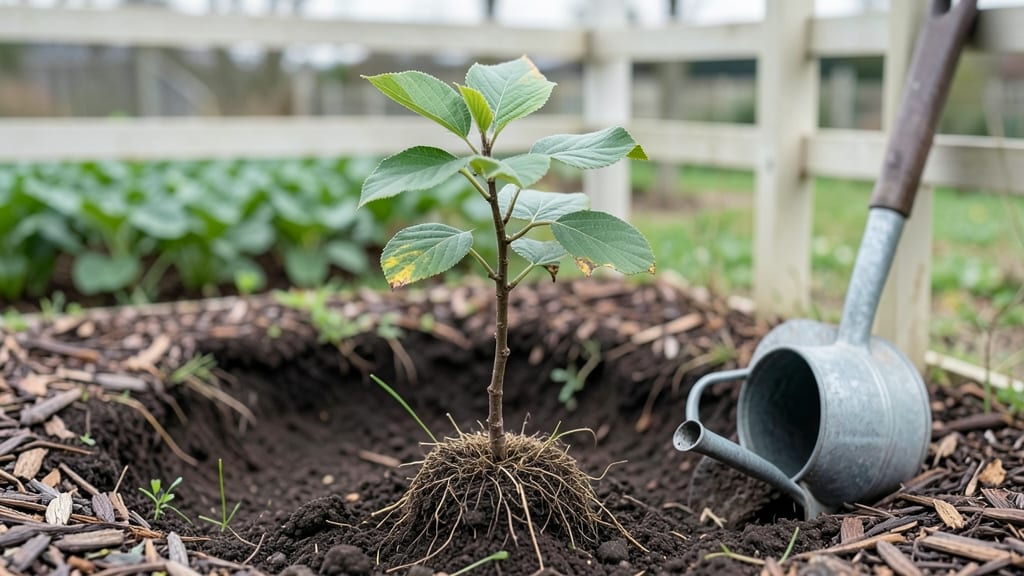
When you see people planting trees pictures, you’ll notice the pros use 8-12 feet spacing for mature growth, dig holes twice the width of the root ball, and plant at a 30-degree angle for stability. They also water immediately after planting to help roots establish.
These planting techniques aren’t just random—they’re designed to prevent future problems like root competition and poor airflow.
A garden spade helps dig clean edges, while the angled position keeps the trunk from bending as the tree grows. 🌳 I’ve seen firsthand how proper spacing reduces the need for pruning later, and the right angle ensures the tree stays upright even in windy conditions.
For beginners, the biggest mistake is planting too deep—this can suffocate the roots. Always check the root flare (where the roots meet the trunk) should sit just above ground level.
Mulching too thickly can also harm the tree, so stick to a 2-3 inch layer around the base, keeping it clear of the trunk.
💡 In This Article
- Optimal Tree Planting Spacing for Healthy Growth
- Step-by-Step Tree Planting Techniques with Visual Tips
Optimal tree planting spacing for healthy growth
Proper spacing between trees isn't just about fitting more saplings in your yard—it's about creating an ecosystem where each tree can thrive. Roots spread horizontally, often reaching 1.5 to 2 times the tree's mature height, which is why 8-12 feet spacing prevents underground competition.
For example, a 40-foot-tall oak needs roots extending 60-80 feet outward, so planting too close means roots will tangle and starve each other for water and nutrients.
The science behind spacing also involves canopy expansion. Trees need sunlight for photosynthesis, and proper spacing ensures each gets at least 6-8 hours of direct light daily.
Fast-growing species like willows or poplars need 15-20 feet spacing because they develop broad canopies quickly, while slow-growing conifers like pines can handle 6-10 feet spacing. Soil type matters too—sandy soils drain faster, so roots spread wider, while clay soils hold moisture longer, allowing closer spacing.
Climate plays a surprising role too. In dry climates, wider spacing (12-15 feet) reduces water competition, while in humid regions, trees can tolerate closer spacing (6-8 feet) because moisture is abundant.
I've noticed that in urban settings, where soil is often compacted, trees need even more space—sometimes 20 feet—because their root systems struggle to penetrate hardpan layers.
Here's a visual rule of thumb: Imagine a circle around each tree's mature canopy. That circle should overlap just slightly with neighbors—like 10-20% overlap—to allow airflow and reduce disease risk. For instance, a 30-foot maple should have a 30-foot radius of clear space around it.
This prevents fungal growth from damp, crowded conditions and ensures each tree gets proper airflow for strong wood development.
Long-term benefits of proper spacing include stronger trunks (reducing storm damage) and higher fruit yields (for fruit trees). I've seen poorly spaced orchards where trees produce 30% less fruit because of root competition.
The key is planning for the tree's mature size, not its current size—what looks cramped now will cause major headaches in 10 years.
One common mistake is using uniform spacing for all trees. Fast-growing shade trees need more room than slow-growing ornamentals. For example, a fast-growing silver maple needs 40 feet spacing, while a slow-growing Japanese maple can manage with 15 feet.
Always check the species tag or consult a local nursery—they'll have exact recommendations based on your climate zone.
The payoff comes in tree longevity. Properly spaced trees live 20-30% longer because they're not fighting for resources. I've seen 200-year-old oaks in old-growth forests where spacing was clearly optimized centuries ago. That's the power of getting it right from day one. 🌳