
Watering
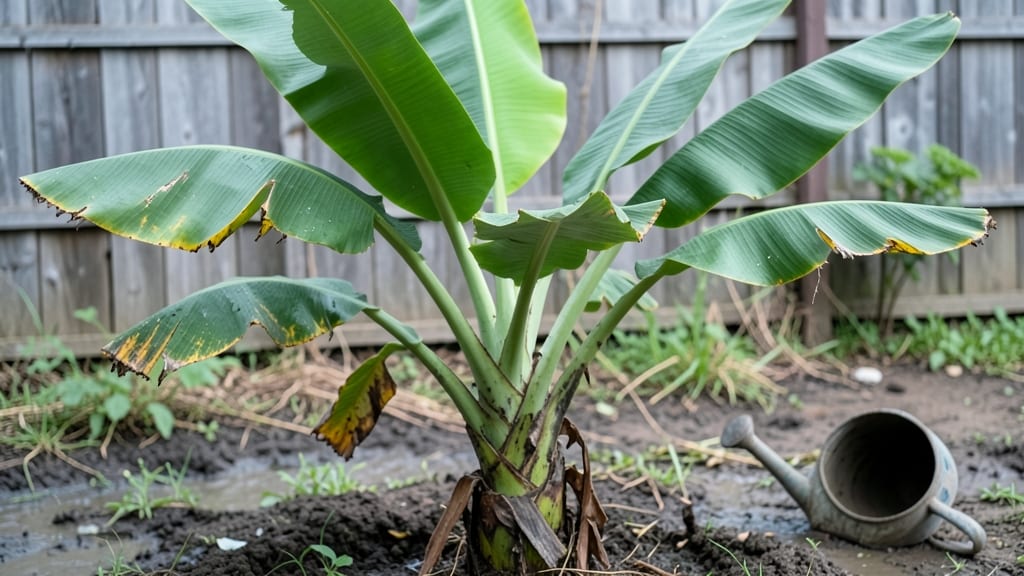
Your banana plant’s yellow leaves aren’t a death sentence—just a cry for help from soggy roots. 🌱 I’ve nursed back more than a few overwatered banana plants, and the key is acting fast before root rot takes over.
The good news? With the right moves, you can turn those sad, drooping fronds into vibrant green growth within just three days.
Overwatering happens when banana plants sit in soggy soil for too long, cutting off their roots from oxygen. You’ll spot the problem in yellowing leaves that start at the older fronds and spread inward, or a mushy stem when you gently squeeze it.
The soil might smell sour, and the pot could feel heavy from excess moisture. The fix starts with stopping all water until the soil dries out about 2 inches down.
Once you’ve halted the watering, repot the plant into fresh, well-draining soil mixed with perlite or sand to improve aeration. Trim any blackened or mushy roots with sterilized scissors, then place the plant in bright, indirect light—no direct sun until it recovers.
Within 72 hours, you should see the edges of the yellow leaves firming up as the roots start to heal.
To keep this from happening again, stick your finger in the soil before watering—if it’s still damp 2 inches down, wait another day. Banana plants thrive on consistent moisture, not soggy conditions, and a pot with drainage holes is non-negotiable.
With these adjustments, your plant will bounce back stronger than ever.
Root Causes Of Excess Moisture
Banana plants are tropical powerhouses, thriving in warm, humid conditions—but their roots are far more delicate than their lush foliage suggests. When watering habits go awry, the consequences can be swift and devastating.
Understanding why overwatering happens is the first step to saving your plant. Let’s dig into the science behind the soggy soil.
Banana plants hate standing water. Their native habitats in tropical regions feature well-draining volcanic soil, where excess water quickly drains away. When planted in containers or garden beds with compacted, clay-heavy, or non-porous soil, water pools around the roots instead of draining.
Over time, this creates an anaerobic (oxygen-deprived) environment, suffocating the roots and triggering:
- Root rot (caused by Pythium or Phytophthora fungi, which thrive in waterlogged conditions).
- Nutrient uptake failure—roots can’t absorb water or minerals when submerged, leading to yellowing leaves.
- Weak structural support—rotting roots compromise the plant’s ability to anchor itself, making it prone to toppling.
Pro Tip: 🌡️ Test your soil’s drainage by filling a container with water, then timing how long it takes to drain. If it takes more than 30 minutes, amend with perlite, coconut coir, or sand to improve aeration.
Banana plants are heavy drinkers—but that doesn’t mean they should be drowned. Common mistakes include:
- Watering on a rigid schedule (e.g., every Monday/Wednesday/Friday) without checking soil moisture. Banana plants need 1–2 inches of water per week, but this varies by climate, pot size, and season.
- Ignoring weather conditions—rainy days or high humidity reduce the need for supplemental watering.
- Using overhead sprinklers, which can lead to foliar diseases (like Sigatoka leaf spot) and over-saturate the soil.
When roots stay wet for prolonged periods, they deplete oxygen reserves faster than they can replenish them. This triggers ethylene gas production—a stress hormone in plants that accelerates leaf yellowing and tissue breakdown.
Banana plants in small or shallow pots dry out too quickly—but that doesn’t mean you should overcompensate by watering excessively. The problem? Small containers retain moisture like a sponge, with no room for excess water to escape.
Even if the topsoil feels dry, the roots below may still be waterlogged.
Signs your pot is too small:
- Roots circling the bottom or poking out of drainage holes.
- Soil staying damp for more than 2–3 days after watering.
- Yellowing leaves despite frequent watering.
Fix: 🔥 Upgrade to a pot at least 18–24 inches deep with drainage holes, and use a fast-draining mix (e.g., 60% potting soil, 20% perlite, 20% compost).
Banana plants are tropical, but cool temperatures (below 60°F/15°C) slow their metabolic rate, reducing their ability to transpire (release excess water through leaves). When combined with high humidity, this creates a double whammy:
- Reduced evaporation—moisture lingers in the soil longer.
- Fungal growth—pathogens like Erwinia (soft rot) or Rhizoctonia thrive in cool, wet conditions.
If your banana plant is in a greenhouse, shaded patio, or indoor space with low airflow, the risk of overwatering skyrockets. Actionable fix: 🌡️ Move the plant to a sunny, breezy spot (6–8 hours of direct sunlight) and use a fan to improve air circulation.
Now that you know why overwatering strikes, the next step is identifying the symptoms and acting fast to revive your banana plant. Stay tuned!
Quick Fixes for Drowning Roots
Overwatering your banana plant can feel like a slow-motion disaster—yellow leaves, mushy stems, and a sad, wilting crown. But don’t panic! With the right steps, you can revive your plant and prevent future waterlogging.
Below are targeted solutions based on the most common causes of overwatering, along with easy-to-follow fixes and prevention tips to keep your banana thriving.
If your banana plant’s leaves are turning yellow (especially at the base) due to soggy soil, act fast to save the roots.
Step 1: Stop Watering Immediately
🚰 Action: Pause all watering for 3–5 days to let the soil dry out. 💡 Pro Tip: If the soil feels damp just an inch below the surface, hold off. Banana plants prefer well-draining soil and can’t handle soggy conditions.
Step 2
Improve Soil Drainage 🔧 Action: If your plant is in a pot, check the drainage holes.
If they’re clogged or missing, add 2–3 more or repot into a container with better airflow. 🌿 For in-ground plants: Amend the soil with compost, perlite, or coarse sand to break up compacted clay and improve drainage.
Step 3: Prune Damaged Leaves
✂️ Action: Snip off yellow, brown, or mushy leaves at the base with sterilized scissors. This helps the plant focus energy on healthy growth. ⚠️ Warning: Avoid cutting into green, firm leaves—they’re still viable!
If your banana plant’s soil smells foul or the roots look black/mushy (signs of root rot), you’ll need a more aggressive fix.
Step 1: Remove the Plant & Inspect Roots
🌿 Action: Gently dig up the plant (or tip the pot) and rinses the roots in lukewarm water to remove excess soil. 🔍 Check for rot: Healthy roots are firm and white; rotten roots are soft, brown, or slimy.
Trim away the bad ones with clean pruners.
Step 2: Repot in Fresh, Dry Soil
🏺 Action: Use a clean pot (sterilized with bleach if reused) and fresh potting mix designed for tropical plants (or a mix of 60% peat moss, 20% perlite, 20% compost). 💡 Pro Tip: Add a 1-inch layer of gravel or broken pottery at the bottom for extra drainage.
Step 3: Adjust Watering Habits
💧 Action: Water only when the top 2–3 inches of soil are bone-dry. Stick your finger in—if it’s moist, wait! 🌡️ Bonus: Place a moisture meter in the pot to track soil conditions accurately.
Once your banana plant is back on track, keep these long-term fixes in mind:
🌧️ Choose the Right Watering Schedule
- Potted bananas: Water every 7–10 days (less in winter).
- In-ground bananas: Water deeply 2–3 times per week (adjust for rain).
- Signs you’re overwatering: Yellowing leaves, moldy soil, or a plant that feels heavy when lifted.
🏺 Upgrade Your Pot & Soil
- Pots: Use terracotta or fabric pots (they dry faster than plastic).
- Soil: Avoid heavy garden soil—opt for airy, organic mixes with perlite or coconut coir.
🌿 Monitor Humidity & Airflow
Banana plants love humidity (60–80%) but hate stagnant air.
- Increase airflow by placing a small fan nearby (on low).
- Mist leaves occasionally (but avoid wetting the crown).
📅 Seasonal Adjustments
- Spring/Summer: Water more frequently (but still check soil).
- Fall/Winter: Reduce watering—banana plants dormant slightly in cooler months.
Final Thought: Overwatering is reversible if you catch it early! With these fixes, your banana plant should bounce back in 3–7 days, and with a little care, it’ll reward you with bold new leaves and maybe even fruit. 🍌✨
Frequently asked questions
How often should I water my banana plant to avoid overwatering?
Water your banana plant when the top 2-3 inches of soil feel completely dry. In pots, this usually means every 7-10 days during warm months, while in-ground plants need deep watering 2-3 times per week. Always check soil moisture before watering—banana plants prefer consistent moisture, not soggy conditions.
What are the first signs my banana plant is overwatered?
Watch for yellowing leaves starting at the base, a mushy stem when gently squeezed, or roots that smell foul. The soil may feel heavy and stay damp for days. These are early warnings that roots are suffocating from too much moisture.
Can I save a banana plant with black, mushy roots?
Yes! Remove the plant from its pot, rinse the roots, and trim away all black/mushy sections with sterilized scissors. Repot in fresh, well-draining soil with perlite or sand and hold off watering for 3-5 days to let roots recover. With proper care, your plant can regrow healthy roots within 2-3 weeks.
Why does my banana plant need drainage holes if I water it carefully?
Drainage holes are essential because banana roots need oxygen—even careful watering can leave excess moisture trapped in containers. Without holes, water pools at the bottom, creating anaerobic conditions that cause rot. If your pot lacks holes, upgrade to one with them or use a fabric grow bag instead.
Will my banana plant recover if I stop watering immediately?
Stopping watering is the first step, but recovery depends on how severe the damage is. If roots are still firm (not mushy), your plant can bounce back in 3-7 days with proper care. For advanced rot, you may need to repot and prune damaged roots. Always monitor soil moisture afterward to prevent recurrence.