
Watering
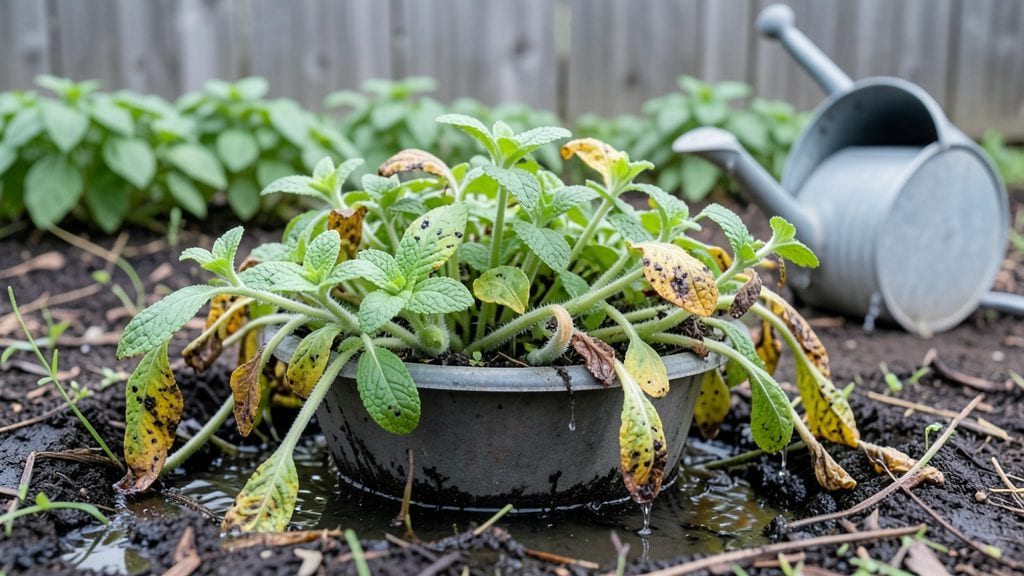
An overwatered mint plant can go from lush and fragrant to a sad, soggy mess in days. 🌱 I’ve seen it happen more times than I’d like to admit—especially when mint’s fast growth tricks you into thinking it’s always thirsty.
The good news? With the right adjustments, you can drain excess moisture and revive your plant in just 24 hours.
Mint thrives on consistency, but its roots can’t handle soggy soil for long. Yellowing leaves, mushy stems, and that dreaded musty smell mean root rot is setting in. The fix starts with stopping water immediately, then improving drainage—whether that’s repotting into fresh soil or adding perlite to existing containers.
A quick trim of affected foliage helps redirect energy to healthy growth.
Within a day, you’ll notice the plant perking up as excess water drains away. Keep it in bright, indirect light and water only when the top inch of soil feels dry. Mint’s resilient, but future care means letting the soil dry slightly between waterings—no more “just in case” top-ups.
This method works for potted mint, window garden setups, or even overgrown plants in the ground.
Once revived, your mint will bounce back with its signature peppery scent and rapid growth. The key is monitoring soil moisture like a pro—finger-testing before watering saves more plants than any rescue technique. Trust me, your mint (and your future self) will thank you.
Root Causes Of Mint Overwatering
Mint plants may look lush and vibrant, but they’re surprisingly delicate when it comes to watering. When your mint plant gets too much moisture, it’s rarely an accident—it’s usually the result of a few common gardening missteps.
Understanding these causes helps you adjust your care routine before the problem worsens. Let’s break down the science behind why mint plants drown.
Mint thrives in well-draining soil, but many gardeners unknowingly create a soggy environment by using the wrong potting mix. Heavy, clay-based soils or mixes with high organic matter (like peat or compost) retain too much water, suffocating the roots.
Mint’s shallow root system needs air pockets to breathe—when these fill with water, roots asphyxiate, leading to root rot and yellowing leaves.
Why it happens:
- Compacted soil: Tight, clay-heavy soils don’t allow excess water to escape, trapping moisture around roots.
- Lack of perlite/sand: Amendments like perlite or coarse sand improve aeration, but skipping them turns soil into a waterlogged sponge.
- Over-potting with organic matter: Too much compost or coconut coir breaks down slowly, holding moisture longer than mint’s fast-growing roots can handle.
Actionable fix: Use a 50/50 mix of potting soil and perlite/sand. For containers, ensure drainage holes are present—and always use a cache pot (a tray under the hole) to catch excess water.
Mint plants hate inconsistency. Some gardeners swing between drought stress and overwatering because they don’t account for the plant’s variable thirst. Factors like humidity, temperature, and pot size change how quickly mint drinks water.
If you water on a rigid schedule (e.g., every 2 days) without checking soil moisture, you risk drowning the roots.
Why it happens:
- Ignoring the "finger test": Sticking your finger 1 inch into the soil tells you if it’s dry (time to water) or still damp (wait 1–2 more days).
- Overcompensating after wilting: If mint wilts from underwatering, some gardeners overwater to "revive" it, leading to root suffocation.
- Seasonal neglect: Cool, rainy weather slows evaporation, but many forget to reduce watering, keeping soil perpetually soggy.
Actionable fix: Water mint when the top 1–2 inches of soil feel dry. In hot weather, this might be daily; in winter, every 5–7 days. Use a moisture meter for precision.
Not all pots are created equal—and some are downright deadly for mint. Small containers dry out faster, but terracotta pots (while breathable) can also trap moisture if overwatered. Meanwhile, large pots hold more water, keeping soil damp longer than mint’s roots can process.
Why it happens:
- No drainage holes: Water pools at the bottom, creating anaerobic (oxygen-free) conditions where roots rot.
- Overpotting: A 12-inch pot for a small mint plant means the roots can’t keep up with the soil’s moisture retention.
- Plastic pots without breathability: Unlike terracotta, plastic doesn’t wick away excess moisture, turning the pot into a water trap.
Actionable fix:
- Choose medium-sized pots (6–8 inches) with drainage holes.
- Opt for fabric grow bags or terracotta for better airflow.
- Repot if roots are circling the container—mint needs room to grow out as much as down.
Mint doesn’t just drown from your watering mistakes—humidity, light, and temperature play a huge role in how quickly soil dries. High humidity (like in bathrooms or kitchens) slows evaporation, while low light reduces the plant’s ability to transpire (release water vapor).
The result? Soil stays wet longer than it should.
Why it happens:
- High humidity + poor airflow: Mint in a closed terrarium or humid room retains moisture longer, promoting fungal growth.
- Low-light placement: Without enough sunlight, mint grows slowly and can’t "drink" excess water fast enough.
- Cold temperatures: Chilly weather reduces root activity, making mint less efficient at processing moisture.
Actionable fix:
- Move mint to a bright, indirect spot (e.g., near a window but not in direct sun).
- Use a small fan on low setting to improve airflow in humid rooms.
- Avoid placing pots on trays or saucers without drainage—water should exit, not pool.
Pro Tip: 💡 "Mint is a thirsty but finicky plant—think of it like a coffee lover. Too much water, and it gets jittery (root rot); too little, and it crashes (wilting). Find that sweet spot by observing, not guessing!"
Revive Your Mint Plant Fast
An overwatered mint plant can feel like a lost cause—but with the right steps, you can nurse it back to health in just 24 hours. The key is acting quickly to prevent root rot and giving your plant the breathing room it needs.
Below, we’ll break down the fixes based on the most common causes, along with easy prevention tips to keep your mint thriving.
If your mint’s leaves are turning yellow or mushy, it’s a clear sign of overwatering. The roots are drowning, and the plant can’t absorb nutrients properly.
Step 1: Stop Watering Immediately
🔥 Why? Mint plants hate soggy soil. Cutting off water lets the roots dry out and recover. 👨🍳 How?
- Pause all watering for 24 hours—no exceptions.
- If the soil feels damp or smells funky, wait even longer (up to 48 hours).
Step 2: Check the Soil Drainage
🥘 Why? Poor drainage traps excess moisture, worsening the problem. 🔪 How?
- Gently squeeze a handful of soil—if water drips out, it’s too wet.
- If your pot lacks drainage holes, transfer your mint to a new container with holes ASAP.
- Pro Tip: Mix in perlite or sand (10-20%) to improve airflow in the soil.
Step 3: Trim Damaged Foliage
⏰ Why? Dead leaves sap energy from healthy growth. 🌿 How?
- Snip off yellow, brown, or mushy leaves with clean scissors.
- Avoid cutting into green stems—focus only on the worst-affected leaves.
Step 4: Revive with Fresh Air
🌡️ Why? Good airflow speeds up evaporation and prevents fungal growth. 💡 How?
- Move your mint to a bright, indirect spot (like a windowsill or under a grow light).
- If humidity is high, use a small fan on low setting for 10-15 minutes daily to dry the leaves.
If your mint’s stems feel soft or black, root rot may have set in. This is serious—but not hopeless!
Step 1: Remove the Plant from the Pot
🔥 Why? You need to inspect (and possibly trim) the roots. 👨🍳 How?
- Gently tip the pot and slide the plant out.
- Shake off excess soil to expose the roots.
Step 2: Trim Rotten Roots
🔪 Why? Healthy roots are white or light tan; black, mushy roots must go. 🌿 How?
- Use sterilized scissors to snip away all blackened roots.
- Keep only firm, white roots—these can regrow.
Step 3: Disinfect the Soil (If Needed)
⏰ Why? Fungal spores linger in old soil. 💡 How?
- Option 1 (Quick Fix): Repot in fresh, well-draining potting mix (avoid garden soil—it’s too dense).
- Option 2 (Deep Clean): Sterilize the old soil by baking it at 200°F (93°C) for 30 minutes to kill pathogens.
Step 4: Repot with Better Conditions
🌡️ Why? A fresh start prevents reinfection. 💡 How?
- Choose a terracotta pot (breathable material) or a container with drainage holes.
- Use a mix of:
- 60% potting soil
- 20% perlite or vermiculite
- 20% coconut coir or sand
- Water lightly only after 2-3 days to avoid shocking the roots.
Once your mint recovers, keep these habits to avoid future soggy soil disasters.
💡 The Finger Test (Best Method)
- Stick your finger 1 inch into the soil—if it’s dry, water; if damp, wait.
- Pro Tip: Mint prefers slightly dry soil between waterings.
✨ Adjust Your Watering Schedule
- Containers: Water every 5-7 days (less in winter).
- Garden Beds: Water deeply 2-3 times per week (depending on climate).
- Rainy Days? Skip watering—mint can handle light rain.
🎯 Upgrade Your Pot Setup
- Drainage is non-negotiable. No holes? Drill them or switch pots.
- Self-watering pots? Use sparingly—mint hates sitting in water.
- Mulch helps! Add a 1-inch layer of straw or gravel to retain moisture without drowning roots.
🌿 Monitor for Signs of Stress
- Wilting? Could mean underwatering or overwatering—check the soil!
- Pests? Overwatering attracts fungus gnats—use yellow sticky traps if needed.
With these fixes, your mint should bounce back in 24-48 hours. Keep an eye on it, adjust as needed, and soon you’ll be harvesting fresh, vibrant leaves for your favorite teas and cocktails! 🍹✨
Frequently asked questions
Why does my mint plant get overwatered so easily?
Mint has shallow roots that need quick-draining soil, but many gardeners use heavy mixes or small pots without drainage. The plant’s fast growth tricks you into thinking it’s always thirsty, but soggy soil suffocates roots faster than you’d expect. Check for yellowing leaves or mushy stems—they’re classic overwatering signs.
Can I save mint with black, mushy stems?
Yes, but act fast! Trim away all blackened stems and roots, then repot in fresh, well-draining soil. Use a mix of potting soil and perlite (50/50) and avoid watering for 3 days. Place it in bright, indirect light to help it recover within 1-2 weeks.
How often should I water mint in containers vs. garden beds?
Containers dry faster—water every 5-7 days when the top inch of soil feels dry. Garden beds hold moisture longer, so water deeply 2-3 times per week (adjust for rain). Always check soil moisture first—mint prefers slightly dry conditions over soggy soil.
What’s the best pot material for mint?
Terracotta pots are ideal—they breathe and wick away excess moisture. Avoid plastic without drainage holes, as it traps water. For extra airflow, try fabric grow bags. Just ensure all containers have holes to prevent root rot.
Will overwatered mint come back after I fix the problem?
Mint is resilient—once you stop watering and improve drainage, it typically recovers within 24-48 hours. Trim damaged leaves, repot if needed, and keep it in bright light. Within days, you’ll see fresh green growth.