Watering
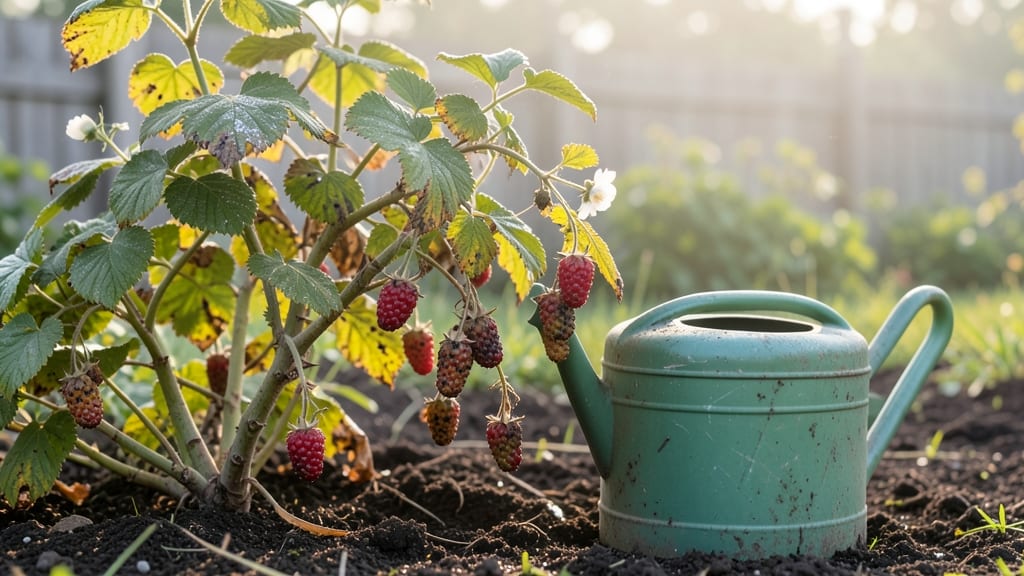
When your raspberry plant’s leaves turn yellow and the stems wilt like a soggy dishrag, it’s almost always overwatering. 🌱 I’ve seen this happen more than I’d like to admit—especially after a week of rain when the soil stays drenched for days.
The good news? Raspberries bounce back faster than you’d expect when you adjust watering and improve drainage.
First, stop watering until the top 2-3 inches of soil feel dry to the touch. Raspberries hate soggy roots, and once they’re waterlogged, they suffocate. If your container doesn’t have drainage holes, transfer the plant to a pot with them ASAP—this alone can save a struggling plant.
For in-ground beds, consider amending the soil with compost to help it drain better.
Within a week, you’ll notice new growth pushing through the wilted stems. The leaves will firm up, turn a healthy dark green, and the plant will start producing new canes.
Mulch around the base with straw or wood chips to keep moisture levels steady—this prevents future waterlogging while locking in nutrients.
This method works for both backyard patches and container-grown plants. The key is consistency: check soil moisture before watering, and never let the roots sit in standing water. Once you’ve got the rhythm, your raspberries will thrive instead of struggling.
Root Issues Behind Overwatering
Overwatering your raspberry plants might seem like a harmless act of generosity, but it can quickly turn into a recipe for disaster. Let’s break down the science behind why too much water stunts your plants’ growth and causes those dreaded wilted stems.
Raspberry plants thrive in well-draining soil, but when water pools around their roots, it creates an anaerobic environment—meaning oxygen can’t reach the roots.
Without oxygen, roots suffocate, leading to: - Root rot (caused by fungi like Phytophthora or bacteria like Pseudomonas), which breaks down root tissue. - Nutrient uptake failure, since roots can’t absorb water or minerals efficiently in saturated soil. - Weakened stems that wilt as the plant struggles to transport water and nutrients.
Why it happens:
- Clay-heavy or compacted soil holds water like a sponge, never drying out.
- Lack of organic matter (like compost) reduces soil porosity, trapping excess moisture.
- Improper planting depth—burying the crown too deep suffocates roots and prevents airflow.
Actionable fix: Test your soil’s drainage by digging a 6-inch hole, filling it with water, and timing how long it takes to drain. If it takes more than 4 hours, amend the soil with perlite, sand, or compost.
Raspberries are drought-tolerant once established, but many gardeners water them daily, thinking more is better.
This leads to: - Salt buildup from fertilizers dissolving in excess water, creating a toxic environment. - Fungal infections (like Botrytis cinerea), which flourish in damp, stagnant conditions. - Root suffocation, as constant moisture prevents roots from developing properly.
Why it happens:
- Automatic sprinklers or hose timers run on schedules, not soil conditions.
- Small, frequent waterings keep the topsoil soggy instead of encouraging deep root growth.
- Ignoring weather patterns—rainy days followed by extra watering double the problem.
Actionable fix: Water deeply 1–2 times per week (depending on climate) and always in the morning. Use a soil moisture meter to check before watering—if the top 2 inches are dry, it’s time.
Potted raspberry plants are especially vulnerable because containers lack the drainage and space of garden beds.
Problems include: - No escape for excess water—containers fill up quickly, drowning roots. - Limited root zone—roots fill the pot fast, leaving no room for oxygen circulation. - Heat stress—waterlogged soil in pots heats up faster, accelerating rot.
Why it happens:
- Small pots (under 10 gallons) restrict root growth and drainage.
- No drainage holes trap water, turning the container into a swamp.
- Plastic pots retain moisture longer than fabric or terracotta.
Actionable fix: Upgrade to large, breathable containers with drainage holes and a cactus/succulent mix blended with perlite. Elevate pots on feet or saucers to prevent waterlogging.
Heavy foot traffic, tilling, or even weeding can compress soil around raspberry roots, reducing airflow and trapping moisture.
This leads to: - Poor aeration, which slows root respiration. - Water pooling in compacted layers, mimicking a soggy foundation. - Weakened root structure, making plants more susceptible to disease.
Why it happens:
- Walking on garden beds flattens soil particles, sealing pores.
- Over-tilling destroys soil structure, creating hardpan layers.
- Using heavy tools near plants compresses the root zone.
Actionable fix: Avoid stepping on beds and use broadforks (not trowels) to loosen soil without compacting it. Top-dress with mulch (straw or wood chips) to improve aeration and reduce evaporation.
Pro Tip: 🌡️ Monitor soil temperature—cooler soils (below 50°F) drain slower, increasing waterlogging risks. Warm soil (60–75°F) absorbs and releases moisture better.
Revive Your Plant in 3 Steps
An overwatered raspberry plant can feel like a lost cause, but with the right adjustments, you can nurse it back to health—often faster than you think! The key is acting quickly to correct drainage, reduce moisture stress, and restore balance.
Below are practical, step-by-step solutions tailored to the most common causes of soggy soil and wilting stems, plus tips to keep your berries thriving long-term.
Cause: Excessive moisture suffocates roots, cutting off oxygen and inviting rot. Fix: Pause watering entirely until the soil dries out.
- 🔥 Check the soil first: Stick your finger 1–2 inches into the soil. If it’s damp or cold, hold off on watering.
Raspberry plants prefer moderately moist (not soggy) soil—think of a wrung-out sponge, not a swamp. - 👨🍳 Redirect water away: If your plant sits in a low spot or has poor drainage, move it temporarily to a raised bed, container, or area with better airflow.
Use a drip tray or saucer to catch excess water if potted. - ⏰ Time it right: Water only in the early morning (before 10 AM) to allow foliage to dry by nightfall, reducing fungal risks.
💡 Pro Tip: If your raspberries are in containers, ensure pots have drainage holes—no exceptions! Add a layer of gravel or perlite at the bottom to improve airflow.
Cause: Compacted or clay-heavy soil traps water, while poor container setups create root prisons. Fix: Amend the soil and optimize the growing environment.
| Problem | Solution | Tools/Materials |
|---|---|---|
| Heavy clay soil | Mix in compost, sand, or coconut coir to loosen texture. Aim for 20–30% amendment. | Garden fork, compost, coarse sand |
| No drainage holes | Drill holes in pots or repot into terracotta or fabric grow bags. | Drill, new pot, gravel |
| Waterlogged bed | Create raised beds or mound soil to elevate roots. Add organic mulch (straw or wood chips) to absorb excess moisture. | Shovel, mulch, landscape fabric (optional) |
| Root-bound plants | Repot into a larger container with fresh, well-draining potting mix. | New pot, potting soil, rooting hormone (if needed) |
✨ Prevention Hack: Test your soil’s drainage with a simple DIY test:
- Fill a jar halfway with soil.
- Add water and cover with a lid.
- Shake vigorously, then let sit for 2 hours.
- If water remains at the top, your soil is too dense—amend it!
Cause: Overwatering weakens stems, leading to yellowing leaves, mold, or blackened canes. Fix: Prune strategically to redirect energy to healthy growth.
- 🔪 Prune yellow/mushy leaves: Use sterilized scissors to snip off: - Yellow or blackened leaves (signs of rot or disease). - Soft, mushy stems (gently squeeze—if they ooze or smell foul, remove them). - Overly leggy canes (thin to 3–5 strong canes per plant to improve airflow). - 🍳 Fertilize lightly: Wait 1–2 weeks after pruning, then feed with a balanced, low-nitrogen fertilizer (e.g., 10-10-10) to rebuild strength.
Avoid high-nitrogen blends—they encourage leafy (not fruity) growth. - 🌿 Support recovery: Stake weak canes with soft ties to prevent snapping as they regrow.
💡 Pro Tip: If your plant is severely rotted, consider propagating healthy canes as insurance. Cut a 6-inch stem from a green (not woody) part, dip in rooting hormone, and plant in moist perlite until roots form.
- 📊 Monitor soil moisture: Use a moisture meter or the "squeeze test" (gently compress soil—it should crumble, not stay clumpy).
- 🌡️ Adjust watering by season: Raspberries need less water in winter (unless in a mild climate) and more during fruit set (late spring).
- 🎯 Choose the right spot: Plant in full sun (6+ hours/day) with slightly acidic soil (pH 5.5–6.5) and good airflow to deter fungal issues.
- 🍎 Mulch wisely: Use straw or pine needles (not thick wood chips) to retain moisture without suffocating roots.
Remember: Patience is key—reviving an overwatered raspberry plant can take 2–4 weeks, but with these steps, your canes will bounce back stronger than ever. 🌱💪
Frequently asked questions
How do I know if my raspberry plant is overwatered instead of underwatered?
Check the soil and leaves: Overwatered raspberries have yellowing leaves that feel mushy, stems that wilt even when soil is damp, and roots that smell foul or look brown and slimy. Underwatered plants have crispy, dry edges on leaves and soil that pulls away from pot sides. Stick your finger 2 inches deep—if it's soggy, you're overwatering.
Can I save a raspberry plant with blackened canes from overwatering?
Yes! First, cut off all blackened or mushy canes with sterilized scissors. Then, repot in fresh, well-draining soil and hold off on watering until the top 3 inches feel dry. Healthy canes will sprout from the base within 2-3 weeks. For severe cases, propagate healthy stems in water or perlite to grow new plants.
Why does my potted raspberry plant keep getting waterlogged even with drainage holes?
Containers can still trap water if the soil mix is too dense or the pot lacks proper aeration. Switch to a 50/50 blend of potting soil and perlite, and consider upgrading to a terracotta pot (which dries faster than plastic). Elevate pots on feet or a saucer to prevent water pooling at the bottom.
Will overwatered raspberries still produce fruit this season?
New growth and fruit set depend on how quickly you correct the issue. If you act within 1-2 weeks, the plant may recover enough to produce some berries. However, severely damaged canes won't fruit. Focus on reviving the roots first—healthy foliage comes before fruit production. Mulch with straw to stabilize moisture levels moving forward.
How often should I water raspberries after fixing overwatering?
Water deeply 1-2 times per week (depending on climate), aiming for 1-1.5 inches of water per session. Always water at the base, not overhead, and check soil moisture before watering—if the top 2 inches are dry, it's time. In summer heat, you may need daily watering, but never let soil stay soggy longer than 24 hours.