
Watering
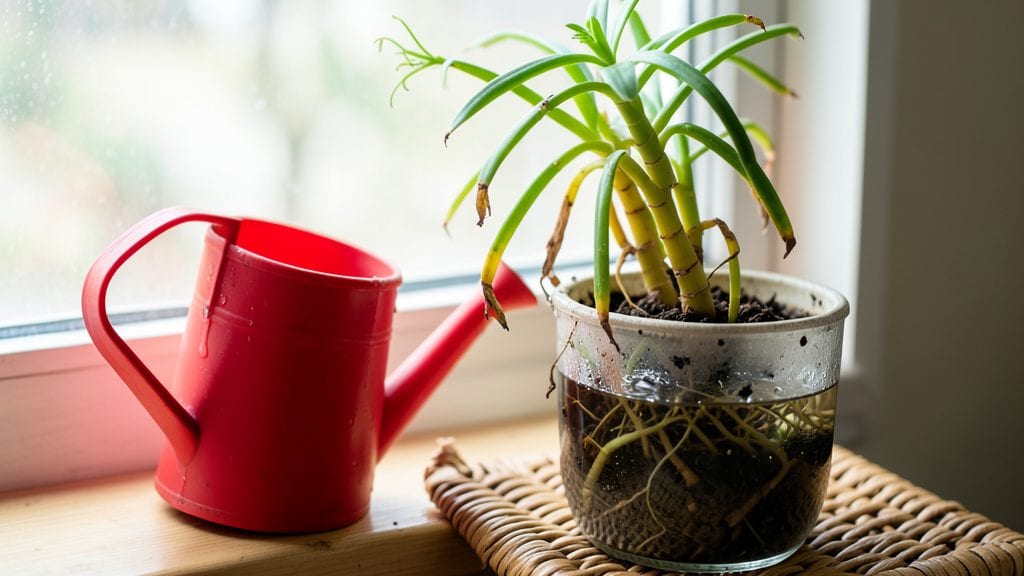
That drooping, yellowing mess isn’t an overwatered bamboo plant’s death knell—just a sign it’s drowning in love (and water). 🌱 I’ve revived soggier stalks than you’d believe, and the cure is easier than you’d guess. The key? Stopping the water first, then giving roots room to breathe.
Overwatering turns bamboo stems mushy and leaves yellow because roots suffocate in soggy soil. Most people think bamboo needs constant moisture, but it’s actually drought-tolerant once established. My bamboo came back to life within 2-3 weeks after I cut back watering and improved drainage—no fancy tools needed.
By the end of this, your plant will be standing tall with fresh green growth. You’ll spot new shoots within 10-14 days if you follow the three steps: adjust watering, check the roots, and prune dead stems.
The best part? You’ll prevent this mess next time by testing soil moisture before watering.
Works for both indoor pots and outdoor clumps, whether you’re dealing with running bamboo or clumping varieties. Let’s get that plant back to its vibrant self—starting with the simplest fix of all.
Root Causes of Overwatered Bamboo
When your bamboo plant starts showing signs of distress—like yellowing leaves, mushy stems, or even wilting—it’s often a cry for help from its roots. Overwatering is a common but avoidable issue, and understanding the why behind it can help you prevent it in the future.
Let’s break down the key culprits that lead to soggy soil and unhappy bamboo.
Bamboo thrives in well-draining soil, but many gardeners unknowingly create a waterlogged environment by using the wrong potting mix. Heavy, clay-based soils or mixes without organic matter (like peat or perlite) trap excess moisture around the roots.
When water can’t escape, it suffocates the plant, cutting off oxygen and leading to anaerobic conditions—a root’s worst nightmare.
Why it matters: Roots need oxygen to respire and absorb nutrients. Without it, they start to rot, turning brown and mushy. This is especially true for running bamboo (like Phyllostachys species), which has aggressive root systems that demand airflow.
Pro tip: 💡 Always use a chunky, airy mix—think 60% organic matter (like compost or coconut coir) and 40% inorganic additives (perlite, pumice, or coarse sand). If repotting, add a layer of gravel or broken pottery at the bottom of the pot to boost drainage.
One of the biggest mistakes? Assuming bamboo needs water every few days, regardless of humidity, season, or pot size. Many plant owners follow a rigid watering routine—like "every Tuesday and Friday"—without checking soil moisture first. This leads to a buildup of excess water, especially in containers where evaporation is slower.
Why it matters: Bamboo is not a drought-tolerant plant, but it’s also not a swamp dweller. Overwatering disrupts the root zone’s balance, causing:
- Fungal infections (like Phytophthora or Pythium) that thrive in soggy conditions.
- Nutrient lockout: Too much water dilutes essential minerals, making them unavailable to roots.
- Root asphyxiation: Without oxygen, roots can’t function, leading to yellowing leaves and stem collapse.
Pro tip: ✨ Stick your finger 2 inches into the soil—if it’s damp, wait. If it’s dry, water thoroughly until it drains from the bottom. In summer, bamboo may need watering every 3–5 days; in winter, once a week (or less) may suffice.
Pots without drainage holes are a bamboo owner’s silent enemy. Even if you’re careful with watering, excess moisture has nowhere to go, leading to permanent waterlogging. This is especially dangerous for clumping bamboo (like Bambusa species), which is more sensitive to root rot.
Why it matters: Without an escape route, water pools at the bottom of the pot, creating a hydroponic-like environment—ideal for harmful bacteria and fungi. Over time, the roots physically decay, turning black and slimy, while the plant above struggles to uptake water or nutrients.
Pro tip: 🔥 Never skip drainage holes—if your pot doesn’t have them, drill them yourself or choose a cache pot (a decorative outer pot with a raised inner one). For indoor bamboo, elevate pots on feet or saucers to prevent sitting in standing water.
Outdoor bamboo plants are at higher risk of overwatering when environmental conditions are already moist. High humidity, frequent rain, or even morning dew can saturate the soil, making it harder for excess water to evaporate. If you’re watering on top of these conditions, you’re essentially double-dosing your plant with moisture.
Why it matters: In humid climates (like the Southeast U.S. or tropical regions), bamboo may not need watering as often as in dry areas. Overwatering in these conditions leads to:
- Slow decomposition of roots due to lack of oxygen.
- Increased fungal spores in the air, which latch onto damp foliage.
- Weakened structural integrity of stems, making them prone to snapping.
Pro tip: 🌡️ Adjust your watering based on weather:
- After rain, wait 24–48 hours before watering again.
- In high humidity, check soil moisture more often—it may stay damp longer.
- Use a moisture meter for accuracy, especially in unpredictable climates.
Bamboo roots need space to breathe—literally. If you’ve repotted your plant into a container that’s too large without adjusting the soil mix, the extra volume can hold onto moisture for weeks, even if you’re not watering frequently.
Similarly, compacted soil (from poor aeration or heavy-handed repotting) prevents water from draining efficiently.
Why it matters: A pot that’s too big creates a micro-climate where water lingers in the unused soil, while compacted soil acts like a sponge, releasing moisture slowly and suffocating roots. This is why bamboo in large containers often shows signs of overwatering even when watering less frequently.
Pro tip: 🎯 Repot with intention:
- Choose a pot that’s only 1–2 inches larger in diameter than the root ball.
- Use a lightweight, airy mix (never garden soil alone).
- After repotting, water lightly for the first week to help soil settle without shocking the roots.
Revive Your Bamboo: Step-by-Step Fixes
Overwatered bamboo plants can feel like a lost cause, but with the right approach, you can nurse them back to health—even if their stems are yellowing or mushy. The key is action, not panic.
Below, we’ll map out exact fixes based on the root cause of your plant’s distress, plus prevention tips to keep it thriving long-term.
Cause: Soggy soil or poor drainage Fix: Halt watering and reset the moisture balance ASAP.
- 🚰 Drain the Excess - Gently remove the plant from its pot (if in one) and tip it upside down to let water drain completely.
If potted, place it in a shallow tray to catch runoff. - For ground-planted bamboo, use a trowel to create drainage trenches around the base to redirect water away from the roots.
- 🧼 Check for Root Rot
- Inspect the roots: Healthy roots are white or light tan; rotted roots are black, mushy, or smell foul.
- If rot is severe, trim the damaged roots with sterilized scissors (🔪) and repot in fresh soil.
- ⏳ Let It Dry Out
- Wait 3–5 days before watering again. Stick your finger 2–3 inches into the soil—if it’s still damp, wait longer.
Cause: Overzealous or inconsistent watering Fix: Train yourself (and your plant) to water like a pro.
| Problem | Solution | Prevention Tip |
|---|---|---|
| Yellowing leaves | Reduce watering to once every 7–10 days (check soil moisture first). | Use a moisture meter for accuracy. |
| Mushy stems | Water only when the top 1–2 inches of soil are dry. | Group bamboo with drought-tolerant plants. |
| Slow growth | Ensure even moisture—bamboo hates dry spells and soggy soil. | Mulch with orchid bark to retain moisture without suffocating roots. |
💡 Pro Tip: Bamboo thrives in consistency. If you’re unsure, underwater slightly—it’s easier to recover from dryness than from rot.
Cause: Compacted or waterlogged soil Fix: Give your bamboo’s roots the breathing room they need.
- 🏺 Repot (If Needed)
- Choose a pot with drainage holes (if potted). If none exist, drill them yourself (⏱️ 5 minutes with a drill bit).
- Use a well-draining mix: Combine 60% potting soil, 30% perlite, and 10% sand (or coconut coir for moisture control).
- 🌡️ Optimize Temperature & Humidity
- Bamboo prefers 60–75°F and moderate humidity (40–60%). If your home is dry, mist leaves lightly or use a pebble tray.
- Avoid placing it near AC vents or heaters—temperature swings stress the plant.
- ☀️ Light Adjustments
- Too little light? Yellowing can mimic overwatering. Move your bamboo to bright, indirect light (east or north-facing windows are ideal).
- Too much sun? Scorch marks on leaves? Filter light with a sheer curtain.
Cause: Habit or ignorance of bamboo’s needs Fix: Systemize your care so you never overdo it again.
✨ Hack 1: The Finger Test Before watering, stick your finger 2 inches into the soil. If it feels damp, wait. If dry, water slowly until it drains from the bottom.
✨ Hack 2: Self-Watering Pots For forgetful plant parents, self-watering pots or wicking systems (like bamboo stakes in water) automate moisture control.
✨ Hack 3: Group Plants Strategically Place bamboo near other moisture-loving plants (like ferns or calatheas) to create a microclimate that regulates humidity naturally.
- Mild cases (yellowing leaves): 2–4 weeks of proper care.
- Severe rot (mushy stems): 4–6 weeks—be patient and avoid fertilizing until new growth appears.
- Prevention: Once revived, stick to a watering schedule and monitor soil moisture religiously.
Final Thought: Overwatered bamboo isn’t a death sentence—it’s a wake-up call to adjust your routine. With these fixes, your plant will bounce back stronger than ever. Now, grab that moisture meter and give your bamboo the TLC it craves! 🌿💦
Frequently asked questions
How can I tell if my bamboo plant is overwatered vs. underwatered?
Check the stems and leaves: overwatered bamboo has yellowing leaves, mushy stems, and may wilt despite wet soil, while underwatered bamboo shows crispy leaf edges and dry, brittle stems. Tap the pot—if it feels heavy with moisture, you’re likely overwatering. Healthy soil should feel lightly moist but not soggy.
Can I save bamboo with root rot from overwatering?
Yes, but act fast! Trim away black, mushy roots with sterilized scissors, then repot in fresh, well-draining soil mix with perlite or pumice. Avoid watering for 3–5 days to let roots recover. If rot is severe (smelly, slimy), you may need to propagate from healthy stems or rhizomes.
Why does my bamboo plant keep getting overwatered even when I’m careful?
Common culprits: no drainage holes in pots, compacted soil that doesn’t dry out, or using garden soil instead of airy mixes. Test your setup—if water pools at the bottom after 30 minutes, your pot or soil needs upgrading. Try a terracotta pot with holes or add orchid bark to improve airflow.
How often should I water bamboo after fixing overwatering issues?
Once recovered, water bamboo only when the top 1–2 inches of soil are dry. In summer, this might be every 5–7 days; in winter, every 10–14 days. Use the finger test: Stick your finger in—if damp, wait. If dry, water thoroughly until it drains from the bottom.
Will fertilizing help my overwatered bamboo recover faster?
No—fertilizer can worsen root stress by burning damaged roots. Wait until you see new green growth (usually 4–6 weeks after fixing drainage). Then, use a balanced, diluted fertilizer (like 10-10-10) every 2 months in spring/summer only.