
Watering
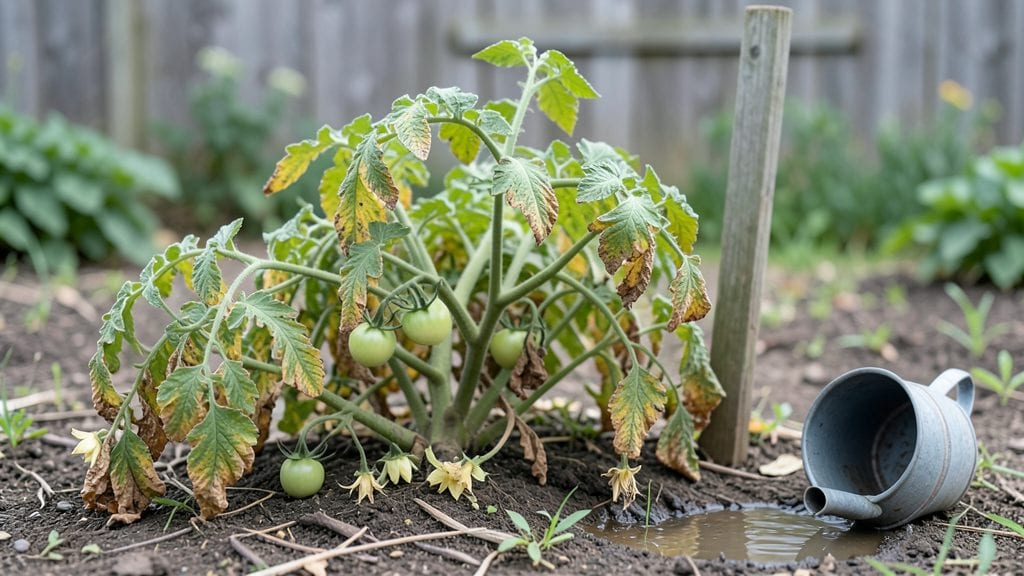
Check out these over watered tomato plant pictures—that sad, droopy look is your plant’s SOS, but don’t panic! 🌱 I’ve nursed plants from this state back to vigorous producers, and the key is spotting the warning signs early.
Yellowing leaves, especially the older ones, are the first red flags. Then comes the musty smell from the soil, and worst of all, roots that look mushy or black instead of firm and white.
These are classic signs of root rot, where too much water cuts off oxygen, and your plant starts to drown. The before pictures in this guide will show you exactly what to watch for.
Here’s the game-changer: stop watering immediately and let the soil dry out completely before watering again. Improve drainage by adding compost or perlite to the soil, and prune any black or wilted stems to redirect energy to healthy growth.
Within days, you’ll see the plant perk up—new leaves, firmer stems, and a comeback that’s nothing short of shocking.
Once you’ve got the watering schedule right—deep soaks every 1-2 weeks instead of daily sprinkles—your tomatoes will thrive. The after pictures will show you how a little patience and the right adjustments can turn a struggling plant into a productive one. Let’s get those plants back on track!
Root Causes Of Overwatering
Overwatering your tomato plants might seem like a harmless gardening mistake—but it’s actually a silent killer for these thirsty yet delicate plants. When too much water floods the soil, it disrupts the natural balance of air, nutrients, and microbial life that tomato roots rely on.
Understanding why this happens is the first step to preventing it. Below, we break down the most common causes, backed by science, so you can spot the warning signs before your plants turn into soggy, sad statistics.
Tomatoes hate "wet feet." If your soil or containers lack proper drainage, excess water pools around the roots, cutting off oxygen and suffocating them. This is especially true in:
- Clay-heavy soil: Clay particles pack tightly, trapping water like a sponge that never dries. Even after rain or watering, clay holds moisture for days, creating anaerobic (oxygen-free) conditions.
- Plastic pots without drainage holes: Water has nowhere to escape, leading to root rot within 48–72 hours. Roots in stagnant water drown because they can’t respire (breathe).
- Raised beds with compacted soil: Without organic matter (like compost or perlite), water runs off the surface instead of draining through, leaving lower layers waterlogged.
Science alert: Roots need both water and oxygen to absorb nutrients. When soil is waterlogged, beneficial microbes (like Pseudomonas bacteria) die off, reducing nutrient availability. Meanwhile, harmful pathogens like Phytophthora thrive in soggy conditions, attacking roots within days.
Tomatoes aren’t cacti—they need consistent moisture, but that doesn’t mean they want to swim. Common watering mistakes include:
- Watering on a strict clock: Following a "every other day" rule ignores weather, soil type, and plant maturity. A light rain can leave soil saturated for weeks in clay, while sandy soil dries out in hours.
- Ignoring the "finger test": Sticking your finger 1–2 inches into the soil is the gold standard. If it’s damp, wait. If it’s bone-dry, water deeply—but not until runoff occurs.
- Automatic sprinklers without sensors: These systems often run at dawn or dusk, when evaporation is low, leaving foliage wet overnight. This invites fungal diseases like early blight and septoria leaf spot, which weaken the plant’s ability to regulate water uptake.
Pro tip: Mature tomato plants (with fruit) need 1–1.5 inches of water per week, but this varies by climate. In hot, dry areas, they may need daily watering—but always in the morning to reduce evaporation.
Sometimes, overwatering isn’t your fault—it’s Mother Nature’s doing. These hidden factors can turn your well-intentioned watering into a disaster:
| Factor | Why It Causes Overwatering | Solution |
|---|---|---|
| 🌧️ Heavy or frequent rain | Soil can’t absorb excess water fast enough, leading to surface runoff and waterlogging. | Use mulch (straw or wood chips) to slow water absorption and reduce evaporation. |
| 🌡️ Low temperatures | Cold soil (<60°F) slows root activity, making plants unable to uptake water efficiently. Roots "drown" in their own moisture. | Wait until soil warms to at least <65°F before planting. Use row covers to protect young plants. |
| 🌿 Weeds or thick mulch layers | Competition for water means your tomatoes get less, but the soil stays damp longer, promoting rot. | Keep mulch 2–3 inches thick and remove aggressive weeds that steal moisture. |
Not all tomato varieties handle water the same way. Some are genetically more prone to stress when overwatered:
- Heirloom and indeterminate varieties: These plants grow continuously and have a larger root system. If their roots expand into poorly draining soil, they’re more likely to suffer from blossom end rot (a calcium deficiency triggered by uneven moisture).
- Seedlings or young transplants: Tiny roots are delicate and lack the depth to seek out dry soil. A single heavy watering can dislodge them or cause damping-off, a fungal disease that rots stems at the soil line.
- Stressed plants (from pests, disease, or transplant shock): When tomatoes are already fighting off aphids or blight, their roots can’t handle excess water. Think of it like giving a sick person a gallon of water—they’ll drown.
Actionable fix: If you’re growing cherry tomatoes or beefsteak varieties, monitor their specific needs. Cherry tomatoes, for example, wilt faster when thirsty but also recover quickly—so don’t assume they need constant water.
Now that you know why overwatering happens, the next step is spotting the signs early. Yellowing leaves? Drooping stems? We’ll cover those red flags next.
Revive Your Tomato Plants Now
Overwatering can turn your thriving tomato plants into sad, soggy messes—but don’t panic! With the right steps, you can nurse them back to health and even prevent future watering disasters. Below, we break down cause-specific fixes and prevention tips to get your plants back on track.
Problem: Yellowing leaves, wilting stems, or blackened roots mean your tomatoes are drowning. Overwatering cuts off oxygen, inviting root rot (a fungal nightmare).
How to Fix It:
- 🚰 Stop Watering Immediately
- Let the soil dry out for 24–48 hours before watering again. Check moisture by sticking your finger 1–2 inches deep—if it’s damp, wait longer.
- 🌱 Improve Drainage Fast - For pots: Move your plant to a container with drainage holes (or drill them yourself). Add a layer of gravel or perlite at the bottom to prevent waterlogging. - For garden beds: Amend the soil with compost or sand to loosen it up.
Avoid heavy clay soils unless you’ve already mixed in organic matter.
- 🧴 Treat Root Rot (If Severe)
- Gently remove the plant from its pot or dig it up carefully.
- Trim black, mushy roots with sterilized scissors (dip in rubbing alcohol).
- Repot in fresh, dry soil mixed with fungicide (like copper-based spray) or hydrogen peroxide (3%) to kill fungus.
- Skip watering for 3–5 days to let roots recover.
- 🌿 Prune Damaged Foliage
- Snip off yellow or brown leaves to redirect energy to healthy growth. Use clean pruners to avoid spreading disease.
Problem: Overwatering (or uneven moisture) stresses plants, leading to blossom end rot—those ugly, dark spots on tomatoes.
How to Fix It:
- 💧 Water Deeply but Less Often
- Morning watering (6–8 AM) is best—it gives roots time to absorb moisture before evening evaporation.
- Aim for 1–1.5 inches of water per week (including rain). Use a soaker hose or drip irrigation to deliver water directly to the roots.
- 🥛 Boost Calcium Levels
- Mix crushed eggshells, bone meal, or calcium nitrate into the soil. A 1 tbsp per plant every 2 weeks helps prevent rot.
- 🌡️ Keep Soil Warm & Consistent
- Mulch with straw or grass clippings to maintain even moisture and temperature.
💡 Pro Tip: "Tomatoes hate wet feet!" Follow these habits to avoid future overwatering: - 📏 Check Soil Moisture before watering—stick your finger in.
If the top 1–2 inches are dry, it’s time. - ⏰ Water Early to reduce evening humidity (which fuels fungal growth). - 🌿 Use Mulch (straw, wood chips) to slow evaporation and keep roots cool. - 🌱 Choose the Right Pot—if container-grown, ensure it’s at least 5 gallons for one plant. - 🌱 Monitor Weather—adjust watering during rain or high humidity.
- Mild overwatering? Plants may bounce back in 1–2 weeks with proper care.
- Severe root rot? It could take 3–4 weeks—be patient and keep soil dry.
- Blossom end rot? New fruit should firm up in 7–10 days once watering is stabilized.
🎯 Final Thought: Overwatering is fixable, but consistency is key. Once your tomatoes perk up, stick to a smart watering routine—your future harvest will thank you! 🍅✨
Frequently asked questions about overwatered tomato plants
How can I tell if my tomato plant is overwatered vs. underwatered?
Check the soil first—overwatered plants have soggy, cold soil that smells musty, while underwatered plants have dry, cracked soil. Look at the leaves: overwatered plants show yellowing lower leaves and wilting stems, while underwatered plants have crispy, brown edges and drooping leaves that feel dry. The key difference? Overwatered roots turn black and mushy, while underwatered roots shrink and pull away from the soil.
Can I save a tomato plant with root rot from overwatering?
Yes, but act fast! First, stop watering immediately and let the soil dry completely. Gently remove the plant, trim away any black, mushy roots with clean scissors, then repot in fresh, dry soil mixed with perlite or sand for better drainage. Skip watering for 3-5 days to let roots recover. For severe cases, add a fungicide to the soil to prevent further spread.
Why do my tomato leaves turn yellow when I water them regularly?
Yellowing leaves are a classic overwatering sign, but it could also mean nutrient deficiency or fungal disease. Start by checking the soil moisture—if it's damp, you're overwatering. If the soil is dry, the yellowing might be from nitrogen deficiency (common in sandy soils). For yellow leaves with brown spots, it could be early blight, which thrives in wet conditions. Always check the roots first to rule out rot.
How often should I water my tomato plants to avoid overwatering?
Tomatoes need 1-1.5 inches of water per week, but frequency depends on your climate and soil type. In hot weather, water deeply every 2-3 days in the morning, while cooler weather may only need weekly watering. Always check soil moisture by sticking your finger 1-2 inches deep—if it's damp, wait. Use mulch to retain moisture and reduce evaporation.
What's the best way to fix blossom end rot caused by overwatering?
Blossom end rot appears as dark, sunken spots on the bottom of tomatoes and is often triggered by inconsistent moisture. First, adjust your watering schedule to provide deep, even moisture (never letting soil dry completely between waterings). Add crushed eggshells or calcium nitrate to the soil to boost calcium levels, and mulch to maintain steady soil moisture. New fruit should firm up within 7-10 days once conditions stabilize.