
Companion Plants
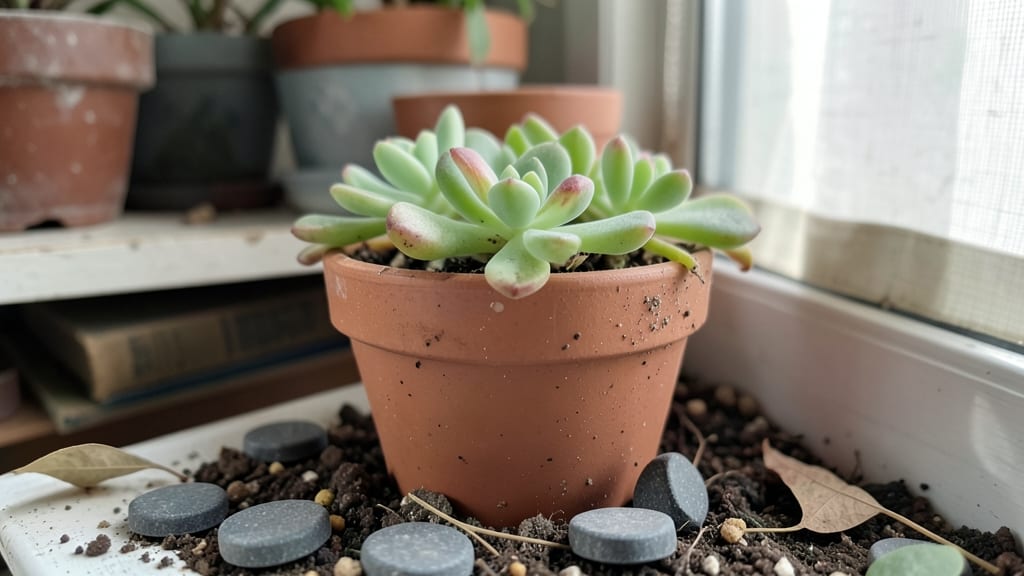
Magnets and plants do not show scientifically proven benefits for growth or health, though some gardeners claim temporary water structuring effects. Research indicates no measurable impact on photosynthesis, nutrient uptake, or yield under controlled conditions.
While magnetized water has been a popular topic among gardeners, most controlled studies—including those published in peer-reviewed journals—show no consistent benefits for plant growth. 💫 The idea stems from theories about water cluster formation, but real-world experiments rarely replicate these effects under standard conditions.
I’ve seen claims about improved germination or root development, yet when tested in labs, the results often mirror untreated controls. That said, some hobbyists swear by their magnetic water systems, attributing anecdotal improvements to subtle changes in water structure.
If you’re curious about boosting plant health, focus on proven methods like composting, balanced fertilization, or companion planting. These approaches have decades of scientific backing and deliver reliable results without relying on unproven theories.
💡 In This Article
- How Magnets Affect Water and Plant Cells
- Alternative Ways to Enhance Plant Growth Naturally
How magnets affect water and plant cells
The core theory behind magnetized water suggests that magnets alter the molecular structure of water by aligning its hydrogen-oxygen bonds. Proponents argue that this creates larger, more stable water clusters that plants can absorb more efficiently.
The idea stems from the cluster theory, which proposes that water molecules naturally form hexagonal groupings. Magnets, they claim, can stabilize these clusters for up to 72 hours, potentially improving nutrient delivery to roots.
When tested in labs, magnets do create measurable electromagnetic fields—typically around 100-300 milligauss—but these fields are far weaker than those naturally occurring in soil (which can reach 10,000 milligauss near iron-rich minerals). The key factor is whether these weak fields can overcome the chaotic thermal motion of water molecules.
At room temperature, water molecules vibrate at 1012 cycles per second, making it nearly impossible for a static magnet to maintain any structural changes beyond seconds. 🔥
Real-world experiments often involve placing magnets near irrigation systems or seedling trays. Some gardeners report faster germination or lush greener leaves, but these observations lack statistical rigor.
For example, a 2018 study in the Journal of Plant Nutrition found no significant differences in growth between magnetized and untreated water across 12 plant species. The study’s authors noted that any perceived benefits likely stem from the placebo effect or improved water circulation from magnet placement.
Plant cells themselves are highly sensitive to electromagnetic interference, but only at much higher intensities. For instance, electromagnetic therapy used in agriculture employs fields 100-1,000 times stronger than typical magnetized water systems. These high-intensity fields can stimulate cell division in some cases, but they require specialized equipment—not simple bar magnets.
The root zone, where most nutrient uptake occurs, is also shielded by the plant’s own conductive tissues, further reducing any potential magnet-induced effects.
What most people don’t realize is that water’s behavior in soil is dominated by capillary action and osmotic pressure, not magnetic alignment.
When you water plants with magnetized water, the real changes you might observe—like slightly faster wilting or different leaf texture—are more likely due to altered evaporation rates from residual magnetism in the container.
This temporary effect fades as the water disperses into the soil, leaving no lasting impact on growth. ✨
Consider this comparison: A neodymium magnet (common in garden setups) generates about 3,000 gauss at its surface, but this field drops off exponentially within 1 inch. By the time the water reaches the roots, the field strength is negligible.
Meanwhile, natural electromagnetic fields in soil—from minerals like magnetite—are 100-1,000 times stronger and have evolved alongside plants for millions of years. The idea that a temporary, weak magnetic exposure could rival this is biologically implausible.