
Diseases
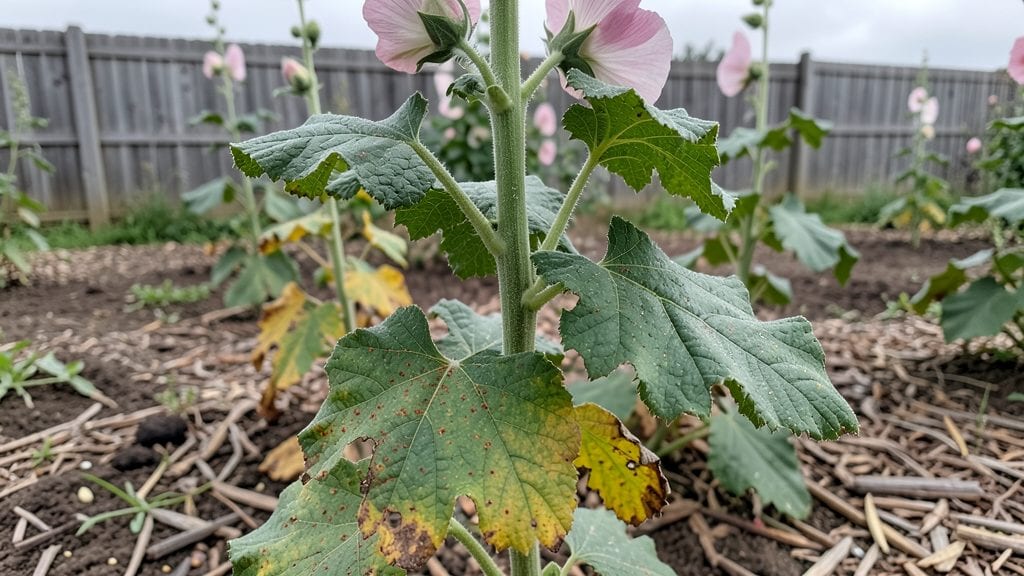
Hollyhock plant diseases can turn your towering blooms into sad, spotted messes before you even get to enjoy them. I’ve lost entire borders to rust and powdery mildew, but I’ve also learned how to spot these fungal foes early and stop them before they spread.
The key is knowing what to look for—yellow spots, black streaks, or fuzzy white patches—and acting fast with the right treatments.
Most of these problems start with too much moisture or poor airflow between those tall stems. Hollyhocks love height but hate humidity trapped in their leaves. Prune for better circulation, space plants properly, and water at the base—not overhead—and you’ll cut the risk by half.
Organic options like neem oil or baking soda sprays work wonders for early-stage infections, while severe cases might need a targeted fungicide.
By the time you finish this guide, you’ll recognize each disease by sight and have a go-to plan for treatment. No more guessing whether to pull a plant or spray it down—just clear steps to save your hollyhocks before they’re lost.
The payoff? Healthy stems, vibrant blooms, and a garden that stays stunning all summer long.
Whether you’re dealing with rust, mildew, or something else, the solutions here work for any hollyhock variety. Let’s get those plants back in fighting shape before the next downpour hits.
Behind The Fungal Frenzy
Hollyhock plants may look sturdy, but their towering blooms and lush foliage make them prime targets for fungal invaders. Understanding why these diseases strike is the first step to preventing them.
Let’s break down the real culprits behind hollyhock plant diseases—from environmental triggers to plant vulnerabilities—so you can protect your garden before trouble starts.
Hollyhocks thrive in moist soil, but too much water—especially on leaves—creates the perfect breeding ground for fungi. Here’s why:
- Poor Air Circulation: Dense foliage traps humidity, preventing water from evaporating quickly. Fungi like rust and powdery mildew love this damp, stagnant environment. - Prolonged Leaf Wetness: When leaves stay wet for more than 6–12 hours, spores germinate and spread.
Rain, overhead watering, or even morning dew can trigger outbreaks. - Compacted or Waterlogged Soil: Roots struggle to absorb oxygen, weakening the plant’s defenses. This stress makes hollyhocks more susceptible to root rots and stem cankers.
Actionable Fix: Space plants for airflow, water at the base (not overhead), and ensure soil drains well. Mulch with straw to absorb excess moisture without suffocating roots.
Fungi are opportunistic—they exploit temperature swings and high humidity to multiply rapidly. Hollyhocks, often grown in cooler climates, face double trouble when:
- Cool Nights + Warm Days: Ideal for rust fungi (e.g., Puccinia malvacearum), which thrives in 60–75°F (15–24°C) with high humidity.
The contrast creates condensation on leaves, fueling spore growth. - Stagnant Air: Greenhouses or densely planted beds trap heat and moisture, accelerating diseases like downy mildew. - Sudden Rain After Dry Spells: Dormant fungal spores in soil wake up when moisture returns, infecting fresh growth.
Actionable Fix: Avoid planting in low-lying areas where cold air pools. Use row covers in spring to moderate humidity, and prune for airflow.
A stressed hollyhock is an open invitation to pathogens. Common stressors include:
- Nutrient Deficiencies: Lack of magnesium (Mg) or potassium (K) weakens cell walls, making plants more vulnerable to bacterial leaf spot or Alternaria blight.
- Physical Damage: Pruning wounds or hail marks create entry points for Verticillium wilt or Fusarium oxysporum.
- Overcrowding: Competing for resources stunts growth, leaving plants unable to fend off infections.
Actionable Fix: Feed hollyhocks with balanced fertilizer (10-10-10) in early spring. Space plants 18–24 inches apart and disinfect pruners with 70% isopropyl alcohol to prevent cross-contamination.
Fungal spores linger in soil for years, especially if previous hollyhocks (or related plants like mallows) were infected. Here’s how it happens:
- Residual Pathogens: Spores of Phytophthora (root rot) or Cercospora (leaf spot) survive in organic matter, reinfecting new plants.
- Dirty Tools: Pruners, gloves, or trellises can transfer spores from diseased to healthy plants.
- Compost from Infected Plants: Using diseased plant debris as mulch spreads problems instead of solving them.
Actionable Fix: Rotate crops (avoid planting hollyhocks in the same spot for 3+ years). Sterilize tools with bleach solution (1 part bleach to 9 parts water) or rubbing alcohol. Test soil for fungal activity before planting.
Some diseases hitchhike on insect damage.
For example: - Aphids or Spider Mites: Their honeydew (sticky residue) attracts sooty mold, which blocks sunlight and stresses the plant. - Japanese Beetles: Chew holes in leaves, creating wounds where Alternaria or Septoria can enter. - Slugs/Snails: Leave slime trails that trap moisture, promoting Botrytis blight (gray mold).
Actionable Fix: Monitor for pests early. Use neem oil or insecticidal soap to control populations before they cause damage.
Not all hollyhocks are equally resilient. Old-fashioned varieties (e.g., ‘Benary’s Giant’) are more prone to rust and mildew than modern hybrids bred for disease resistance (e.g., ‘Lady Baltimore’).
Why? - Genetic Vulnerabilities: Some cultivars lack natural preformed resistance (like waxy leaf coatings that repel water). - Hybrid Breakdown: First-generation hybrids may lose resistance over time if not propagated carefully.
Actionable Fix: Choose disease-resistant cultivars labeled for your climate. If growing heirlooms, prioritize regular fungicide sprays (e.g., copper-based or sulfur-based) as a preventive measure.
Catch fungal trouble before it spreads by watching for: ✅ Yellowing leaves (rust or nutrient deficiency) ✅ White/powdery coating (mildew) ✅ Brown spots with halos (Alternaria or Septoria) ✅ Black streaks on stems (Verticillium wilt) ✅ Wilting despite moist soil (root rot)
Act fast: Remove infected leaves immediately and dispose of them in the trash (not compost).
Quick Fixes for Sick Hollyhocks
When your hollyhocks show signs of distress—whether it’s powdery mildew dusting the leaves, rust turning them orange, or leaf spot eating away at the foliage—don’t panic! Most hollyhock diseases are treatable with the right approach.
Below, we’ve mapped out practical, step-by-step solutions for the most common fungal foes, plus prevention tips to keep your plants thriving.
Cause: Fungal spores thrive in humid, shaded conditions, coating leaves in a white, powdery film.
How to Fix It: ✅ 🧼 Clean Up Immediately Remove heavily infected leaves with sterilized pruners (dip in rubbing alcohol first). Avoid composting—toss them in the trash instead.
✅ 💦 Water Wisely Powdery mildew loves moisture on leaves. Water at the base in the morning so foliage dries quickly. Avoid overhead sprinkling.
✅ 🌿 Homemade Spray (Best for Early Stages) Mix 1 tbsp baking soda + 1 tsp dish soap + 1 gallon water in a spray bottle. Apply every 5–7 days until symptoms fade. For stubborn cases, try a fungicide like neem oil (1 tsp per quart of water).
✅ 🌞 Boost Airflow Thin out crowded plants and space them 12–18 inches apart to improve air circulation.
💡 Prevention Pro Tip: Plant hollyhocks in full sun (6+ hours daily) and choose resistant varieties like ‘Benary’s Giant’.
Cause: Tiny orange pustules on undersides of leaves signal rust, which weakens plants over time.
How to Fix It: ✅ ✂️ Prune Aggressively Cut off all infected leaves (including stems if rust is severe). Disinfect tools between cuts.
✅ 🌱 Remove Debris Rust spores overwinter in fallen leaves. Rake and dispose of plant debris after the first frost.
✅ 🛡️ Fungicide Treatment Use a copper-based fungicide (like Bordeaux mixture) or sulfur spray every 10–14 days until new growth is rust-free.
✅ 🌿 Rotate Crops Avoid planting hollyhocks in the same spot yearly—rust spores linger in soil. Rotate with non-host plants like marigolds.
🔥 Emergency Fix: If rust spreads fast, remove the entire plant to prevent soil contamination.
Cause: Dark, water-soaked spots with yellow halos appear when bacteria or fungi infect leaves, often from splashing water.
How to Fix It: ✅ 🧹 Sterilize Tools & Hands Wear gloves and disinfect pruners with 70% rubbing alcohol before trimming.
✅ 🚫 Isolate Infected Plants Move sick hollyhocks 6+ feet away from healthy ones to prevent spread.
✅ 💧 Adjust Watering Water early in the day (before 10 AM) and use a soaker hose to avoid wetting leaves.
✅ 🌿 Chemical Defense Spray with fixed copper fungicide (like Champion Fungicide) every 7–10 days until symptoms stop.
🌡️ Heat Tip: In hot climates, mulch with straw to reduce soil splash onto leaves.
Cause: Yellowing leaves, wilting (even in moist soil), and stunted growth signal these soil-borne fungi, which are often fatal.
How to Fix It (If Caught Early): ✅ 🚜 Remove Infected Plants Dig up and dispose of the entire plant (do not compost). Sterilize the soil with solarization (cover with clear plastic for 4–6 weeks in summer heat).
✅ 🌱 Plant Resistant Varieties Choose ‘Helen Campbell’ or ‘Peach Blow’—some hollyhocks are less susceptible.
✅ 🔄 Rotate Crops Religiously Avoid planting hollyhocks (or other susceptible plants like tomatoes) in the same bed for 3–4 years.
✨ Prevention Hack: Test soil for pH balance (ideal: 6.5–7.0). Acidic soil worsens wilt diseases.
To keep hollyhocks healthy year-round:
- 🌿 Space plants 12–18 inches apart for airflow.
- ☀️ Plant in full sun (6+ hours daily).
- 💦 Water at the base—never overhead.
- 🧹 Clean up debris after each growing season.
- 🔄 Rotate crops every 3–4 years.
- 🌱 Start with disease-free seedlings from reputable nurseries.
Final Reminder: Early action is key! The sooner you treat hollyhock diseases, the easier (and cheaper) it is to save your plants. Monitor regularly, and don’t hesitate to prune aggressively—your hollyhocks will thank you with bold blooms all season! 🌸
Frequently asked questions about hollyhock plant diseases
What are the first signs my hollyhocks have powdery mildew?
Look for a white, powdery coating on leaves that resembles dust or flour. The mildew often appears first on older leaves in shaded areas. If you see this, act fast by removing infected foliage and spraying with a baking soda solution (1 tbsp baking soda + 1 tsp dish soap per gallon of water).
How do I tell if my hollyhock has rust disease or just nutrient deficiency?
Rust shows as tiny orange pustules on leaf undersides, while nutrient deficiencies cause yellowing between leaf veins (chlorosis). If you see both symptoms, test your soil—rust is a fungal issue requiring fungicides, while deficiencies need fertilizer adjustments (like Epsom salt for magnesium).
Can I save a hollyhock plant with black stem streaks (Verticillium wilt)?
Unfortunately, Verticillium wilt is usually fatal. Remove the entire infected plant immediately and sterilize the soil with solarization (cover with clear plastic for 4-6 weeks). For future plantings, choose resistant varieties like 'Helen Campbell' and rotate crops every 3-4 years.
Is it safe to compost hollyhock leaves with fungal diseases?
No, never compost diseased plant material. Fungal spores survive composting and can reinfect your garden. Instead, bag infected leaves in plastic and dispose of them in the trash. This prevents spreading diseases to other plants.
Why do my hollyhocks keep getting leaf spots even after treatment?
Leaf spots often return if you're watering overhead or plants are too crowded. Water at the base using a soaker hose, space plants 12-18 inches apart, and sterilize your pruners between cuts. For stubborn cases, use a fixed copper fungicide every 7-10 days until symptoms clear.