
Plants
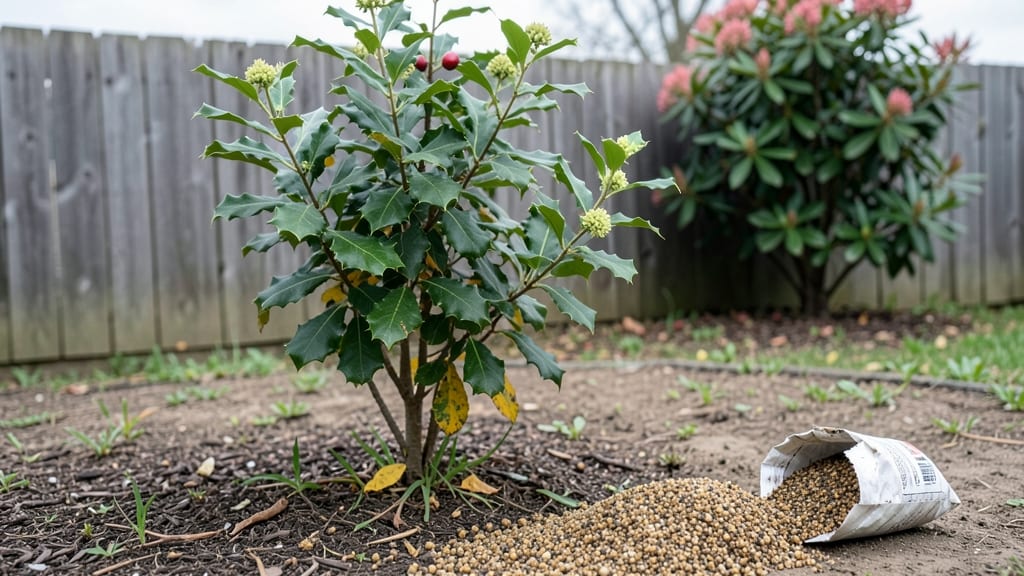
The right fertilizer for holly plants 🌿 is the difference between a lush, berry-laden shrub and one that barely survives.
Holly plants thrive with the right fertilizer, but choosing the wrong type can stunt growth or even kill your shrub—especially if you’re dreaming of vibrant red berries.
These acid-loving shrubs need a low-pH feed packed with iron and nitrogen, but timing matters just as much as the formula. Too much too soon? You’ll burn roots. Too little? You’ll miss the growing season entirely.
In this guide, I’ll break down the best organic and synthetic options, when to apply them, and how to keep your holly thriving year after year—without guesswork.
Best acidic fertilizers for holly plants to enhance berry production
Holly plants (Ilex spp.) are acid-loving shrubs that produce stunning berries—but only if they receive the right nutrients. The key lies in selecting acidic fertilizers with balanced nitrogen-phosphorus-potassium (NPK) ratios and proper pH levels (4.5-6.0).
Without this, your holly may struggle with yellowing leaves or poor berry development. Let’s dive into the best organic and synthetic options to fuel your holly’s growth and berry production.
Not all fertilizers are created equal for holly plants. The best options mimic their natural soil conditions, which are typically acidic and rich in organic matter. Synthetic fertilizers can deliver quick results, while organic options improve soil health long-term.
For berry production, focus on fertilizers with a higher phosphorus content (P), as this promotes flowering and fruiting. Let’s compare your top choices below.
📌 PRO TIP: Always test your soil’s pH before fertilizing. Holly plants thrive in acidic soil (pH 4.5-6.0). If your soil is too alkaline, amend it with sulfur or pine needles before applying fertilizer.
| Fertilizer Type | NPK Ratio | Best For | Application Rate | Season to Apply | pH Adjustment |
|---|---|---|---|---|---|
| Ammonium Sulfate (Synthetic) | 21-0-0 | Leaf growth & acidity | 1-2 tbsp per plant | Early spring & fall | Lowers pH slightly |
| Iron Sulfate (Synthetic) | 0-0-0 (Iron) | Chlorosis correction | 1 tsp per gallon water | Year-round (as needed) | Acidifies soil |
| Pine Bark Fertilizer (Organic) | 1-0-0 (Slow-release) | Long-term soil acidity | 2-3 cups per plant | Spring & fall | Maintains pH 4.5-5.5 |
| Fish Emulsion (Organic) | 5-1-1 | Berry production & growth | 1 tbsp per gallon water | Spring & early summer | Neutral to slightly acidic |
| Cottonseed Meal (Organic) | 6-2-1 | Slow-release nitrogen | 1 lb per 100 sq ft | Early spring | Acidifies soil |
| Azomite (Organic Mineral) | 0-0-0 (Trace minerals) | Overall plant health | 1 lb per 100 sq ft | Spring & fall | Balances pH naturally |
For berry production, prioritize fertilizers with a higher phosphorus (P) content, like fish emulsion (5-1-1) or a balanced 10-10-10. Phosphorus is critical for flowering and fruiting, so apply it in early spring when new growth begins.
If your holly’s leaves are turning yellow between the veins, it’s a sign of iron deficiency, which iron sulfate can correct quickly.
Organic options like pine bark fertilizer or cottonseed meal are excellent for long-term soil health. They release nutrients slowly, reducing the risk of root burn while maintaining the acidic pH holly plants love.
Synthetic fertilizers like ammonium sulfate provide a fast nitrogen boost for leafy growth, but they require careful monitoring to avoid over-fertilization.
Timing is everything when fertilizing holly plants. Apply most feeds in early spring (March-April) to support new growth, and again in early summer (June) to encourage berry development. Avoid fertilizing in late summer or fall, as this can stimulate tender new growth that won’t survive winter.
Always water thoroughly after application to help nutrients absorb into the soil.
⚠️ WARNING: Over-fertilizing can harm holly plants, leading to leaf scorch or root damage. Start with half the recommended dose and monitor your plant’s response. If you notice brown leaf tips or stunted growth, flush the soil with water to reduce salt buildup.
To maximize berry production, pair your fertilizer choice with proper mulching. A 2-3 inch layer of pine straw or oak leaves helps retain moisture, regulates soil temperature, and slowly releases nutrients. This mimics the holly’s natural understory habitat, where acidic leaf litter keeps the soil ideal for growth.
If your holly isn’t producing berries, it might need a phosphorus boost. Try a 10-20-10 fertilizer in early spring and repeat in early summer. For established plants, a slow-release organic fertilizer like Azomite can provide trace minerals that enhance overall vitality and berry quality.
Remember, holly plants are slow growers compared to annuals, so patience is key. With the right acidic fertilizer and consistent care, your holly will reward you with vibrant foliage and abundant berries for years to come. Happy gardening! 🌿
How to apply fertilizer for holly plants without burning roots
Holly plants are acid-lovers that need precise fertilizer application to avoid root burn and nutrient overload. The key is timing—too much fertilizer at the wrong time can damage roots while too little stunts growth.
I’ve learned that spring and early fall are the only safe windows for feeding, and even then, dilution is critical. Let’s break down the exact steps to keep your holly thriving without harming its roots.
Before applying any fertilizer, test your soil’s pH level. Holly plants prefer a range of 4.5 to 6.0. If your soil is too alkaline, even the best fertilizer won’t work—roots simply can’t absorb nutrients.
You can use a simple home soil test kit or send a sample to a local extension office for accurate results. Adjusting pH with sulfur or peat moss before fertilizing makes all the difference.
- Yellowing leaves (even on new growth)
- Wilting despite moist soil
- Brown leaf edges or crispy tips
- Reduced berry production or none at all
For spring feeding, aim for a balanced fertilizer like 10-10-10 or a slow-release acid-loving plant blend. Apply it in early April, just as new growth begins. Water your holly thoroughly 24 hours before to help dilute any salts in the soil.
After applying fertilizer, water again to flush nutrients into the root zone. This two-step process prevents fertilizer from sitting on the soil surface and burning tender roots.
In early fall, holly plants benefit from a low-nitrogen, high-phosphorus fertilizer (like 5-10-5) to support root development before winter. This is your last feeding of the year—never fertilize after mid-October, as new growth won’t harden off before frost.
Instead, focus on mulching with pine needles or oak leaves to gradually release acidity and nutrients over time.
Avoid fertilizing during summer heat or winter dormancy. Holly plants go dormant in winter, and feeding during this time encourages weak, frost-sensitive growth. In summer, high temperatures increase the risk of fertilizer salt buildup, which can dehydrate roots.
Stick to a watering-only schedule during these months and let your holly rest.
If you notice signs of over-fertilization, act fast. Flush the soil with 3 to 4 inches of water to leach out excess salts. You can also amend the soil with compost or peat moss to improve structure and reduce salt concentration.
With patience and the right approach, your holly will reward you with lush foliage and vibrant berries for years to come.