
Pests
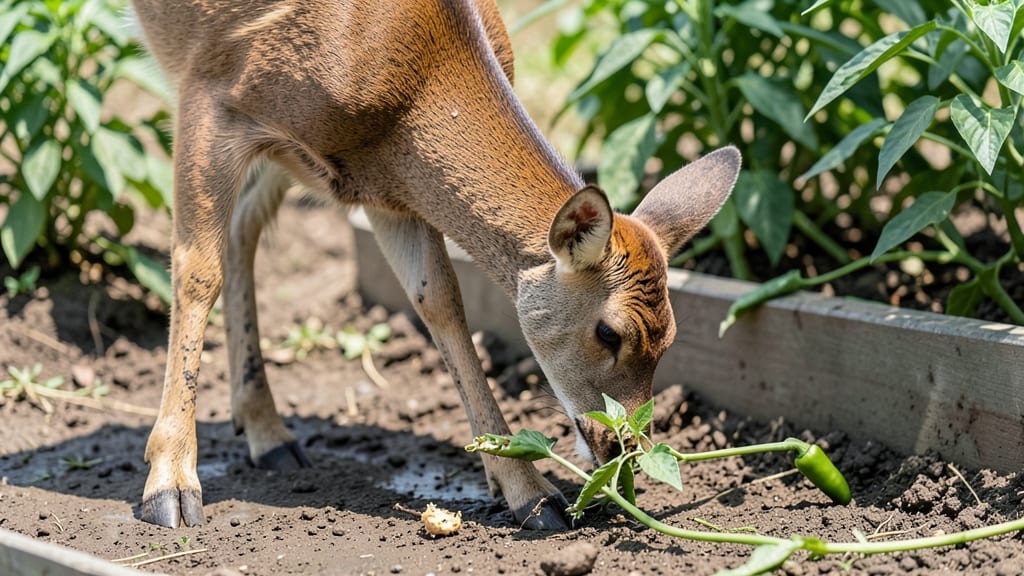
Yes, deer eat jalapeno plants, particularly young seedlings and tender foliage, though mature peppers with stronger capsaicin content may deter them. Protect your garden with fencing, repellents, or companion plants like marigolds and garlic to minimize damage.
Deer are opportunistic feeders that often target young, soft plant growth because it's easier to digest and packed with nutrients. 🌱 The capsaicin in jalapenos becomes more concentrated as peppers mature, which can make them less appealing—but deer still browse mature plants when other food sources are scarce.
In my experience, late spring and early summer are peak browsing times, so timing your planting or using temporary barriers during these months can make a big difference.
Beyond fencing, I've found that combining multiple strategies works best. For example, planting garlic around your jalapenos creates a natural barrier, while commercial deer repellents applied every few weeks can reinforce the protection. The key is consistency—deer are smart and will return if they find an easy meal.
💡 In This Article
- Why Deer Target Jalapeno Plants in Gardens
- Effective Deer-Proofing Strategies for Pepper Gardens
Why deer target jalapeno plants in gardens
Deer primarily target young jalapeno seedlings because their tender leaves contain high levels of nitrogen and water—both essential nutrients for their diet. 🌱 New growth has a protein content of about 20-25%, which is nearly double that of mature pepper foliage (10-12%).
This nutrient density makes seedlings irresistible to deer, especially during spring when other food sources are scarce. The soft texture also requires less chewing effort, making it an easy meal.
Capsaicin, the compound that gives jalapenos their heat, plays a crucial role in deterrence—but only after plants mature. Young plants produce just 0.0001-0.0005% capsaicin by weight, far too little to deter deer. As peppers ripen, capsaicin concentrations climb to 0.05-0.1%, creating a mild bitterness that some deer avoid.
However, this avoidance isn't universal—deer in areas with limited food options (like urban edges or drought-stricken regions) will still browse mature peppers.
Seasonal patterns reveal why damage spikes in late spring and early summer. 🌿 During these months, deer mothers are nursing fawns, requiring 20-30% more calories daily. Your garden's young jalapenos become a high-value food source.
In northern climates, browsing peaks in May-June, while southern regions see damage extend into July due to delayed spring growth. The key difference? Northern deer face more competition from emerging grasses, while southern deer rely more heavily on cultivated plants.
Regional variations in palatability create another layer of complexity. Deer in the Southeast, where milder winters mean year-round plant growth, develop stronger preferences for spicy peppers because they're accustomed to higher capsaicin exposure.
In contrast, northern deer—unfamiliar with spicy flavors—may avoid jalapenos entirely unless desperate. This regional adaptation explains why some gardeners report 80% damage rates in Texas but only 20% in Maine.
What most gardeners overlook is how deer learn from experience. If they encounter a mildly spicy jalapeno (like a 2,500-5,000 Scoville unit pepper) and find it tolerable, they'll return to browse more aggressively.
This learned behavior is why I recommend removing all damaged plants—even partially eaten ones—from your property. The scent markers left behind actually attract more deer to investigate.
One surprising factor is how deer's sense of smell interacts with pepper plants. 🌶️ The aromatic compounds in jalapeno leaves (like limonene and myrcene) actually mask the plant's natural defenses, making them more appealing.
This chemical camouflage explains why deer often target pepper foliage even when other vegetables remain untouched. The solution? Interplanting with strongly scented herbs like thyme or rosemary can disrupt this olfactory deception.
The bottom line? Deer don't just eat jalapenos—they're drawn to them through a combination of nutritional cues, learned behaviors, and chemical signals. Understanding these mechanisms lets you outsmart them with targeted strategies, from timing your planting to strategic companion planting. 💡