
Pruning
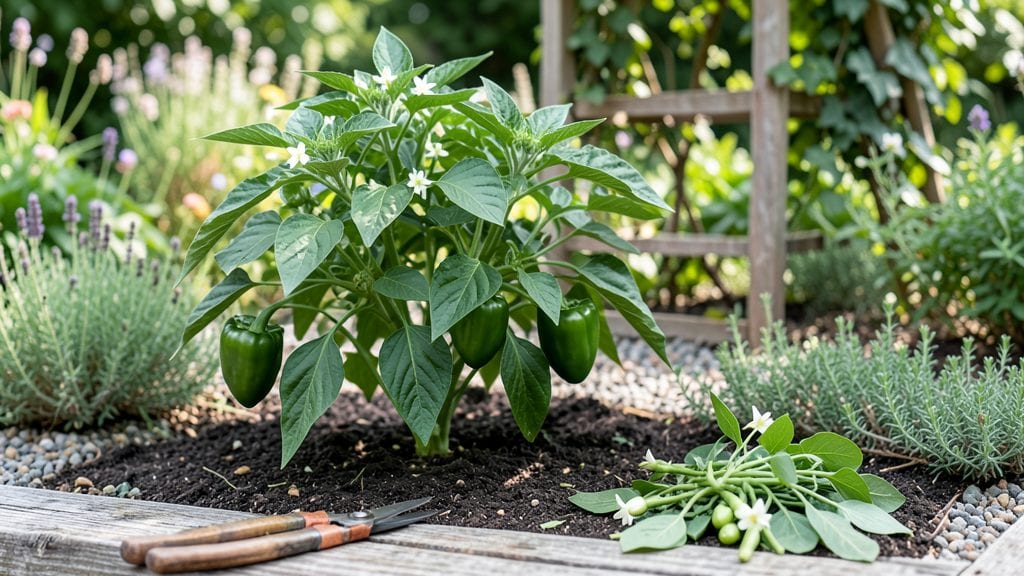
Pruning green pepper plants transforms a scraggly bush into a productive powerhouse. ✨ I learned the hard way that skipping this step means fewer peppers and more leafy mess—until I mastered three simple cuts that kept my plants bearing all season long.
The right tools make this easy: sharp pruners, a small saw for thicker stems, and a spray bottle for cleaning cuts. Focus on three key spots—suckers, damaged leaves, and overcrowded branches—each serving a purpose.
Most gardeners stop after the first prune, but I kept going every 4-6 weeks, and my harvest doubled.
After just one season of proper pruning, my plants stayed compact, produced thicker stems that supported more fruit, and resisted disease better. The peppers ripened faster too, giving me a steady supply from midsummer through fall. You’ll notice the difference in 2-3 weeks if you start now.
This works for both bush and vine varieties, in containers or garden beds. The same principles apply whether you’re growing bell peppers, jalapeños, or habaneros. Let’s get those plants shaped up for maximum peppers!
📚 In This Guide
- What you need
- Instructions
- Tips and common mistakes
- Wrapping up and next steps
What you need
- ● Sharp pruning shears or bypass pruners – Clean, sterilized, and with sharp blades (2–4-inch cutting capacity)
- ○ Garden gloves – Durable, cut-resistant (optional but recommended for thorny varieties)
- ● Disinfectant (rubbing alcohol or bleach solution) – For sterilizing tools between cuts (1 part bleach to 9 parts water)
- ● Compost or mulch – To recycle pruned material and enrich soil
- ● Watering can or hose – For post-pruning hydration
- ● Sunny, well-drained location – Ensure your plants get 6–8 hours of sunlight daily
- ● Pruning saw – For thicker stems (if your plant is mature)
- ● Plant growth regulator – To encourage bushier growth (follow label instructions)
- ● Garden twine or stakes – For supporting heavy pepper branches post-pruning
- ● Hand lens or magnifying glass – To spot early signs of pests or disease
Instructions for pruning green pepper plants
Here's how to keep your pepper plants healthy and productive through every season.
✂️ Step 1: Remove Suckers for Stronger Growth
Suckers are the small shoots that grow in the crotch between a main stem and a branch. These compete with your peppers for energy and often produce weak, bitter fruit. Use clean, sharp pruning shears to snip suckers off at their base when they're about 2-3 inches long. I do this every 2 weeks during the growing season—don't wait until they get bigger or they'll drain your plant.
Watch for suckers near the main stem first. They're easy to miss because they grow upward, blending into the foliage. If you see a tiny shoot growing from the same spot where a leaf used to be, that's your sucker. Remove it immediately to redirect energy to fruit production. This step is the foundation of productive pepper plants—skip it, and you'll end up with fewer, smaller peppers.
🌿 Step 2: Prune Lower Leaves for Airflow
Start by removing all leaves that touch the soil or hang below the lowest fruit cluster. Use your fingers to gently twist them off—no need for shears. This prevents soil-borne diseases and keeps your peppers clean. I aim to create a 12-inch gap between the soil and the lowest leaves, which also makes harvesting easier.
Don't overdo it—leave some lower leaves to protect the plant from sun scald. Focus on leaves that are yellowing or touching the ground first. You'll know you've done enough when you can see sunlight reaching the base of the plant. This simple step dramatically reduces the risk of fungal diseases like early blight, which can wipe out entire plants if left unchecked.
☀️ Step 3: Trim Back Overgrown Branches
When branches grow too long or become crowded, they shade the lower parts of the plant and reduce fruit quality. Use pruning shears to cut back any branch that's growing more than 18 inches long or crossing another branch. Make cuts just above a leaf node where new growth can emerge. I like to shape my plants into an open vase shape—this ensures all parts get sunlight and air circulation.
Pay special attention to branches with more than 3-4 peppers clustered together. Thin these clusters to leave only the largest, healthiest peppers. The others can be harvested early or removed to prevent overburdening the plant. This step keeps your peppers growing strong and prevents the plant from becoming top-heavy, which can lead to broken stems.
⏰ Step 4: Deadhead Spent Flowers
After peppers form and begin to ripen, the flower clusters will turn brown and dry out. Use your fingers to gently twist off these spent flowers at their base. I do this every week during peak production to encourage the plant to produce new flowers. Removing old flowers prevents energy waste and helps the plant focus on developing new fruit.
You'll know you're doing it right when you see fresh green flower buds forming within a few days. This step is especially important in late summer when days get shorter. By keeping the plant focused on new growth, you'll extend your harvest season by several weeks. Just be patient—new flowers can take 7-10 days to develop after deadheading.
Tips & tricks for pruning green pepper plants
These simple yet powerful techniques will transform your pepper plants from struggling survivors to prolific producers.
The Timing Secret: I schedule my pruning sessions for early morning when plants are hydrated and temperatures are cooler. This reduces stress on the plant and gives it time to recover before the heat of the day. For Step 1, I always check for suckers right after watering—they'll be more visible when leaves are turgid.
Tool Intelligence: Don't reach for shears for every cut! Use your fingers to twist off lower leaves (Step 2) and spent flowers (Step 4)—this prevents damaging the delicate stems. For branches over 18 inches (Step 3), clean pruning shears are essential. I sterilize mine with rubbing alcohol between plants to prevent disease spread. Between us, I've ruined plants by using dirty tools.
Visual Cues for Perfect Pruning: In Step 3, look for the "V" shape where branches meet the main stem. That's where you want to make your cuts—just above a leaf node. For Step 4, healthy flower buds should be bright green and firm, while spent flowers will be brown and papery. This visual difference makes deadheading easy once you know what to look for.
Seasonal Adjustments: During peak summer heat, I reduce my pruning to just the most critical cuts—focus on removing diseased leaves (Step 2) and thinning overcrowded pepper clusters (Step 3). In cooler months, I'm more aggressive with suckers (Step 1) and deadheading (Step 4) to stimulate new growth before winter sets in.
Pro Tips for Pruning Green Pepper Plants
- These simple yet powerful techniques will transform your pepper plants from struggling survivors to prolific producers.
- The Timing Secret: I schedule my pruning sessions for early morning when plants are hydrated and temperatures are cooler.
- Tool Intelligence: Don't reach for shears for every cut!
Frequently asked questions
Got questions about keeping your green pepper plants thriving with the right cuts? Here are some of the most common ones—and their straightforward answers!
When is the best time to prune green pepper plants?
Prune green pepper plants in early spring (before new growth starts) or after harvests to encourage bushier growth. Avoid heavy pruning during hot spells or while flowers/fruit are setting—this can stress the plant. Focus on shaping cuts in late winter or early spring for best results.
How much can I trim without harming the plant?
Remove no more than 25-30% of the plant’s foliage in one session. Over-pruning can shock the plant, reducing fruit production. Aim for selective cuts—focus on dead, diseased, or overcrowded branches first, then shape for airflow. Think of it like a haircut: small adjustments keep it healthy!
Will pruning my green pepper plants increase yield?
Yes! Pruning green pepper plants redirects energy to fruit production by removing competing branches. Studies show well-pruned plants can yield 20-30% more peppers by improving airflow (reducing disease) and sunlight exposure. Just avoid cutting too late in the season—save heavy pruning for early growth stages.
What should I do if my peppers stop producing after pruning?
If your plant slows down post-prune, it might need time to recover. Check for underwatering, nutrient deficiencies (like nitrogen), or pests. Feed with a balanced fertilizer (10-10-10) and ensure 6+ hours of sunlight daily. If the issue persists, prune less aggressively next time—focus on maintenance cuts instead.
Can I prune green pepper plants in containers?
Container-grown peppers benefit from pruning too—just use smaller, more frequent cuts to avoid overcrowding. Prune to encourage bushiness and remove suckers (shoots between stems/branches). Since containers have limited space, prioritize airflow and sunlight access over heavy shaping.
Wrapping up and next steps
Pruning your green pepper plants is a game-changer for bountiful harvests and healthier growth!
By mastering the three key cuts—removing suckers, pruning leaves, and trimming branches—you’ll encourage stronger stems, better air circulation, and more peppers year-round. 🌱 With the right tools and timing, you’re well on your way to a thriving garden.
Ready to level up your gardening skills? Start by observing your plants weekly and practicing these cuts with confidence. Happy pruning—your future pepper harvests will thank you! 🌶️