
Pests
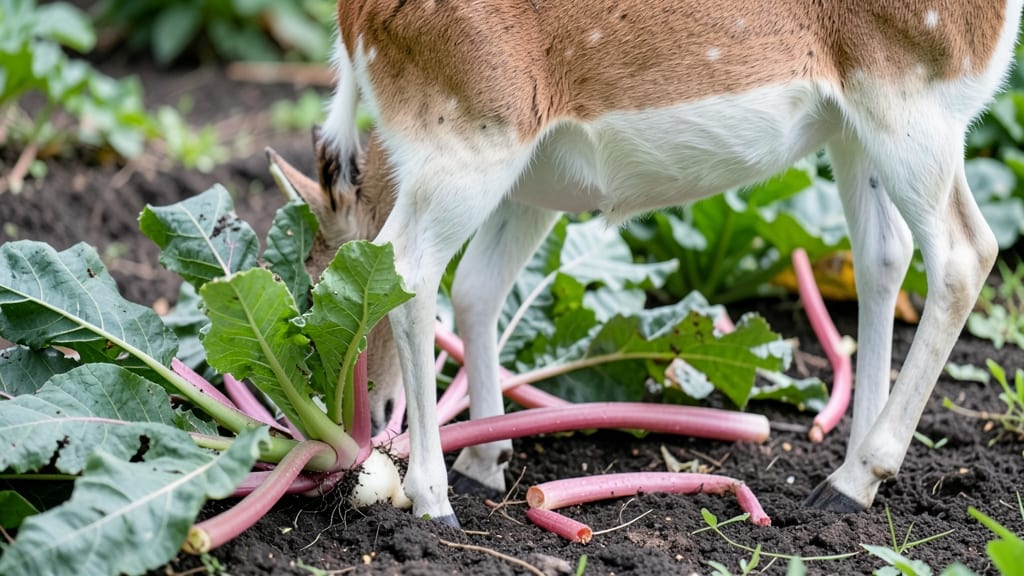
Rhubarb plants and deer rarely clash because the tart stems and mild toxicity deter browsing, but hungry deer may still nibble young shoots during harsh winters when other food is scarce. Physical barriers and repellents are your best defense against damage.
Deer usually steer clear of rhubarb because its sharp, sour flavor and oxalic acid content make it unappealing. 🌱 However, when snow covers the ground and deer face starvation, they’ll target tender new growth—especially in late winter or early spring.
I’ve seen this happen in my own garden, where deer ignored mature plants but chewed through young shoots overnight. The key is protecting vulnerable areas while the plants are still establishing themselves.
For gardeners, this means installing temporary fencing around new plantings or applying commercial deer repellents containing putrescent egg solids. 🦌 Even a simple 8-foot-tall fence can make all the difference, as deer typically won’t jump higher than that.
Monitoring for signs like jagged edges or missing leaves helps you act fast before significant damage occurs.
💡 In This Article
- Why Deer Rarely Target Mature Rhubarb Plants
- Protecting Rhubarb from Deer: Fencing and Natural Deterrents
Why deer rarely target mature rhubarb plants
Mature rhubarb plants contain oxalic acid—a natural compound that gives them their signature tartness and acts as a chemical deterrent. This compound isn't just about flavor; it's toxic to deer in concentrated amounts, causing irritation to their digestive systems.
Studies show deer instinctively avoid plants with oxalate levels exceeding 0.5%, and rhubarb leaves contain roughly 1.5-2.5% oxalic acid. For comparison, spinach—another oxalate-rich plant—contains about 0.5-1.0%, yet deer still nibble it occasionally. 🌿
The texture plays a role too. Rhubarb's thick, fibrous stems and coarse leaves make them difficult to chew, especially for deer accustomed to softer vegetation like clover or dandelions.
The plant's upright growth habit also makes it less accessible—deer prefer browsing at waist height or lower, where they can easily reach tender shoots. Even when food is scarce, mature rhubarb's structural defenses often keep deer at bay, similar to how deer avoid holly bushes with their spiky leaves.
Seasonal changes explain the exceptions. During late winter or early spring, when deer's primary food sources—like acorns or berries—are scarce, their survival instincts override these deterrents. Young rhubarb shoots, which contain less oxalic acid (0.3-0.8%) and are more tender, become prime targets.
This is why gardeners often notice damage in February-March, when deer are most desperate for nutrition. The contrast between mature and young plants is stark: a fully grown rhubarb stalk is like a fortress, while a new shoot is an all-you-can-eat buffet. 🦌
Comparing rhubarb to other deer-resistant plants reveals patterns. Like rhubarb, foxglove and oleander contain toxic compounds (digitalis and cardiac glycosides, respectively), but deer avoid them for similar reasons—bitter taste and chemical irritation.
The key difference is that rhubarb's toxicity is mild enough that deer might still sample it when desperate, whereas foxglove's effects are severe enough to be universally avoided. This makes rhubarb a fascinating case study in how plant defenses work on a spectrum.
What most people don't realize is how smell plays a role. Rhubarb's tart aroma—similar to green apples with a sour edge—acts as an olfactory warning.
Deer have an incredible sense of smell (up to 20 times better than humans) and will often avoid plants with strong, unpleasant odors unless they're starving. This is why commercial deer repellents often mimic these natural warning signals using putrescent egg or predator urine scents.
The combination of taste, texture, and smell creates a multi-sensory deterrent that's hard for deer to ignore—unless hunger takes over. 🌱
Understanding these mechanisms helps explain why deer damage is usually situational. In urban or suburban areas with abundant alternative food sources, rhubarb plants often thrive untouched. But in rural settings where deer face harsher winters, even mature plants can become fair game.
This seasonal vulnerability is why gardeners in colder climates need to be especially vigilant during January-April, when deer are most likely to test their boundaries. The lesson? Rhubarb's defenses are impressive, but not invincible. 💫