
Planting
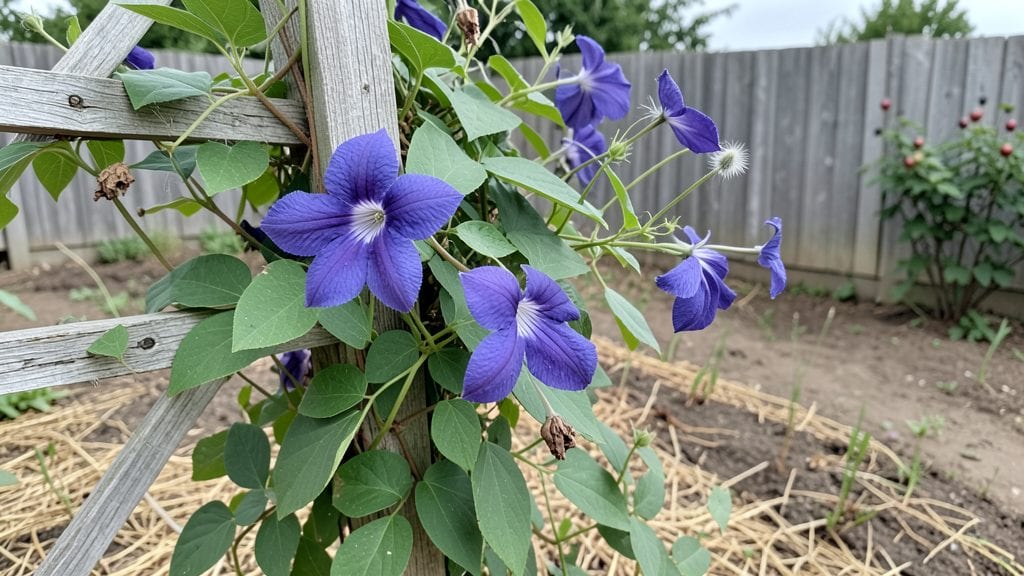
The clematis plant identification you need begins with leaf shape and node count—two clues that reveal everything about pruning and care. 🌿 I’ve spent years untangling vines that looked identical until I spotted the telltale differences: lobed leaves vs. simple, three-part leaves, or... how many buds cluster at each joint.
These details aren’t just academic—they determine whether you prune aggressively in early spring or wait until after blooming.
The first step is comparing leaf shapes: Clematis montana has smooth, oval leaves, while Clematis viticella sports three sharply toothed leaflets.
Count the nodes too—Group 1 clematis (like Clematis montana) bloom on old wood, so you’ll see buds forming in late summer, while Group 3 (like Clematis viticella) sends out new growth from the base each spring.
This isn’t just theory: misidentifying your vine could mean cutting off next year’s flowers.
Once you’ve matched the leaves to the growth habit, pruning becomes intuitive. Group 1 vines need minimal trimming—just tidy up after blooming—while Group 3 thrives when you cut back hard in late winter. The payoff?
A trellis bursting with blooms from early summer through fall, with zero guesswork about when or how to prune. Think of it as unlocking a secret language your clematis has been speaking all along.
For hybrids or tricky cases, check the flower color too: deep purples often signal Group 2 (like Clematis lanuginosa), while pale pinks or whites might be Group 1.
And if your vine climbs like a maniac but flowers sparsely, it’s probably a Group 3 that needs aggressive pruning to encourage new shoots. The more you observe, the easier it gets—until you’re identifying vines on sight, like a seasoned pro.
Mistaken Clematis Identification Causes
If you’ve ever stared at a vine with lush, heart-shaped leaves and wondered, "Is this really a clematis?"—you’re not alone. Misidentifying clematis plants often stems from a mix of visual similarities, growth habits, and botanical quirks.
Let’s break down the real reasons why even experienced gardeners get tripped up—and how to avoid the confusion.
Clematis leaves are iconic, but they’re not unique. Many vines—like Actaea (bugbane), Hydrangea petiolaris, or even Virginia creeper—sport palmate or ternate leaf structures that can fool the eye. The key issue? Leaf dissection and arrangement.
- Why it happens: Clematis leaves are typically ternate (three leaflets) or simple (single leaf), but their lobes can mimic other plants. For example, Clematis montana has broad, almost maple-like leaves, while Actaea simplex (a shade-loving vine) has similarly divided foliage.
- Actionable fix:
- Check the leaflet edges: Clematis often have serrated (toothed) margins, while Virginia creeper has deeply lobed leaves with five points.
- Look for leaf arrangement: Clematis leaves attach oppositely (in pairs at nodes), whereas many impostors have alternate (staggered) leaves.
One of clematis’ defining traits is their node structure—the points where leaves and tendrils emerge. But young or pruned plants can throw off even seasoned gardeners.
- Why it happens:
- Clematis are woody vines with multiple buds per node, but if you’re examining a new shoot or a pruned section, the nodes may look sparse or identical to non-woody vines like Ivy.
- Some clematis (e.g., Clematis armandii) have scale-like buds that can resemble berry-producing vines (like Lonicera or Rubus).
- Actionable fix:
- Inspect the stem texture: Clematis stems are herbaceous (soft) when young but develop bark-like ridges as they age. Impostors like Honeysuckle stay smooth.
- Count the buds per node: True clematis nodes have 3–5 buds (or more in some species). A single bud per node? Probably not clematis.
Clematis are famous for their blooms, but their fruit and seed heads often get overlooked—yet they’re a game-changer for ID.
- Why it happens:
- After flowering, clematis develop plumed seed heads (feathery and persistent). Many gardeners mistake these for dandelion fluff or the seeds of Milkweed or Thistle.
- Some clematis (like Clematis recta) produce woody, pod-like fruits, which can resemble Pea pods or Bean vines.
- Actionable fix:
- Wait for seed development: If the plant has feathery, wind-dispersed seeds, it’s almost certainly a clematis.
- Check for flower structure: Clematis blooms have 4–8 petals (often in a bell or star shape) and no true petals (they’re actually tepals, undifferentiated sepals and petals). Compare this to Honeysuckle (trumpet-shaped) or Wisteria (pealike clusters).
Clematis are climbing vines, but they’re not all the same. Some cling to surfaces with petiolar tendrils, while others need twining or support structures. Confusing their habits leads to misidentification.
- Why it happens:
- Clematis like C. viticella or C. montana have petiolar tendrils (leaf-stalk tendrils) that wrap around supports. But vines like Passiflora (passionflower) or Campsis (trumpet vine) also climb—but with different tendril structures.
- Some clematis (e.g., C. integrifolia) have no tendrils and instead root along nodes, mimicking Ivy or Boston Ivy.
- Actionable fix:
- Observe how it attaches: Clematis tendrils are thin, wiry, and emerge from the leaf axil. If the vine uses adhesive pads (like Ivy) or twines around stems (like Morning Glory), it’s not clematis.
- Note the growth speed: Clematis can grow 6–10 feet per season. Slower climbers? Probably not.
Pro Tip: 🔍 Combine traits—leaf shape plus node structure plus flower/fruit type—for foolproof ID. A single feature (like leaf shape alone) rarely seals the deal!
Quick Fixes for Common Clematis Issues
When your clematis isn’t thriving, the good news is most problems have simple, actionable solutions—no gardening degree required! Below, we’ve mapped the most common clematis struggles to practical fixes, plus pro tips to keep your vines healthy long-term. Think of this as your clematis first-aid kit.
Cause: Overwatering, poor drainage, or root rot. Fix It:
- 🔥 Check the soil: Stick your finger 2 inches deep—if it’s soggy, your clematis is drowning. Water only when the top inch feels dry.
- 🍳 Improve drainage: Amend heavy soil with perlite or sand (1 part to 3 parts soil). For containers, use pots with drainage holes.
- 👨🍳 Prune damaged roots: If roots smell foul or look mushy, trim them with sterilized scissors and repot in fresh, well-draining soil.
- ⏰ Prevent future rot: Space waterings 2–3 inches away from the stem to avoid wetting the base.
💡 Pro Tip: Mulch with bark or straw (not organic matter like grass clippings) to keep roots cool and dry.
Cause: High humidity, crowded foliage, or overhead watering. Fix It:
- 🌡️ Boost airflow: Thin out dense growth and avoid planting clematis where it’ll be shaded by walls or trees.
- 🎯 Spray preventatively: Mix 1 tbsp baking soda + 1 quart water + a drop of dish soap. Spray leaves every 7–10 days during humid months.
- 🔪 Prune infected leaves: Snip off spots immediately with clean pruners, then sterilize them with rubbing alcohol.
- ✨ Prevent recurrence: Water at the base in the morning (not evening) so leaves dry quickly.
💡 Pro Tip: Choose resistant varieties like ‘Jackmanii’ or ‘Niobe’ if fungal issues are chronic in your climate.
Cause: Over-pruning, poor sunlight, or wrong pruning group. Fix It:
- 🔥 Know your clematis group:
- Group 1 (Early bloomers): Prune after flowering (e.g., ‘Alionush’).
- Group 2 (Repeat bloomers): Prune lightly in early spring (e.g., ‘The President’).
- Group 3 (Late bloomers): Prune hard in late winter (e.g., ‘Jackmanii’).
- 🍳 Feed for flowers: Apply a balanced fertilizer (10-10-10) in early spring, then switch to low-nitrogen, high-phosphorus (5-10-10) when buds form.
- 👨🍳 Give it sunlight: Clematis needs 6+ hours of sun daily. If shaded, move it or trim nearby trees.
- ⏰ Deadhead wisely: Snip spent blooms back to the nearest healthy bud to encourage reblooming (but avoid over-pruning!).
💡 Pro Tip: If your clematis is too leggy, it’s likely not getting enough light—relocate it to a sunnier spot.
Cause: Weak plants attract pests; slugs love tender new growth. Fix It:
- 🔥 Blast aphids: Spray with soapy water (1 tsp mild soap per quart of water) or introduce ladybugs (natural predators).
- 🍳 Treat spider mites: Wipe leaves with neem oil (1 tsp oil + 1 quart water) weekly until gone. Increase humidity to deter them.
- 👨🍳 Stop slugs: Set out beer traps (bury a cup filled with beer) or sprinkle diatomaceous earth around the base.
- ⏰ Prevent pests: Keep plants healthy and well-fed—stressed clematis is a pest buffet!
💡 Pro Tip: Companion planting with marigolds or garlic can repel pests naturally.
Cause: Nutrient deficiency, root-bound pots, or improper support. Fix It: - 🔥 Test your soil: Clematis loves slightly acidic to neutral soil (pH 6.0–7.0).
Add lime to raise pH or sulfur to lower it if needed. - 🍳 Fertilize smartly: Use a slow-release granular fertilizer in spring, then switch to liquid feed (like fish emulsion) every 4–6 weeks during growing season. - 👨🍳 Repot if needed: If roots circle the pot, transplant into a larger container or garden bed with fresh soil. - ⏰ Provide support: Use a strong trellis, arbor, or wire mesh—weak stems snap easily under heavy blooms.
💡 Pro Tip: Epsom salt (1 tbsp per gallon of water) can boost magnesium if leaves yellow between veins.
Cause: Freeze-thaw cycles, lack of mulch, or improper pruning. Fix It:
- 🔥 Insulate for winter: Pile 4–6 inches of mulch (straw or shredded leaves) around the base after the ground freezes.
- 🍳 Prune damaged stems: In early spring, cut back dead or blackened stems to the first healthy bud.
- 👨🍳 Protect young plants: For first-year clematis, wrap the base in burlap or use a cloche in harsh winters.
- ⏰ Prevent future damage: Choose cold-hardy varieties like ‘Perle d’Azur’ (USDA Zone 4) if you live in a chilly climate.
💡 Pro Tip: Avoid pruning in fall—wait until late winter to avoid encouraging new growth that’ll freeze.
Remember: Clematis is forgiving—most issues resolve with a little TLC. Start with one fix at a time, monitor progress, and adjust as needed. Happy gardening! 🌸
Frequently asked questions
How can I tell if my vine is clematis vs. wisteria or honeysuckle?
Check the leaf arrangement and tendrils: clematis leaves grow in pairs at each node (opposite), while wisteria has compound leaves with 9-19 leaflets. Clematis tendrils wrap around supports, but honeysuckle has no tendrils—it twines around stems. Also, clematis flowers have 4-8 petals, while wisteria blooms form long, drooping clusters.
What's the easiest way to identify clematis leaf types?
Look for these key traits: ternate leaves (3 leaflets) or simple leaves with serrated edges. Most clematis leaves are opposite (paired at nodes), while impostors like Virginia creeper have alternate (staggered) leaves. Count the leaflets—if it's 3 or 5, it's likely clematis.
Why do some clematis bloom early and others late in the season?
This depends on their pruning group: Group 1 (early bloomers) like Clematis montana flower on old wood, so they bloom in spring before pruning. Group 3 (late bloomers) like Clematis viticella need hard pruning in winter to produce summer flowers. Group 2 blooms twice—spring and fall.
Can I identify clematis by its seed heads alone?
Yes! Mature clematis develop feathery seed heads that look like dandelion fluff. If you see these after flowering, it's almost certainly clematis. Some species (like Clematis recta) produce woody pods instead. This is a great way to confirm ID when flowers are gone.
What's the most common mistake when identifying clematis?
Assuming all vines with three-leaf clusters are clematis. Many plants (like Actaea) have similar leaves but different growth habits. Always check node structure, tendrils, and flower shape for accurate ID. A single trait isn't enough—combine 2-3 clues for certainty.