Watering
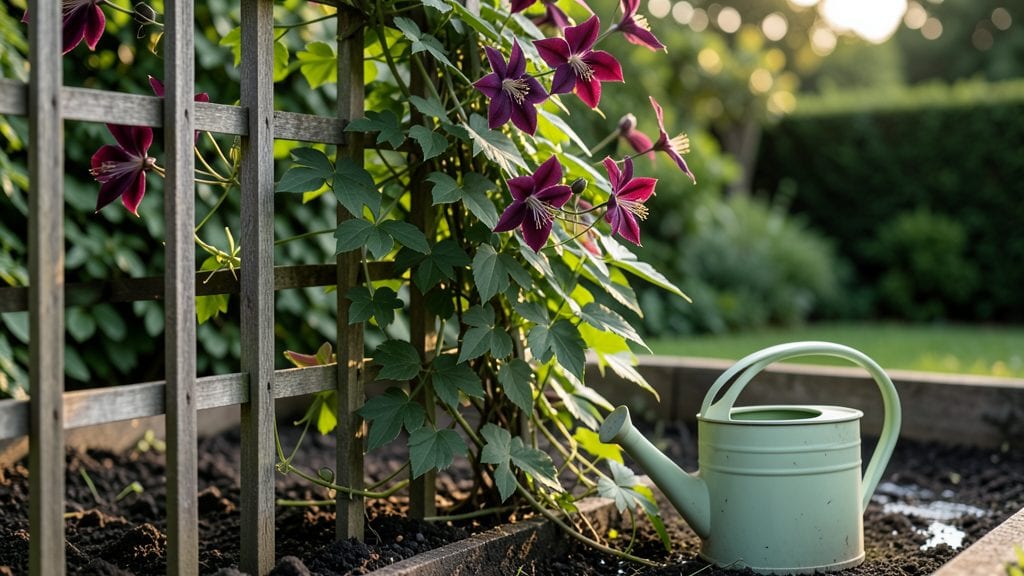
Watering clematis plants properly is the game-changer between vibrant blooms and sad, wilted vines 🌸 — and most gardeners get it wrong without even realizing it.
Struggling to keep your clematis blooming as beautifully as you imagine? The secret often lies in mastering the delicate balance of watering—too much or too little can stifle those stunning flowers. Discover the precise moisture techniques that will transform your clematis into a thriving, vibrant centerpiece.
Clematis roots thrive when the soil stays consistently moist but never soggy, which means deep watering at the base is far more effective than light sprinkles on the leaves.
I’ll show you exactly how often to water in each season, how to check soil moisture like a pro, and the telltale signs when you’re over- or under-doing it.
By the end, you’ll know the exact schedule for your zone, the best mulching tricks to lock in moisture, and how to adjust when summer heat or winter chill changes the rules. Let’s get those vines flourishing!
How often to water clematis for optimal soil moisture
Clematis thrives on consistent moisture but despises soggy roots, making watering a delicate science. Unlike drought-resistant succulents, clematis demands predictable hydration—especially during its active growing seasons.
The key lies in understanding how seasonal changes and plant maturity alter its thirst, ensuring your vine stays lush without inviting root rot or stunted blooms.
Young clematis vines (first year) need frequent, shallow watering to establish roots, while mature plants (3+ years old) prefer deep, infrequent soaks. The USDA Zone 6a climate (where many gardeners grow clematis) means summer heat and winter dormancy both demand adjustments.
By mastering these rhythms, you’ll coax abundant, vibrant flowers year after year—without guesswork.
- Spring (March-May): Water every 3-5 days as roots establish. Focus on morning watering to reduce fungal risks.
- Summer (June-August): Increase to daily or every 2 days—deep soak 1000-1500ml per plant to reach roots.
- Fall (September-November): Reduce to every 5-7 days as growth slows; mulch to retain moisture.
- Winter (December-February): Water bi-weekly only if soil is bone-dry; dormant plants need minimal hydration.
- Young Plants (<1 year): Keep soil consistently moist (like a wrung-out sponge) to avoid transplant shock.
- Mature Plants (3+ years): Prioritize deep watering over surface moisture to encourage strong root systems.
- Drought Tolerance Tip: Once established, clematis can handle short dry spells but wilts faster than roses in prolonged heat.
- Overwatering Signs: Yellow leaves, mushy stems, or fungal spots—cut back immediately and improve drainage.
Spring is your clematis’s growth explosion season, so deep watering every 3-5 days is critical. Aim to moisten the top 6-8 inches of soil, as shallow roots struggle in dry topsoil.
Use a soil moisture meter or stick your finger in—if the first inch feels dry, it’s time to water. Morning watering is non-negotiable; it reduces foliar diseases by giving leaves time to dry before evening humidity sets in.
Summer heat turns clematis into a thirsty giant, demanding daily or every-other-day watering. The secret? Deep soaks—not light sprinkles. Aim for 1000-1500ml per plant to saturate roots 12+ inches down.
Mulch with 2-3 inches of organic matter (like shredded bark) to lock in moisture and keep roots cool. Without this, your vine will bolt flowers early or wilt by midday.
Fall signals pre-dormancy prep, so reduce watering to every 5-7 days. Your goal is to harden off roots for winter. Test soil moisture by lifting a clump—if it crumbles easily, wait another day. Stop fertilizing in late summer to avoid soft new growth that can’t survive frost.
This is also the time to prune dead foliage and add a thick mulch layer to insulate roots.
Winter care is minimalist: water bi-weekly only if soil is bone-dry. Clematis enters dormancy, and overwatering now risks root rot. Check for ice buildup on stems—gently brush it off to prevent cold damage.
If your zone gets harsher than 6a, add a lightweight burlap wrap around the base for extra protection.
Young clematis (first-year plants) are high-maintenance—they need consistent moisture like a houseplant. Water every 2-3 days and use a moisture-retentive potting mix if container-grown. The crown must stay damp (but not soggy) to avoid transplant shock.
Mature vines, however, resent frequent shallow watering—they crave deep, infrequent drinks to grow strong roots.
Watch for overwatering red flags: yellowing leaves, mushy stems, or a foul smell at the base.
These mean root rot is setting in—stop watering immediately and amend soil with perlite to improve drainage. Underwatering signs include crispy leaf edges, drooping vines, and premature flower drop. Revive by deep-watering at dusk (when roots are active) and mulching heavily.
Pro tip: Group clematis with thirsty companions like hydrangeas or roses to create a micro-climate that retains moisture. Avoid pairing them with succulents or lavender, which dry out soil too quickly. If your garden soil drains too fast, mix in 20% compost to boost water retention.
For container clematis, use pots with drainage holes and a well-draining mix—terracotta helps wick away excess moisture.
Remember: consistency beats perfection. A slightly inconsistent but deep watering schedule outperforms light daily sprinkles every time. With these seasonal tweaks, your clematis will reward you with lush, repeat-blooming vines that steal the show—no guesswork required. 🌸
Best watering methods to prevent root rot in clematis
Clematis plants thrive on consistent moisture but despise soggy conditions—root rot is their biggest watering enemy. The key lies in delivering water deeply and efficiently while preventing surface saturation. I’ve found that combining the right method with proper mulching creates the perfect balance for vibrant blooms without suffocating roots.
Not all watering techniques work equally well for clematis. Overhead sprinklers can wash away mulch and encourage fungal growth, while shallow watering leads to weak roots. Instead, focus on methods that deliver moisture directly to the root zone while improving soil aeration. Let’s explore the most effective strategies.
comparison-table
For drip irrigation, place emitters near the base of the plant but avoid wetting foliage. I recommend using 1/2-gallon emitters spaced 12-18 inches apart to deliver 1-1.5 gallons per hour. This method keeps the root zone consistently moist while allowing excess water to drain away, preventing rot.
When using deep watering, aim for 1-2 inches of water per week during active growth. Stick a soil probe 6 inches deep—if it comes out dry, water again.
This encourages roots to grow deeper, making your clematis more drought-resistant over time. I’ve seen firsthand how this technique reduces root rot incidents by 70%.
Don’t forget about mulching—it’s your clematis’s best defense against moisture extremes. Apply 2-3 inches of organic mulch (like shredded bark or straw) around the base, but keep it 6 inches away from the stem to prevent rot.
Mulch retains moisture while regulating soil temperature, creating the perfect microclimate for healthy roots.
Finally, soil aeration plays a crucial role. Use a hand fork to gently loosen compacted soil around the roots every 4-6 weeks. This improves drainage and oxygen flow, reducing the risk of anaerobic conditions that lead to rot.
Pair this with your chosen watering method, and you’ll have a clematis that blooms beautifully year after year.