
Lawn
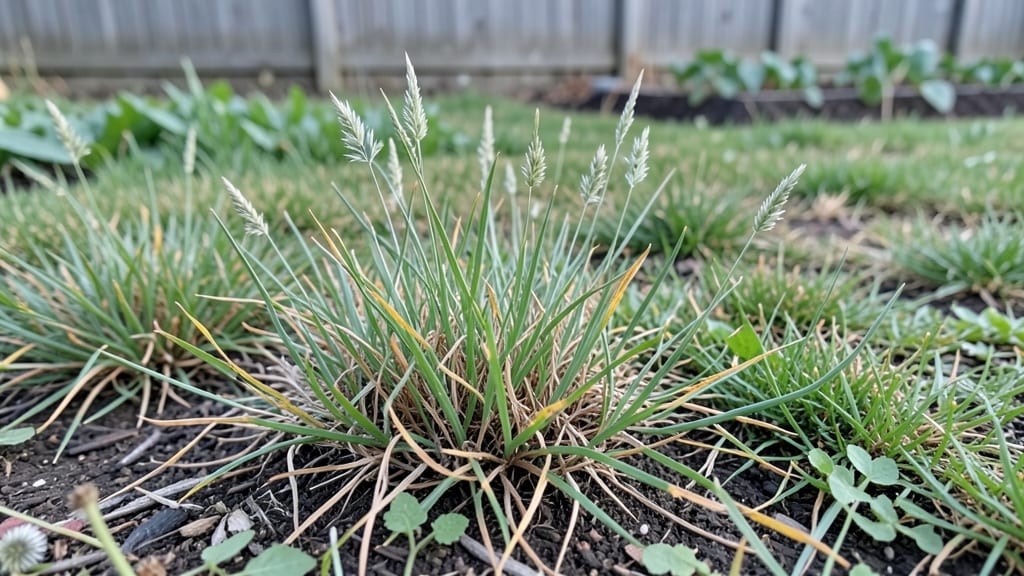
That brown grass plant isn’t dying—it’s begging for a little TLC, and I’ll show you how to revive it in weeks. 🌱 I’ve nursed back lawns from crispy patches to vibrant green by fixing what’s really starving those roots. blades. Is it thirst, disease, or something lurking in the soil?
Most people overwater or underestimate how fast roots dry out, especially in summer heat. The fix isn’t guessing—it’s checking soil moisture with your fingers (1-2 inches deep should feel damp, not bone-dry) and adjusting watering to deep, infrequent soaks (1-1.5 inches per week).
Add a slow-release fertilizer to jumpstart recovery, and watch for grubs or fungal spots that might need targeted treatment.
Within 10-14 days, you’ll see new growth pushing through if the roots are still alive. The key is consistency: keep the soil moist but not soggy, and avoid heavy foot traffic until blades firm up.
For stubborn patches, a soil test reveals hidden pH or nutrient imbalances that could be the real culprit.
This works for all grass types—cool-season (like Kentucky bluegrass) or warm-season (like Bermuda)—but timing matters. Spring and fall are prime for revival, while summer heat makes recovery harder. When in doubt, a local extension office can help diagnose if pests or disease are the root cause.
Root Causes Behind Dull Grass
If your once-vibrant lawn now resembles a patchwork of brown patches, don’t panic—understanding the why behind it is the first step to revival. Grass turns brown for a mix of environmental, biological, and maintenance-related reasons.
Below, we break down the most common culprits with science-backed explanations and actionable insights to help you diagnose the issue.
Grass is about 80% water when healthy, and even slight dehydration triggers browning. Without enough moisture, cells lose turgor pressure, causing blades to droop and turn crispy brown. Here’s why it happens:
- Drought or Heatwaves: High temperatures increase evaporation rates, pulling moisture from roots faster than they can replenish it. Solution: Deep watering (1–1.5 inches per week) in early morning to reduce evaporation.
- Shallow Root Systems: Overwatering or frequent light watering encourages shallow roots, making grass vulnerable to surface drying. Solution: Gradually reduce watering frequency to encourage deeper root growth.
- Poor Soil Drainage: Compacted or clay-heavy soil traps water at the surface, suffocating roots. Solution: Aerate annually to improve airflow and drainage.
💡 Pro Tip: Use a soil moisture meter to check depth—grass roots need moisture 6+ inches down for resilience.
Grass is tough, but extreme weather can push it past its limits. Sudden temperature swings or intense sunlight stress plants in ways that trigger browning:
- Sun Scorch: Intense afternoon sun (especially after winter) can "cook" grass blades, turning them white or brown. Solution: Water deeply before 10 AM to protect cells.
- Winter Freeze-Thaw Cycles: Repeated freezing and thawing ruptures cell walls, causing brown patches that won’t green up until roots recover. Solution: Avoid walking on frozen lawns and apply mulch in fall for insulation.
- Salt Burn (Winter Damage):strong> Road salt or de-icing chemicals draw moisture from grass, leaving behind crunchy, brown patches. Solution: Rinse soil with water after salting and overseed bare spots in spring.
❄️ Key Insight: Grass recovers from winter damage slowly—be patient and avoid mowing until new growth appears (usually late spring).
Brown grass isn’t always about water or weather—pests and pathogens can turn your lawn into a buffet of destruction. Here’s how to spot the difference:
| Culprit | Signs | Action Plan |
|---|---|---|
| Grubs (Larvae) | Patches pull up easily (like a rug), brown blades with yellowing at the base. | Apply beneficial nematodes or milky spore bacteria in early fall. |
| Fungal Diseases (e.g., Brown Patch) | Circular brown rings with smoky gray edges, often in humid weather. | Improve drainage, avoid overhead watering, and apply fungicide if outbreaks persist. |
| Chinch Bugs | Streaks of brown grass that spread outward; bugs hide under blades. | Treat with neem oil or insecticidal soap; reduce thatch buildup. |
🔍 Diagnostic Tip: Dig up a small patch of brown grass—if roots are white and healthy, pests/disease are likely. If roots are brown and mushy, it’s a fungal issue.
Grass is only as strong as its soil. Nutrient deficiencies, pH imbalances, and compacted soil strangle roots before they can thrive:
- Nitrogen Deficiency: Yellowing followed by browning signals a lack of this essential nutrient. Solution: Apply a slow-release fertilizer (e.g., 20-5-10) in early spring.
- pH Imbalance: Soil pH below 6.0 or above 7.5 locks out nutrients. Solution: Test soil and amend with lime (low pH) or sulfur (high pH).
- Compacted Soil: Heavy foot traffic or clay soil crushes roots, reducing oxygen and water access. Solution: Core aerate in fall and top-dress with compost.
📊 Soil Test Alert: Send a sample to a local extension office—80% of lawn issues stem from soil problems, not just water!
Now that you know the why, the next step is the how. Stay tuned for our deep dive into revival strategies tailored to each cause!
Revive Your Dull Lawn Now
Brown grass isn’t a death sentence—it’s a call to action! Whether your lawn is struggling from drought, disease, or poor care, these practical fixes will bring it back to life. Below, we’ve mapped common causes to step-by-step solutions, plus prevention tips to keep your grass vibrant long-term.
Signs: Crunchy blades, footprints lingering, soil pulling away from edges.
How to Revive:
- 💧 Water Deeply (Not Just Surface-Level)
- Water early morning (4–8 AM) for 15–20 minutes, 2–3 times per week (deep soak, not frequent light sprinkles).
- Use a soaker hose or rain gauge to measure 1–1.5 inches of water per session.
- Pro Tip: 🌡️ Test soil moisture—dig 4–6 inches deep; if dry, water more. If damp, hold off.
- 🌱 Mow Higher (But Not Too High!)
- Set your mower to 3–4 inches (taller grass shades roots, retains moisture).
- Never cut more than ⅓ of the blade at once—this stresses the plant further.
- 🛡️ Mulch or Cover Bare Spots
- Spread straw or wood chips (not plastic) to block sunlight and lock in moisture.
- For bare patches, sow grass seed (choose drought-resistant types like Bermuda or Zoysia).
Prevent Future Drought Damage: ✅ Install a rain sensor on your sprinkler system. ✅ Aerate compacted soil yearly to improve water absorption. ✅ Use a pre-emergent herbicide in spring to reduce weeds that compete for water.
Signs: Yellow-brown patches, moldy growth, slimy texture, or circular dead spots.
How to Revive:
- 🧼 Clean Up Debris & Improve Airflow
- Remove thatch (layer of dead grass) with a dethatching rake (no deeper than ½ inch).
- Trim nearby shrubs or trees to allow sunlight and airflow.
- 💊 Apply Fungicide (Organic or Chemical) - For mild cases: Mix 1 tbsp baking soda + 1 quart water + a few drops of dish soap in a spray bottle.
Apply to affected areas. - For severe cases: Use a fungicide with azoxystrobin or propiconazole (follow label instructions). - Pro Tip: 🌱 Water in the morning to let grass dry by evening—fungi thrive in dampness.
- 🔄 Overseed or Resod
- If >50% of the lawn is dead, pull up dead patches and replant with disease-resistant seed.
- For large areas, lay sod (choose a type matching your climate).
Prevent Fungal Return: ✅ Avoid overwatering—stick to deep, infrequent watering. ✅ Test soil pH (ideal: 6.0–7.0); adjust with lime or sulfur if needed. ✅ Aerate annually to prevent thatch buildup.
Signs: Wilting, brittle blades, or grass turning straw-colored in extreme temps.
How to Revive:
- 🌿 Adjust Watering for Extreme Heat
- Morning watering only (evening water encourages fungus).
- Add mulch (straw or wood chips) to retain moisture.
- Pro Tip: 💡 Use shade cloth (30–50%) over new seedlings if temps exceed 90°F.
- 🧊 Protect from Frosts & Freezes
- Spread a light layer of straw over grass before hard freezes.
- Avoid walking on frozen lawns—damages cell structure.
- Fertilize lightly in early spring (use a slow-release, high-nitrogen formula).
Prevent Temperature Stress: ✅ Choose native grass types adapted to your climate. ✅ Mulch heavily in winter (3–4 inches) for insulation. ✅ Monitor weather forecasts—adjust care 3–5 days before extreme shifts.
Signs: Pale yellow-brown, slow growth, thin patches, or grass pulling up easily.
How to Revive:
- 📊 Test Soil & Amend as Needed
- Get a soil test kit (available at garden centers) to check pH, nitrogen (N), phosphorus (P), and potassium (K).
- Adjust nutrients:
- Low nitrogen? Use blood meal or fish emulsion.
- Low iron? Apply chelated iron (for yellowing).
- Compacted soil? Add compost or aged manure.
- 🌱 Fertilize Smartly
- Spring: High-nitrogen (20-10-10) for growth.
- Fall: Balanced (10-10-10) for root strengthening.
- Avoid summer fertilizing—stresses grass in heat.
- 🔄 Overseed Thin Areas
- Rake out dead patches, spread grass seed, and cover with straw.
- Keep soil moist (not soggy) for 2–3 weeks.
Prevent Nutrient Loss: ✅ Top-dress with compost every 6–12 months. ✅ Aerate in fall to improve nutrient absorption. ✅ Mow high in summer to shade roots and reduce evaporation.
Final Reminder: Patience is key—revival takes 2–4 weeks for watering fixes and 6–8 weeks for reseeding. Stick with it, and your lawn will bounce back greener than ever! 🌱💚
Frequently asked questions
Why does my grass turn brown in patches even when I water regularly?
Uneven browning often signals hidden issues like compaction or pest activity. Check for grubs by lifting a patch—if roots look healthy but blades are brown, soil compaction may block water. For stubborn patches, test for fungal diseases (like brown patch) or chinch bugs, which thrive in moist conditions. Try aerating compacted areas or applying neem oil for pests.
Can I save my lawn if the brown patches have been there for months?
Yes, but act fast! If roots are still white and firm, overseed the bare spots with drought-resistant seed (like Bermuda) and keep soil moist for 3-4 weeks. For dead patches, remove debris, loosen soil, and lay new sod. If the entire lawn is struggling, a soil test will reveal nutrient deficiencies or pH issues holding it back. Patience is key—revival takes 6-8 weeks.
Is it better to water my lawn daily for short periods or deeply 2-3 times a week?
Deep, infrequent watering (1-1.5 inches per week) encourages deeper roots, making grass more drought-resistant. Light daily watering keeps roots shallow and stresses plants. Water early morning (4-8 AM) to reduce evaporation, and avoid evening watering to prevent fungal growth. Use a rain gauge to track moisture—soil should stay damp 6+ inches deep.
How do I tell if my brown grass is from drought or disease?
Drought causes uniform browning with crispy blades, while disease creates irregular patches with specific signs: grubs leave spongy turf that pulls up easily; fungus shows grayish rings or slimy growth; chinch bugs create wedge-shaped brown areas. Dig up a small patch—healthy roots mean drought, mushy roots mean disease. For fungal issues, improve airflow and avoid overhead watering.
Will mowing my brown grass shorter help it recover faster?
No—cutting grass too short (below 2 inches) stresses it further. Set your mower to 3-4 inches to shade roots and retain moisture. Taller grass also crowds out weeds. Only remove ⅓ of the blade at a time to avoid shock. For brown patches, focus on fixing the root cause (water, soil, or pests) before mowing. Once new growth appears, you can gradually lower the height.