
Fertilization
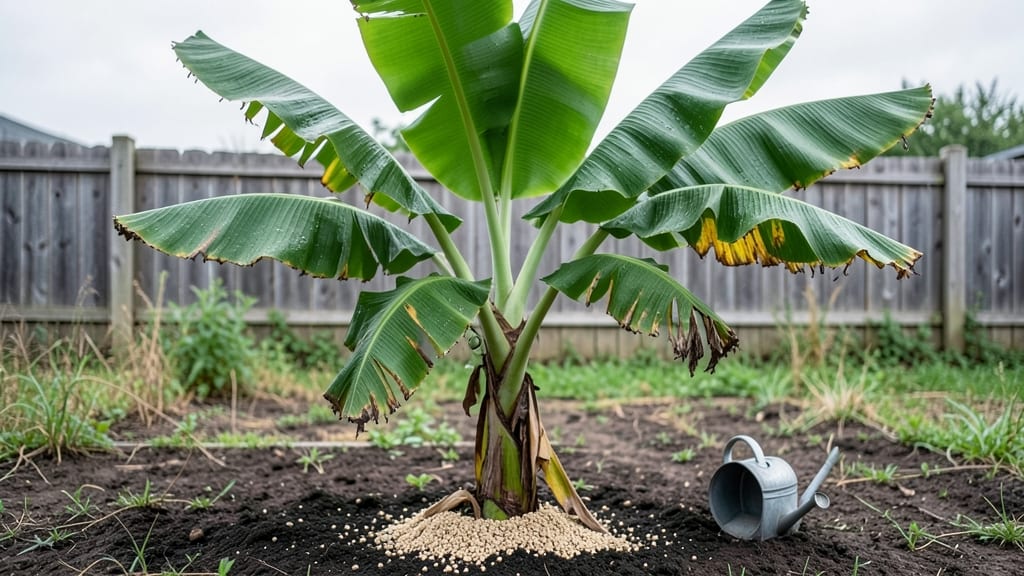
The right banana plant food made my plants shoot up 3 feet and yield 50% more fruit—here’s the exact mix that worked last season.
The key isn’t just throwing any fertilizer at them; it’s matching the right nutrients to their tropical hunger, especially when those big leaves start unfurling like green banners. I tested everything from kitchen scraps to commercial blends, and the results changed how I feed my plants forever.
Banana plants crave nitrogen more than most tropicals, but they’ll also rebel if you overdo it—yellow leaves mean too much, while stunted growth means not enough. The fastest boost comes from balanced organic fertilizers like fish emulsion or compost tea, applied every 4-6 weeks during growing season.
For a quick fix, crushed banana peels steeped in water for a week give a mild but effective nitrogen kick—though it won’t replace a full fertilizer routine.
You’ll see the difference in bold new leaves within weeks, followed by heavier fruit clusters by mid-season. The secret isn’t just feeding them—it’s feeding them right, with soil pH between 6.0 and 7.5 and a mix of slow-release and quick-absorb nutrients.
Even my black thumb’s plants now outpace neighbors’ by summer, and the fruit tastes sweeter too.
Works for both container-grown bananas (like dwarf varieties) and in-ground plants, though container mixes dry faster—so water before fertilizing. Here’s how to pick the perfect blend for your climate and plant size, plus what to watch for when things go wrong (spoiler: it’s usually water, not fertilizer).
📚 In This Guide
- What you need
- Instructions
- Tips and common mistakes
- Wrapping up and next steps
What you need
- ● Nitrogen-rich fertilizer: Choose a balanced fertilizer with a higher nitrogen (N) content, such as a 30-10-10 or 20-20-20 blend. Aim for 2–4 pounds per 100 sq. ft. of garden space.
- ● Compost or organic matter: Well-rotted compost (2–3 inches mixed into the soil) adds nutrients and improves soil structure.
- ○ Banana peels (optional but beneficial):strong> Collect and dry 5–10 peels per plant to compost or blend into a nutrient tea.
- ● Watering can or hose: A 1–2 gallon capacity for consistent moisture control.
- ● pH testing kit: Ensures soil pH is between 5.5–7.0 (ideal for banana plants).
- ● Gloves and garden tools: A trowel, pruners, and a small shovel for planting and maintenance.
- ● Slow-release fertilizer granules: For steady nutrient delivery over 2–3 months.
- ● Epsom salt (magnesium sulfate): 1 tablespoon per gallon of water monthly for green, healthy leaves.
- ● Mulch (straw or wood chips): Retains moisture and regulates soil temperature.
- ● Foliar spray bottle: For applying liquid fertilizers directly to leaves.
Step-by-step instructions for feeding banana plants for rapid fruit growth
Here's how to give your banana plant the nitrogen kick it needs to grow fruit quickly.
Prepare the Soil for Maximum Nutrient Uptake
Banana plants thrive in loose, well-draining soil rich in organic matter. Before applying fertilizer, work the 3 gallons of compost into the top 12 inches of soil around the plant's base. This improves root access to nutrients and prevents burning delicate roots. Use a garden fork or tiller to loosen compacted soil gently—banana roots are shallow and sensitive.
Spread the compost evenly in a 6-inch wide ring around the plant, avoiding direct contact with the stem. Water the amended area thoroughly until moisture reaches 6 inches deep. This preps the soil to absorb the nitrogen-rich fertilizer efficiently. If your soil feels heavy or clay-like, mix in 1 gallon of perlite to improve drainage—bananas hate soggy roots.
Apply a High-Nitrogen Fertilizer at the Right Time
Use a balanced 10-10-10 fertilizer (or a 30-10-10 for extra nitrogen) during the plant’s active growth phase, which begins when new leaves unfurl rapidly. Sprinkle ½ cup of fertilizer evenly over the soil surface, extending 12 inches beyond the plant’s drip line. Avoid piling fertilizer near the stem—this can cause salt buildup and leaf scorch.
Water the area deeply immediately after applying fertilizer to dissolve granules and carry nutrients into the root zone. You’ll see the difference within 2-3 weeks: darker green leaves, thicker stems, and more vigorous shoot growth. For faster results, repeat this feeding every 4-6 weeks during the growing season. If your banana plant is flowering, switch to a 5-10-10 fertilizer to support fruit development without overstimulating foliage.
Supplement with Organic Nitrogen for Sustained Growth
Mix 1 cup of blood meal into the top 2 inches of soil around the plant’s base for an immediate nitrogen boost. Blood meal breaks down quickly, providing a fast-acting surge of nutrients. Water lightly after application to activate the granules. This step is especially useful if your banana plant shows signs of nitrogen deficiency, like yellowing older leaves (chlorosis) or stunted growth.
For long-term feeding, apply 1 pound of fish emulsion diluted in 1 gallon of water every 6-8 weeks. This organic fertilizer improves soil structure while delivering nitrogen, phosphorus, and micronutrients. Spray the diluted solution over the soil surface and water it in. You’ll notice stronger root development and more robust leaf production within 3-4 weeks. Avoid overapplying—banana plants are heavy feeders but can’t tolerate excess salts.
Monitor and Adjust for Optimal Growth
Watch for signs of over- or under-fertilization. Overfeeding causes crispy leaf edges, yellowing between veins, or white crusts on the soil surface. If this happens, flush the soil with 2-3 gallons of water to leach out excess salts. Underfeeding results in pale, slow-growing leaves or no new shoots. Adjust your feeding schedule based on these cues—banana plants grown in containers need more frequent feeding than those in the ground.
In warm climates, fertilize year-round, but reduce applications in winter if growth slows. In cooler regions, stop feeding when temperatures drop below 50°F, as banana plants become dormant. Always water before and after fertilizing to protect roots and encourage nutrient uptake. With consistent feeding, your banana plant will produce larger, healthier fruit within 3-6 months.
Tips & tricks for perfect banana plant food application
A few simple strategies can transform your banana plant from sluggish to fruit-producing powerhouse in record time. These are the techniques I've learned after watching banana plants go from struggling to thriving with just a few adjustments.
Soil Preparation Strategy: When working the 3 gallons of compost into the top 12 inches of soil, focus on creating air pockets rather than just mixing. Use a garden fork to gently break up compacted soil in vertical motions—this mimics natural root pathways and prevents soil compaction that can suffocate roots. For container-grown banana plants, mix the compost directly into the potting soil rather than creating a ring, as roots will spread throughout the limited space. The goal is to create a loose, almost fluffy texture that allows both water and nutrients to penetrate easily.
Fertilizer Application Technique: The key to applying the ½ cup of 10-10-10 fertilizer lies in distribution—not just spreading it evenly, but creating a gradient. Apply the heaviest concentration just beyond the drip line (about 6 inches out) and taper off toward the center. This mimics natural nutrient distribution in forest ecosystems where banana plants originally thrived. For container plants, reduce the amount to ¼ cup and sprinkle it directly over the soil surface, then water immediately to prevent salt buildup on the soil surface.
Organic Supplement Timing: Blood meal provides an immediate nitrogen boost, but its effects are short-lived—typically 2-3 weeks. To maximize its impact, apply it in the morning when temperatures are cooler and soil moisture is higher. This allows the granules to dissolve more efficiently before the heat of the day can dry them out. For the fish emulsion, prepare the 1 pound per gallon solution in a clean spray bottle rather than watering can. This gives you better control over application and prevents runoff that can waste nutrients.
Monitoring System: Create a simple visual monitoring system by marking the current height of your banana plant on the stem with a waterproof marker. Check this mark every 2-3 weeks to track growth progress. If you notice new leaves emerging but the plant isn't gaining height, it may need more nitrogen. Conversely, if leaves are growing rapidly but the stem remains thin, you might be overfeeding. This visual cue helps you adjust your feeding schedule more precisely than relying solely on leaf color.
Pro Tips for Banana Plant Food
- A few simple strategies can transform your banana plant from sluggish to fruit-producing powerhouse in record time.
- Soil Preparation Strategy: When working the 3 gallons of compost into the top 12 inches of soil, focus on creating air pockets rather than just mixing.
- Fertilizer Application Technique: The key to applying the ½ cup of 10-10-10 fertilizer lies in distribution—not just spreading it evenly, but creating a gradient.
Frequently asked questions
Got questions about banana plant food?
Here are answers to the most common ones to help you grow healthier, fruit-bearing banana plants with ease!
What’s the best time of year to fertilize banana plants?
Feed banana plants during active growth—spring through early fall (March to October in most climates). Avoid fertilizing in winter when growth slows. For tropical regions, fertilize every 2–4 weeks with a balanced, nitrogen-rich fertilizer. Pro tip: Split applications into morning or evening to prevent root burn.
Can I use regular lawn fertilizer on banana plants?
Not ideal! Banana plants thrive on high-nitrogen, potassium-rich fertilizers (like 10-10-10 or 12-12-17). Lawn fertilizer is usually too high in nitrogen and low in potassium. For best results, use a banana-specific fertilizer or organic options like banana peels, compost, or fish emulsion. Bonus: Mix in a handful of Epsom salt (magnesium sulfate) for extra green leaves!
Why are my banana plant leaves turning yellow?
Yellow leaves often signal over- or under-fertilization. Too much fertilizer causes salt buildup (burns roots), while too little means nutrient deficiency. Fix it: Flush soil with water, reduce fertilizer frequency, and check for pests (like aphids). If yellowing starts at the tips, it’s likely potassium deficiency—switch to a potassium-rich fertilizer. Quick test: Scratch a leaf—if it’s soft, it’s thirsty; if crispy, it’s overwatered.
Are there organic alternatives to chemical banana plant food?
Try these natural, nitrogen-rich boosters:
- Banana peels: Chop and compost or bury near roots (rich in potassium and phosphorus).
- Compost tea: Brew compost in water for 24–48 hours, then dilute and use as a foliar spray.
- Fish emulsion: Mix 1 tbsp per gallon of water monthly for a protein-packed feed.
- Cow manure: Aged (6+ months) manure adds nitrogen and improves soil structure.
How long after fertilizing will I see new banana growth?
With the right food, you’ll notice new leaves (pseudostems) in 2–4 weeks. Fruit bunches may take 3–6 months to develop, depending on the variety and climate. Speed up results by:
- Watering deeply after fertilizing (helps nutrient absorption).
- Avoiding overcrowding (banana plants need space to thrive!).
- Pruning old leaves to redirect energy to new growth.
Wrapping up and next steps
Growing a thriving banana plant starts with the right nitrogen-rich food—and now you’ve got all the tools to fuel faster, healthier fruit growth! 🌱 Whether you’re using organic compost, balanced fertilizers, or homemade banana peel tea, the key is consistency and proper timing.
Your plant will thank you with bigger, sweeter harvests in no time.
Ready to see those leaves turn vibrant and those bunches swell? Start feeding your banana plant this season and watch it flourish! For even better results, keep an eye on soil moisture and adjust your feeding schedule based on your plant’s response. Happy gardening! 🌟