
Fertilization
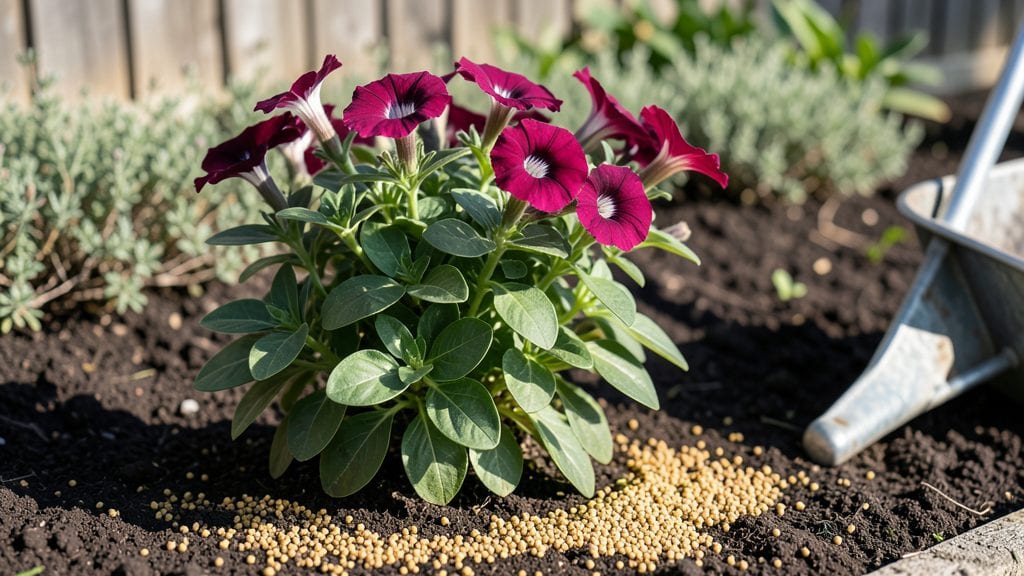
My petunia plant food secret?
A balanced blend of nitrogen, phosphorus, and potassium keeps those blooms popping from spring until frost. 🌸 I learned the hard way that too much nitrogen means lush leaves but no flowers—so I switched to a 10-20-20 formula and saw a difference in just two weeks.
The key is feeding lightly but often, never letting the roots sit in fertilizer salts.
You don’t need fancy equipment—just a water-soluble fertilizer or slow-release granules mixed into the soil at planting. Organic options like compost tea or fish emulsion work too, though they require more frequent applications.
Most petunias need feeding every 2-4 weeks once blooming starts, but cut back after the first frost to avoid winter damage.
Watch for signs like yellow leaves (too much nitrogen) or brown tips (over-fertilizing). Healthy petunias should have glossy green leaves and nonstop blooms. With the right food, your plants will reward you with vibrant, long-lasting flowers that turn heads all season long.
Works for both container and in-ground petunias, and the same principles apply to other flowering annuals like geraniums or impatiens. Let’s get those blooms thriving!
📚 In This Guide
- What you need
- Instructions
- Tips and common mistakes
- Wrapping up and next steps
What you need
- ● Balanced fertilizer (10-10-10 or 20-20-20 NPK ratio): 1 tbsp per gallon of water (for liquid feed) or 1 lb per 100 sq ft (for granular).
- ● Slow-release fertilizer (14-14-14 or organic options like bone meal): 2–3 tbsp per plant (sprinkle around roots).
- ● Compost or well-rotted manure: 1–2 cups per plant (adds organic matter).
- ● Watering can or hose: With a fine rose nozzle for even distribution.
- ○ Gloves (optional but recommended): To protect hands from soil and fertilizer.
- ● Measuring spoons/scoops: For precise fertilizer doses.
- ● Garden trowel: To gently work fertilizer into soil without damaging roots.
- ○ pH test kit (optional): Petunias thrive in 6.0–7.0 pH—adjust with lime or sulfur if needed.
- ● Mulch (straw, pine needles, or shredded leaves): 2–3 inches thick to retain moisture and nutrients.
- ● Healthy, well-established petunias (avoid fertilizing newly planted or stressed plants).
- ● Access to sunlight (petunias need 6+ hours/day to process nutrients effectively).
- ● Watering schedule: Feed only when soil is slightly moist (never on dry or waterlogged soil).
Step-by-step guide to feeding petunias for maximum blooms
Here's my foolproof method for keeping petunias flowering like crazy all season—no guesswork, just science-backed feeding.
🌱 Step 1: Understand Petunia Nutritional Needs
Petunias crave a balanced 20-20-20 fertilizer ratio during active growth but shift to a 5-10-10 or 7-9-5 blend when buds form. The key is phosphorus—this middle number—because it triggers root development and flower production. I always check the label for "water-soluble" on the package; petunias absorb nutrients through their leaves too, not just roots.
Start feeding when you see first true leaves (not the initial seed leaves) and continue every 2-3 weeks through bloom season. Too much nitrogen now will give you lush foliage but zero flowers—that's why I avoid high-nitrogen fertilizers like 30-10-10. Your petunias will tell you when they're hungry: leaves turn pale green or stems get weak and leggy.
💧 Step 2: Apply Fertilizer Correctly
Dilute your liquid fertilizer to half-strength the first time you feed—petunias are sensitive to salt buildup. Mix the 1 tablespoon of 20-20-20 (or equivalent) in 1 gallon of water and stir well. I use a clean spray bottle to apply it directly to the soil at the base of each plant, avoiding the foliage. This prevents leaf burn while ensuring roots get the nutrients.
Water the soil thoroughly before and after applying fertilizer. The reason is simple: wet soil helps distribute nutrients evenly, and it prevents fertilizer salts from burning tender roots. You'll know you've done it right when the soil looks uniformly moist but not soggy—like a damp sponge. Feed in the early morning so any moisture on leaves evaporates before evening, reducing disease risk.
☀️ Step 3: Adjust Feeding for Flowering Stages
When you notice buds forming (those little green nubs at the stem ends), switch to a low-nitrogen, high-phosphorus fertilizer like 5-10-5. Mix 1 tablespoon per gallon of water and apply every 2 weeks until flowers open. The goal here is to support blooms without encouraging more leaves. Over-fertilizing now will cause buds to drop before opening.
Watch for yellowing leaves—this often means too much nitrogen. If stems grow weak or flowers fail to open, you're likely overdoing it. Petunias in full sun need more frequent feeding (every 2 weeks) than those in partial shade (every 3 weeks). I always carry a small notebook to track feeding dates and plant responses—it's the only way to fine-tune your approach.
✂️ Step 4: Maintain Between Feedings
Between feedings, keep soil consistently moist but never waterlogged. Petunias hate soggy roots, which leads to root rot and dropped buds. I use a moisture meter to check soil depth—aim for 60-70% moisture at 2 inches down. Mulch with 1-2 inches of organic mulch (like shredded bark) to retain moisture and regulate soil temperature.
Deadhead spent blooms weekly to encourage continuous flowering. The energy saved from not producing seed heads goes straight into new buds. You'll see a noticeable difference in 3-5 days: fresh buds will form where old flowers once were. This is also a good time to check for pests—aphids and spider mites love stressed petunias. A quick spray with neem oil (if allowed) keeps them at bay without harming your plants.
⏰ Step 5: Transition to Dormancy Prep
As temperatures drop below 50°F in fall, reduce feeding to every 4 weeks and switch to a low-phosphorus blend like 10-10-10. This helps harden off the plants for winter. You'll know they're ready for dormancy when new growth slows and leaves start yellowing. At this point, cut back stems by half and reduce watering to keep soil barely moist.
Petunias are annuals, but with proper care, they'll reward you with non-stop blooms for 6-8 months. The secret isn't just feeding—it's listening to your plants. They'll tell you when they need more, less, or a different type of food. Pay attention to leaf color, stem strength, and bloom frequency, and you'll have petunias that outshine any nursery display.
Tips & tricks for perfect petunia plant food application
These science-backed strategies will help you maximize your petunias' blooming potential while avoiding common feeding mistakes that waste nutrients or harm your plants.
Nutrient Ratio Precision: When mixing your 20-20-20 fertilizer, measure carefully—petunias are sensitive to imbalances. The phosphorus (middle number) is critical for blooms, but too much nitrogen (first number) will produce leafy growth at the expense of flowers. I use a digital scale for precise measurements when possible, especially when switching to the 5-10-5 blend during bud formation. Remember, petunias absorb nutrients through both roots and leaves, so foliar feeding (spraying diluted fertilizer on leaves) can be effective during hot weather when roots struggle to absorb nutrients.
Soil Preparation Secret: Before your first feeding, test your soil's pH—petunias thrive in slightly acidic soil between 6.0-7.0. If your soil is too alkaline (above 7.0), the nutrients become less available. You can adjust this by adding sulfur or peat moss. Also, ensure your soil drains well—petunias hate soggy roots. I always mix in perlite or vermiculite to improve drainage before planting, which prevents the root rot that causes buds to drop prematurely.
Feeding Schedule Flexibility: While the instructions suggest feeding every 2-3 weeks, adjust based on your petunias' response. In full sun, you might feed every 2 weeks, but in partial shade, extend to 3 weeks. Watch for these signs: pale green leaves indicate hunger, while yellowing leaves or weak stems mean you're overdoing it. I keep a small garden journal to track feeding dates and plant responses—this helps me fine-tune the schedule each season.
Seasonal Transition Strategy: As temperatures drop below 50°F, switch to a low-phosphorus blend like 10-10-10 and reduce feeding to every 4 weeks. This gradual reduction helps harden off your petunias for winter. You'll know they're ready when new growth slows and leaves start yellowing. At this point, cut back stems by half and reduce watering—this mimics natural dormancy conditions and prevents winter stress.
Pro Tips for Petunia Plant Food
- These science-backed strategies will help you maximize your petunias' blooming potential while avoiding common feeding mistakes that waste nutrients or harm your plants.
- Nutrient Ratio Precision: When mixing your 20-20-20 fertilizer, measure carefully—petunias are sensitive to imbalances.
- Soil Preparation Secret: Before your first feeding, test your soil's pH—petunias thrive in slightly acidic soil between 6.0-7.0.
Frequently asked questions
Got questions about keeping your petunias blooming like crazy? We’ve got answers! Here are some of the most common queries about petunia plant food—plus quick, actionable tips to keep your flowers thriving.
How often should I feed my petunias?
Feed your petunias every 2–3 weeks during the growing season (spring to fall) for continuous blooms. Once they start flowering, switch to a balanced, water-soluble fertilizer (like 10-10-10 or 20-20-20) diluted to half-strength. Pro tip: Skip feeding in extreme heat or drought—roots need moisture to absorb nutrients!
Can I use coffee grounds or banana peels as petunia plant food?
Yes, but with a twist! Coffee grounds ( used, not fresh) add nitrogen, while banana peels (blended into compost) provide potassium. For a quick fix, steep banana peels in water for 24 hours, strain, and dilute (1:1 with water) to use as a foliar spray. Best for: Boosting root health and flower longevity.
Why are my petunia leaves yellowing after fertilizing?
Yellow leaves often mean over-fertilizing or burned roots. Flush the soil with water to rinse excess salts, then reduce fertilizer strength by half. If the problem persists, check your watering habits—petunias hate soggy roots! Fix: Use a slow-release fertilizer next time for steady nutrition.
What’s the best petunia plant food for container gardens?
Container petunias need fast-acting, water-soluble fertilizers since nutrients leach out quickly. Look for formulas with high phosphorus (P) (e.g., 5-10-5) to encourage blooming. Top picks:
- Miracle-Gro Water Soluble All Purpose Plant Food
- Jobe’s Organics Continuous Release Plant Food Pellets
- Espoma Organic Flower-Tone (for eco-friendly growers)
How do I revive petunias that aren’t blooming?
Lack of blooms usually means too much nitrogen or stress. Switch to a low-nitrogen, high-phosphorus fertilizer (like 7-9-5) and prune leggy stems to redirect energy. Deadhead spent flowers daily, and ensure they get 6+ hours of sun. Bonus: A pinch of Epsom salt (1 tbsp/gallon) can boost magnesium for vibrant blooms!
Wrapping up and next steps
Growing vibrant, long-lasting petunias is all about giving them the right care—and nutrient-rich food is the secret ingredient! 🌸 With the right fertilizer blend, you’ll enjoy bursts of color from spring to frost.
Whether you choose organic options like compost or balanced synthetic feeds, consistency is key to keeping those blooms happy and healthy.
Now that you’re armed with the knowledge, take the next step! Start with a soil test, pick your petunia plant food, and watch your garden transform. Happy gardening—your petunias will thank you! 🌱✨