
Plants
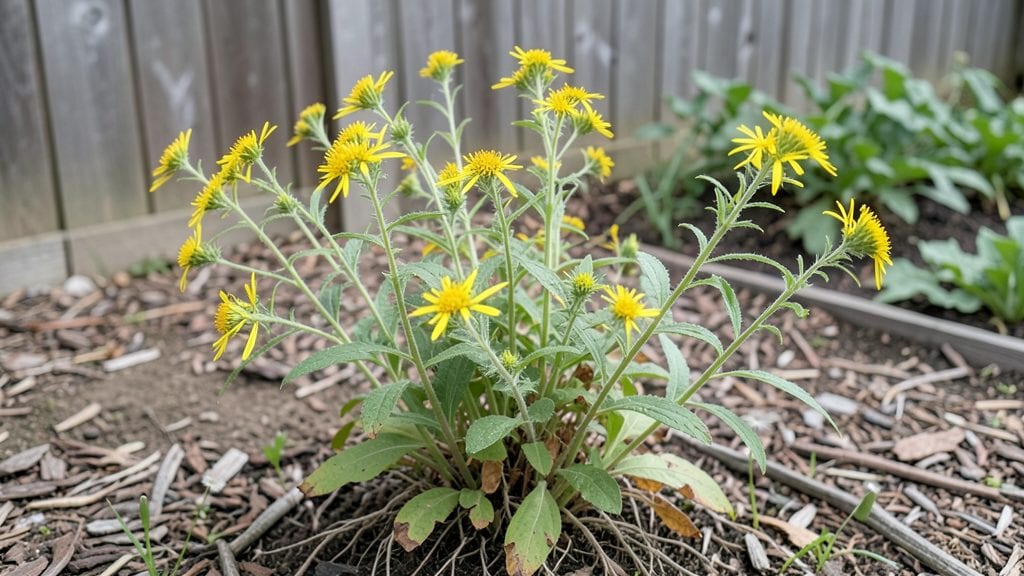
The American goldfinch plant, or Liatris spicata (blazing star), is a tall perennial with spiky purple flower clusters that bloom midsummer through fall, attracting goldfinches and other pollinators while thriving in dry, sunny conditions with minimal care.
The American goldfinch plant gets its name from the way its late-summer blooms perfectly time with migrating goldfinches' feeding needs. 🌿 These purple spikes stand out against narrow, grass-like leaves, making them easy to spot in prairie gardens.
Unlike many perennials, blazing star thrives in poor, dry soil—ideal for low-maintenance landscapes. I've seen it spread naturally in wildflower meadows, proving its hardiness in both gardens and natural settings.
What makes this plant truly special is its pollinator magnet status. 🐝 The dense flower clusters provide nectar for bees, butterflies, and hummingbirds while the seeds later feed goldfinches. Native to North America, it's a cornerstone of prairie restoration projects and drought-resistant gardens.
Just be patient—it takes 2-3 years to reach its full 3-4 foot height, but the wait is worth it for that dramatic late-summer display.
💡 In This Article
- Identifying American Goldfinch Plants in the Wild
- Planting and Maintenance Tips for Blazing Star Perennials
Identifying American goldfinch plants in the wild
The key to spotting Liatris spicata (blazing star) lies in its distinctive flower architecture. Unlike coneflowers (Echinacea), which have flat, daisy-like blooms with prominent central cones, blazing star flowers grow in tight, bottlebrush-like spikes that rise vertically from the stem.
Each spike contains 50-100 tiny tubular florets that open sequentially from bottom to top over 4-6 weeks, creating a cascading effect. 🔥 The stems themselves are stiff and wiry, often branching near the top, while coneflowers have single, unbranched stems.
Foliage provides another critical clue. Blazing star leaves are narrow, grass-like, and slightly rough to the touch, measuring about 1/8 to 1/4 inch wide and 6-12 inches long.
They grow in a basal rosette at the plant's base, forming a tight cluster that contrasts with the airy flower spikes.
In contrast, liatris hybrids often have broader leaves (1/4 to 1/2 inch wide) and may produce double blooms or flowers in shades of pink or white—rare in true L. spicata. The plant's 3-4 foot height also helps distinguish it from shorter wildflowers.
Timing is everything when it comes to goldfinch attraction. Blazing star blooms July through September, perfectly aligning with the goldfinch migration window when these birds need high-energy nectar for their long flights.
The plant's late-summer bloom cycle also coincides with the goldfinch breeding season, when adult birds are feeding their young. This evolutionary synergy explains why goldfinches are so drawn to these spikes—each floret contains ~20% sugar content, making it a nutritional powerhouse for pollinators. 💫
Regional growth habits vary slightly. In the Midwest and Great Plains, blazing star thrives in dry prairies and open woodlands, often forming large colonies through rhizomatous spreading.
Along the Atlantic Coast, it prefers sandy soils and may grow closer to the ground (2-3 feet tall) due to cooler climates.
In the Southeast, look for it in pine savannas where it shares space with other drought-tolerant species like purple poppy mallow (Callirhoe involucrata).
One common lookalike is button snakeroot (Actaea rubra), which has white flower clusters and toxic foliage. Another is prairie coneflower (Ratibida columnifera), which has yellow ray flowers and a hairy stem.
To confirm identification, check for the characteristic "bottlebrush" flower shape and rough, grass-like leaves—these features are nearly unique to Liatris spicata in its native range. 🌟
Here's a quick comparison table for field identification:
- Blazing Star (Liatris spicata): Purple bottlebrush spikes, grass-like leaves, 3-4 ft tall, blooms July-September
- Coneflower (Echinacea): Pink/purple flat blooms with central cone, broader leaves, 2-5 ft tall, blooms June-August
- Button Snakeroot: White clustered flowers, toxic foliage, 2-4 ft tall, blooms May-July
The plant's native ecosystems reveal its ecological importance. In prairie restoration projects, blazing star helps stabilize soil with its deep taproot system (reaching 3-5 feet deep) while providing habitat structure for insects. Its ability to thrive in poor, dry soils makes it a keystone species in maintaining biodiversity. 💛