
Diseases
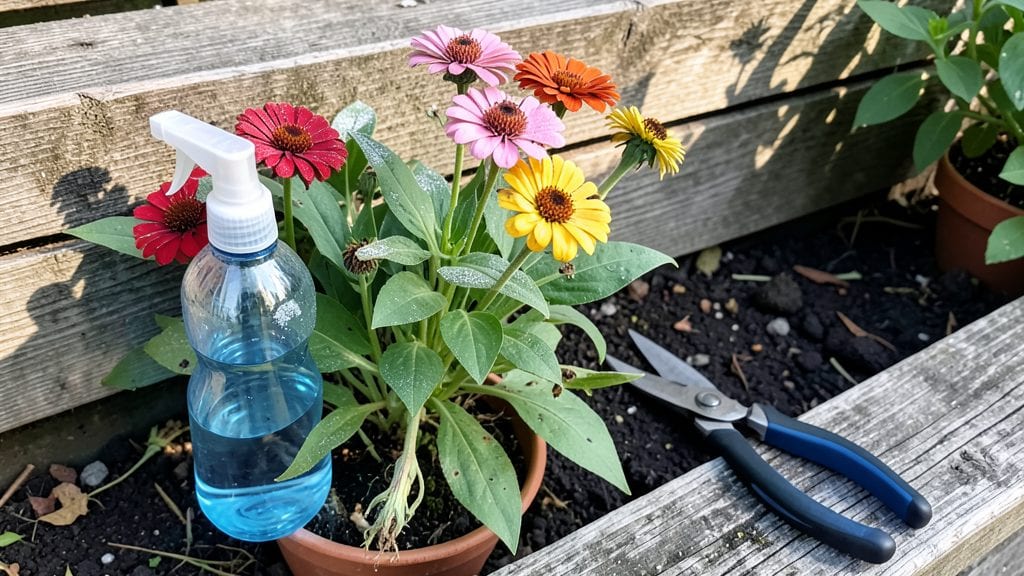
Zinnia plant diseases can turn vibrant blooms into a sad, spotted mess—unless you catch them early. 🌻 I’ve watched powdery mildew creep across my zinnias like white lace, and rust turn leaves into rust-colored confetti before my eyes.
The good news? Most of these problems have simple fixes if you know what to look for.
Overcrowded plants and wet foliage are the biggest culprits. Zinnias need 6-12 inches of space between stems and water at the base—not overhead—to stay healthy. I learned the hard way that skipping these basics invites trouble, but once you adjust, your plants bounce back faster than you’d expect.
Early intervention is everything: snip off infected leaves, spray with a baking soda mixture (1 tsp per quart of water), or use neem oil for stubborn cases. Within a week, you’ll see new growth pushing through, and those bright blooms will return—stronger than ever.
This works for powdery mildew, leaf spot, and rust, the three most common zinnia diseases. The key is acting fast and keeping your garden airy and dry. Let’s get those zinnias back to their glory days!
Root Causes Of Zinnia Struggles
Zinnias are vibrant, hardy flowers that can brighten any garden—but when they fall prey to diseases, the culprits are often hidden in plain sight. Understanding why these issues arise is the first step to protecting your plants.
Below, we break down the science behind the most common problems, so you can spot the warning signs before they spiral out of control.
Zinnias thrive in well-ventilated spaces, but when they’re crowded or planted too closely, stagnant air becomes a breeding ground for fungal diseases like powdery mildew and downy mildew. Here’s why it happens:
- Stagnant air increases humidity around leaves, creating the perfect moisture film for fungal spores to germinate.
- Overcrowding reduces airflow, trapping heat and moisture—ideal conditions for pathogens like Erysiphe cichoracearum (powdery mildew).
- Nighttime dew lingers longer in dense plantings, prolonging wetness on foliage and speeding up disease spread.
💡 Pro Tip: Space zinnias 12–18 inches apart and avoid planting them where evening shade lingers. If you’re growing in containers, elevate them to improve airflow.
Zinnias are drought-tolerant, but too much water—especially poor drainage—turns their roots into a soggy disaster zone. Here’s the science behind the damage:
- Waterlogged soil cuts off oxygen to roots, weakening the plant’s defenses and inviting root rot (caused by Phytophthora or Pythium fungi).
- Frequent surface watering keeps foliage damp, promoting leaf spot diseases like Alternaria or Septoria.
- Poor drainage in clay-heavy soils traps excess moisture, creating the perfect environment for bacterial infections.
🌡️ Key Fix: Water deeply but only when the top 1–2 inches of soil are dry. Use raised beds or amend soil with compost to improve drainage. Never water overhead—use drip irrigation or soaker hoses instead.
Zinnias aren’t just attacked by fungi—they’re also vulnerable to bacterial and viral infections when their natural barriers are compromised. Here’s how it happens:
| Cause | How It Weakens Zinnias | Diseases It Invites |
|---|---|---|
| Physical damage (e.g., hail, rough handling, pruning cuts) | Breaks the plant’s protective waxy cuticle, allowing bacteria and fungi to slip inside. | Xanthomonas (bacterial leaf spot), Botrytis (gray mold) |
| Stress from pests (e.g., aphids, spider mites) | Pests like aphids inject toxins and spread viruses (e.g., Zinnia mosaic virus) as they feed. | Viral infections, secondary fungal growth |
| Nutrient deficiencies (e.g., lack of phosphorus or magnesium) | Weakens cell walls, making plants more susceptible to infections. | Powdery mildew, damping-off in seedlings |
🔥 Prevention Strategy:
- Use sterilized pruners (soak in 1:9 bleach-water solution) to avoid introducing pathogens.
- Inspect plants weekly for pests—remove aphids with a strong spray of water or neem oil.
- Fertilize with a balanced organic mix (e.g., 10-10-10) to bolster immunity.
Diseases don’t just appear—they hitchhike from infected plants, old compost, or dirty gardening tools. Here’s how contamination spreads:
- Reused soil from last year’s garden may harbor Fusarium or Verticillium fungi, causing vascular wilt.
- Infected plant debris left in beds over winter provides a food source for pathogens, leading to damping-off in seedlings.
- Shared tools (trowels, pruners) can transfer bacterial leaf spot or powdery mildew between plants.
✨ Sanitation Checklist:
- Solarize soil in late summer by covering it with clear plastic for 4–6 weeks to kill pathogens.
- Disinfect tools with rubbing alcohol or a 10% bleach solution between uses.
- Rotate planting locations—avoid growing zinnias in the same spot year after year.
Zinnias aren’t just fighting microbes—they’re also battling Mother Nature. Extreme or inconsistent conditions stress plants, making them easier targets:
- Sudden temperature drops (below 50°F) shock zinnias, reducing their ability to fight off downy mildew.
- High humidity + warm nights (70–80°F) create the perfect storm for powdery mildew spores to spread.
- Drought followed by heavy rain weakens roots, making them vulnerable to root rot.
🎯 Adaptive Solutions:
- Choose heat-tolerant varieties (e.g., ‘Benary’s Giant’ or ‘Crystal’) for hot climates.
- Use row covers in early spring to protect seedlings from cold snaps.
- Mulch with straw or wood chips to stabilize soil moisture and temperature.
Quick Fixes for Zinnia Troubles
When your zinnias start showing signs of distress, acting fast can save your plants—and your sanity! Below are practical, organic solutions tailored to the most common zinnia diseases, along with prevention tips to keep your garden thriving.
Think of this as your go-to troubleshooting guide, packed with actionable steps and pro tips to get your zinnias back in bloom.
Signs: White, powdery coating on leaves (like dust) that worsens in humid conditions.
How to Fix It: 🔥 Remove the Problem – Snip off heavily infected leaves with clean pruners and dispose of them in the trash (not compost). This stops the spores from spreading. 🍳 Homemade Spray – Mix 1 tablespoon baking soda + 1 tablespoon horticultural oil + 1 teaspoon mild dish soap + 1 gallon water. Spray leaves early in the morning (avoid direct sunlight to prevent leaf burn). Repeat every 5–7 days until the mildew clears. 👨🍳 Boost Airflow – Thin out crowded plants and stake them to improve airflow. Avoid overhead watering—water at the base instead. ⏰ Prevent Relapse – Apply a copper fungicide (organic option) as a preventive spray every 2–3 weeks during humid seasons.
💡 Pro Tip: Plant zinnias in full sun (6+ hours/day) and well-draining soil—powdery mildew thrives in damp, shaded conditions.
Signs: Orange, rust-colored spots on leaves (usually undersides first), leading to leaf drop.
How to Fix It: 🔥 Isolate Infected Plants – Move affected zinnias at least 10 feet away from healthy ones to prevent spore spread. 🍳 Neem Oil Rescue – Mix 1 tablespoon neem oil + 1 teaspoon mild soap + 1 quart water. Spray both sides of leaves thoroughly. Reapply every 7–10 days for 3–4 weeks. 👨🍳 Clean Up Debris – Remove all fallen leaves and sterilize tools with rubbing alcohol after pruning. ⏰ Prevent Future Outbreaks – Rotate crops yearly (don’t plant zinnias in the same spot). Choose resistant varieties like ‘Benary’s Giant’ or ‘Crystal’.
💡 Pro Tip: Rust spreads via water splashes—always water zinnias at the soil level, not from above.
Signs: Water-soaked brown spots with yellow halos, often with oozing bacteria.
How to Fix It: 🔥 Cut It Out – Prune infected leaves down to healthy tissue (sterilize shears between cuts with bleach). Destroy the clippings do not compost. 🍳 Copper Soap Spray – Combine 1 tablespoon copper fungicide + 1 teaspoon castile soap + 1 gallon water. Spray every 5–7 days until new growth appears. 👨🍳 Strengthen Defenses – Feed zinnias with a balanced organic fertilizer (like fish emulsion) to boost immunity. ⏰ Prevent Spread – Sterilize garden tools after each use and avoid overhead irrigation.
💡 Pro Tip: Bacterial infections love wet foliage—water zinnias early in the day so leaves dry quickly.
Signs: Sticky residue (aphids), tiny webs (mites), or curled/yellowing leaves.
How to Fix It: 🔥 Blast Them Off – Use a strong stream of water to dislodge pests from leaves. 🍳 Soap Suds Solution – Mix 2 tablespoons insecticidal soap + 1 quart water. Spray directly on pests (repeat every 3–4 days). 👨🍳 Attract Predators – Plant marigolds or dill nearby to lure ladybugs and lacewings, which eat aphids. ⏰ Prevent Infestations – Inspect new plants before adding them to your garden. Use row covers if pests are persistent.
💡 Pro Tip: Neem oil works for both fungi and pests—just reapply after rain.
No matter the issue, these basics will help your zinnias bounce back:
- Prune regularly – Remove dead/diseased stems to redirect energy.
- Rotate crops – Avoid planting zinnias in the same spot yearly.
- Test soil pH – Aim for 6.0–7.0; amend with lime (to raise pH) or sulfur (to lower it) if needed.
- Choose disease-resistant varieties – Look for labels like “powdery mildew resistant.”
Final Thought: 🎯 Act fast, but stay calm. Most zinnia diseases are manageable with organic fixes—just consistency is key! With these steps, your zinnias will be back to their vibrant best in no time. 🌸
Frequently asked questions
Why do my zinnia leaves turn yellow and develop brown spots?
This is likely leaf spot disease or bacterial infection, often caused by overhead watering or poor air circulation. Prune infected leaves immediately and water at the base instead. A copper fungicide spray (organic option) every 5-7 days helps stop the spread.
Can I save zinnias with powdery mildew if it's already covering most leaves?
Yes, but act fast! Remove all infected leaves and spray with a baking soda solution (1 tbsp baking soda + 1 tbsp oil + 1 tsp soap per gallon of water). Thin out crowded plants to improve airflow. For severe cases, apply neem oil every 7 days until new growth appears.
How do I prevent rust disease in zinnias before it starts?
Rust thrives in humid conditions, so water zinnias at soil level (never overhead) and space plants 12-18 inches apart for airflow. Choose resistant varieties like 'Crystal' and avoid planting where infected zinnias grew last year. A preventive neem oil spray every 2 weeks during humid seasons works wonders.
Will zinnias grow back healthy after a fungal disease attack?
Once you remove infected parts and treat the plants, zinnias are resilient. Focus on improving airflow, adjusting watering habits, and using organic fungicides. Healthy zinnias often rebound within 2-3 weeks of consistent care—just keep an eye out for new growth.
Can I use the same fungicide spray on zinnias and other garden plants?
Most organic fungicides (like neem oil or copper-based sprays) are safe for many plants, but always check labels. Avoid mixing chemicals—stick to one treatment type per application. For zinnias, copper fungicides and neem oil are both excellent choices that won't harm beneficial insects.