
Planting
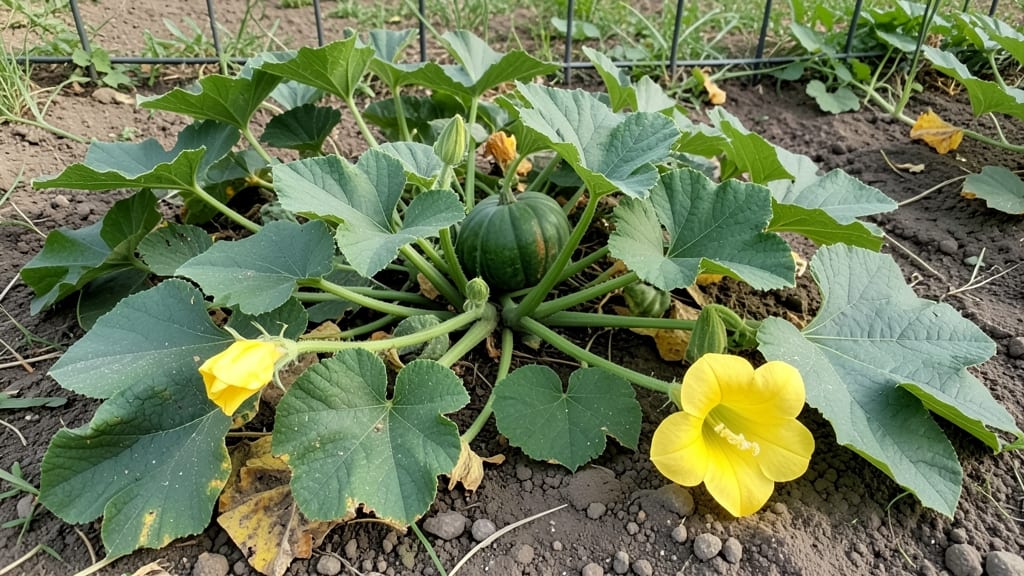
Growing a yellow pumpkin plant like 'Cinderella' or 'Jack Be Little' delivers vibrant foliage and edible fruit in just 90 days—if you nail the sunlight and soil.
I’ve learned the hard way that these varieties demand full sun and rich, well-draining soil to thrive, or they’ll bolt before producing anything worth harvesting. The payoff? Bright orange-yellow blooms followed by small, sweet pumpkins perfect for pies or carving.
Start seeds indoors 4-6 weeks before your last frost, then transplant after soil warms to 60°F. These pumpkins love heat but hate soggy roots, so mulch heavily to retain moisture without suffocating the vines.
A balanced fertilizer at planting and a second dose when flowers appear keeps growth steady—no need for fancy blends, just a 10-10-10 mix works. The key is consistency: too much nitrogen means leafy vines, not fruit.
By late summer, you’ll spot the first pumpkins forming near the plant’s base. Harvest when their rinds harden and stems dry out—usually 90 days after transplanting. These varieties stay compact (3-5 feet long), making them ideal for small gardens or containers.
Store them in a cool, dry place, and they’ll keep for weeks, ready for Thanksgiving or Halloween displays.
Watch for squash vine borers and powdery mildew, which love the warm, humid conditions these pumpkins prefer. Rotate crops yearly to prevent soil-borne diseases, and use row covers early in the season to deter pests.
With the right care, you’ll end up with a productive plant that doubles as a garden centerpiece—no green thumb required, just attention to detail.
Yellowing Leaves Explained
Yellowing in pumpkin plants—especially on the yellow pumpkin plant (Cucurbita pepo or Cucurbita moschata varieties)—isn’t just a cosmetic issue. It’s a cry for help from your plant, signaling underlying problems that can stunt growth, reduce yields, or even kill your harvest.
Understanding the why behind those yellowing leaves is the first step to reviving your vine. Let’s break down the most common culprits and what they mean for your pumpkin patch.
Yellowing leaves often start at the older, lower leaves and creep upward—a classic sign your pumpkin plant isn’t getting the right nutrients. Pumpkins are heavy feeders, and when soil lacks key elements, they show it fast.
- 🌱 Nitrogen (N) Deficiency (Most Common) - What it looks like: Pale yellow or yellow-green leaves, starting at the bottom. Stems may appear thin or weak. - Why it happens: Nitrogen is the building block of chlorophyll (the green pigment in leaves).
Without enough, your plant can’t produce energy efficiently. - Actionable fix: - Test your soil: A simple DIY test kit or lab analysis can confirm if nitrogen is low. - Feed smart: Use a balanced fertilizer (like 10-10-10) or a nitrogen-rich amendment (compost, fish emulsion, or blood meal).
Apply it side-dressed (sprinkled near the base of the plant, not touching the stem) every 2–3 weeks during the growing season. - Mulch matters: Organic mulch (straw or grass clippings) slowly releases nitrogen as it breaks down.
- 💡 Magnesium (Mg) Deficiency (Interveinal Yellowing) - What it looks like: Yellow patches between the veins (interveinal chlorosis), while the veins stay green. Older leaves are the first to show symptoms. - Why it happens: Magnesium is crucial for chlorophyll production.
Compacted or alkaline soils often lack this micronutrient. - Actionable fix: - Add Epsom salt: Mix 1 tablespoon of Epsom salt (magnesium sulfate) per gallon of water and spray it on the leaves every 2 weeks. - Soil amendment: Work in dolomitic lime (for alkaline soils) or wood ash (sparingly) to improve magnesium availability.
- 🍃 Iron (Fe) Deficiency (Young Leaf Yellowing) - What it looks like: New leaves turn bright yellow while older leaves stay green.
This is common in alkaline soils (pH > 7.0). - Why it happens: Iron is immobile in plants—once it’s locked up in alkaline conditions, the plant can’t access it.
Even if iron is in the soil, the pH prevents uptake. - Actionable fix: - Lower the pH: Add sulfur or peat moss to acidic soil (aim for pH 6.0–6.8 for pumpkins). - Chelated iron: Use a chelated iron supplement (like iron sulfate or iron EDTA) and apply it as a foliar spray or soil drench.
Pumpkin plants are thirsty but hate soggy feet. Water stress—whether from drought or overwatering—triggers yellowing as the plant struggles to transport nutrients.
- 💧 Underwatering (Edge Yellowing) - What it looks like: Leaves turn yellow at the edges (scorching) and may feel crispy or dry. The entire leaf can wilt. - Why it happens: Pumpkins need 1–2 inches of water per week (more in extreme heat).
Shallow roots or inconsistent watering lead to stress. - Actionable fix: - Deep watering: Water early in the morning (6–8 AM) to reduce evaporation.
Use a soaker hose or drip irrigation to deliver water 1–2 inches deep per session. - Mulch heavily: Apply 4–6 inches of straw or wood chips to retain moisture and cool roots.
- 🌊 Overwatering (Root Rot & Chlorosis) - What it looks like: Yellowing starts on lower leaves, but the plant may also wilt despite wet soil. Roots smell rotten, and stems feel mushy. - Why it happens: Pumpkins hate waterlogged soil.
Poor drainage or excessive irrigation suffocates roots, preventing nutrient uptake. - Actionable fix: - Improve drainage: Amend soil with compost or perlite if it’s clay-heavy.
Raise beds or plant on a slope to avoid pooling. - Adjust watering: Let the top 2 inches of soil dry out between waterings. If your plant is already yellow from rot, prune affected leaves and reduce watering temporarily.
Pests and pathogens steal nutrients and disrupt the plant’s ability to photosynthesize, leading to yellowing.
- 🐛 Sap-Sucking Pests (Aphids, Spider Mites, Whiteflies) - What it looks like: Leaves develop yellow stippling (tiny dots) or curl and distort.
Sticky residue (honeydew) may appear on undersides. - Why it happens: These pests pierce leaves to feed, injecting toxins that damage cells and prevent chlorophyll production. - Actionable fix: - Blast them off: Spray plants with a strong stream of water to dislodge pests. - Neem oil or insecticidal soap: Apply every 5–7 days until pests are gone.
For severe infestations, use pyrethrin-based sprays (organic option). - Encourage predators: Ladybugs and lacewings love aphids—plant marigolds or dill nearby to attract them.
- 🍄 Fungal Infections (Powdery Mildew, Downy Mildew) - What it looks like: Yellow patches with white powdery spots (powdery mildew) or yellow, greasy-looking undersides (downy mildew). - Why it happens: Fungi thrive in humid, shaded, or crowded conditions.
Poor airflow lets spores spread unchecked. - Actionable fix: - Prune for airflow: Space plants 4–6 feet apart and remove lower leaves touching the soil. - Copper fungicide: Spray weekly with a baking soda mix (1 tsp baking soda + 1 quart water + a few drops of dish soap) or a copper-based fungicide. - Prevent recurrence: Water at the base (avoid overhead sprinkling) and rotate crops yearly.
Even healthy pumpkin plants can yellow if their environment isn’t ideal.
- ☀️ Too Much Sun (Sun Scorch) - What it looks like: Leaves turn yellow or brown in direct sunlight, often with crispy edges.
Common in hot, dry climates or after transplant shock. - Why it happens: Pumpkins love sun, but intense afternoon heat can overwhelm them, causing cellular damage. - Actionable fix: - Provide afternoon shade: Use shade cloth (30–50%) during peak heat (1–4 PM). - Mulch & water deeply: Keep roots cool with mulch and water early morning.
- 🌡️ Temperature Swings (Cold Stress) - What it looks like: Leaves yellow evenly (not patchy) and may feel soft or mushy. Growth slows drastically. - Why it happens: Pumpkins thrive in warm soil (70–90°F).
Cold snaps or late frosts shock the plant, halting nutrient uptake. - Actionable fix: - Extend the season: Use row covers for early planting or black plastic mulch to warm soil faster. - Avoid transplant shock: Wait until soil is at least 60°F before planting seedlings.
Pro Tip 💡: Keep a symptom journal! Note which leaves yellow first, their location, and any other changes (spots, wilting, etc.). This helps pinpoint the exact cause faster next time.
Reviving Your Fading Pumpkin Patch
Seeing your yellow pumpkin plant struggle can be disheartening, but don’t toss the trowel just yet! Whether your vines are wilting, leaves are turning yellow, or growth has stalled, these targeted fixes will help you revive your patch and coax those vibrant orange fruits back to life.
Below, we’ve mapped common issues to practical solutions—plus prevention tips to keep your pumpkins thriving all season.
Yellow leaves are often a cry for help from your pumpkin plant. Here’s how to diagnose and correct the most common culprits:
💡 Lack of Nitrogen (Pale Yellow Leaves, Slow Growth)
Pumpkins are heavy feeders, and nitrogen is their favorite nutrient.
If your leaves are pale or yellowing from the bottom up, it’s time to fertilize. - How to Fix It: - Apply a balanced fertilizer (10-10-10 or 5-5-5) or a nitrogen-rich amendment like composted manure or blood meal.
Follow package instructions for dosage. - For organic growers: Mix in 1–2 inches of compost around the base of the plant (keep it 6 inches away from the stem to avoid rot). - For hydroponic/greenhouse setups: Use a fish emulsion or seaweed extract (1 tbsp per gallon of water) every 2–3 weeks.
- 🌱 Prevention Tips:
- Side-dress your pumpkins with compost or fertilizer every 3–4 weeks.
- Rotate crops annually to replenish soil nutrients.
- Mulch heavily (straw or grass clippings) to retain nitrogen in the soil.
💧 Overwatering or Poor Drainage (Yellowing Edges, Mushy Stems)
Pumpkins hate soggy feet! Yellowing leaves with crispy edges or a mushy stem signal overwatering or compacted soil.
- How to Fix It:
- Check your soil: Stick your finger 2 inches deep—if it’s damp, hold off on watering.
Pumpkins need 1–2 inches of water per week, but they prefer dry feet. - Improve drainage: Amend heavy clay soil with perlite, sand, or coconut coir.
For container growers, ensure pots have drainage holes and use a well-draining mix (60% potting soil, 30% compost, 10% perlite). - Adjust watering habits: Water deeply but infrequently—aim for the soil, not the leaves, to prevent fungal diseases.
- 🌱 Prevention Tips:
- Plant on mounds (6–12 inches high) to improve drainage.
- Use raised beds if your soil is consistently waterlogged.
- Water in the morning to allow foliage to dry before nightfall.
🍄 Fungal Issues (Yellow Spots, Black Spots, or Powdery Mildew)
Fungal infections love damp, crowded conditions.
Look for yellow spots with dark edges or a white powdery coating—classic signs of trouble. - How to Fix It: - Prune infected leaves immediately using sterilized scissors (wipe with rubbing alcohol between cuts). - Apply a fungicide: Use neem oil (1 tsp per quart of water + a drop of dish soap as a surfactant) or baking soda spray (1 tbsp baking soda + 1 quart water + a few drops of soap).
Spray early in the morning and repeat every 7–10 days. - Improve airflow: Thin out vines if they’re too crowded, and space plants 3–5 feet apart.
- 🌱 Prevention Tips:
- Avoid overhead watering—use a drip irrigation system or soaker hose.
- Rotate crops to prevent fungal buildup in the soil.
- Choose resistant varieties like ‘Howden’ or ‘Jack Be Little’ if fungi are a recurring issue.
If your pumpkin plant is small, leggy, or just not growing, it’s likely dealing with stress or pests.
🐜 Pest Invasion (Holes in Leaves, Chewed Vines, or Sticky Residue)
Squash bugs, cucumber beetles, and aphids can derail your pumpkin’s growth faster than you can say “jack-o’-lantern.”
- How to Fix It:
- Handpick pests in the early morning when they’re sluggish.
Drop them into soapy water. - Use row covers (floating fabric) to protect young plants from beetles and squash bugs. - Spray with insecticidal soap (1.5 tbsp per gallon of water) or kaolin clay (a natural repellent). - Introduce beneficial insects: Ladybugs and lacewings eat aphids, while parasitic wasps target squash bugs.
- 🌱 Prevention Tips:
- Interplant with pest-repelling herbs like basil, marigolds, or nasturtiums.
- Remove plant debris at the end of the season to eliminate overwintering pests.
- Rotate planting locations to disrupt pest life cycles.
☀️ Heat or Sun Stress (Scorched Leaves, Wilting Despite Water)
Pumpkins love the sun, but too much heat without proper care can cause leaves to yellow or crisp.
- How to Fix It:
- Provide afternoon shade with a lightweight shade cloth (30–50%) during extreme heat (above 90°F/32°C).
- Mulch heavily (4–6 inches of straw or wood chips) to keep roots cool and retain moisture.
- Water deeply at the base in the early morning to reduce evaporation.
- 🌱 Prevention Tips:
- Choose heat-tolerant varieties like ‘Cinderella’ or ‘Small Sugar’ for hot climates.
- Plant in late spring or early summer to avoid peak heat waves.
- Use reflective mulch (like white plastic) to deflect excess sunlight.
If your plant is beyond saving but you still want fruit, try these desperate-but-effective measures:
- 🌱 Prune Aggressively: Cut back damaged vines to redirect energy to healthy growth.
Focus on keeping 3–5 main vines with strong leaves. - 💧 Hydrate Deeply: Water at the root zone (not the leaves) and let the soil dry slightly between waterings to prevent root rot. - 🌿 Fertilize for a Final Push: Use a low-nitrogen, high-phosphorus fertilizer (like 5-10-10) to encourage flowering and fruiting.
With these fixes, your yellow pumpkin plant should bounce back in no time. Remember, pumpkins are resilient—give them the right care, and you’ll be carving (or baking!) those plump orbs before you know it. 🎃✨
Frequently asked questions
Are yellow pumpkins edible?
Varieties like 'Cinderella' and 'Jack Be Little' produce edible fruit with sweet, nutty flesh perfect for pies, soups, or roasting. Their vibrant color comes from natural pigments (like carotenoids), not artificial dyes, making them a colorful addition to any dish.
How do I tell if my yellow pumpkin plant is healthy?
Healthy plants have deep green leaves (not yellowing), sturdy vines, and bright yellow-orange blooms. Check for strong new growth and firm stems—wilting or mushy stems signal overwatering or disease. A quick soil check (dig 2 inches deep) should reveal moist but not soggy conditions.
Can I grow yellow pumpkins in containers?
Yes! Compact varieties like 'Jack Be Little' thrive in 5-gallon containers with well-draining soil. Use a mix of potting soil and compost, and ensure the pot has drainage holes. Place in full sun (6+ hours daily) and water deeply when the top inch of soil dries out.
Why are my yellow pumpkin leaves turning yellow?
Yellowing leaves usually mean nutrient deficiency (like nitrogen or magnesium), overwatering, or pests. Start by checking soil moisture—if it’s soggy, reduce watering. For nutrients, side-dress with compost or use a balanced fertilizer (10-10-10). Inspect leaves for pests like aphids or spider mites.
How long does it take for yellow pumpkins to mature?
Most varieties mature in 75–90 days from transplanting. Harvest when the rind hardens and the stem dries out—usually late summer to early fall. Smaller varieties (like 'Jack Be Little') may ripen faster (60–70 days), while larger ones take longer.