
Watering
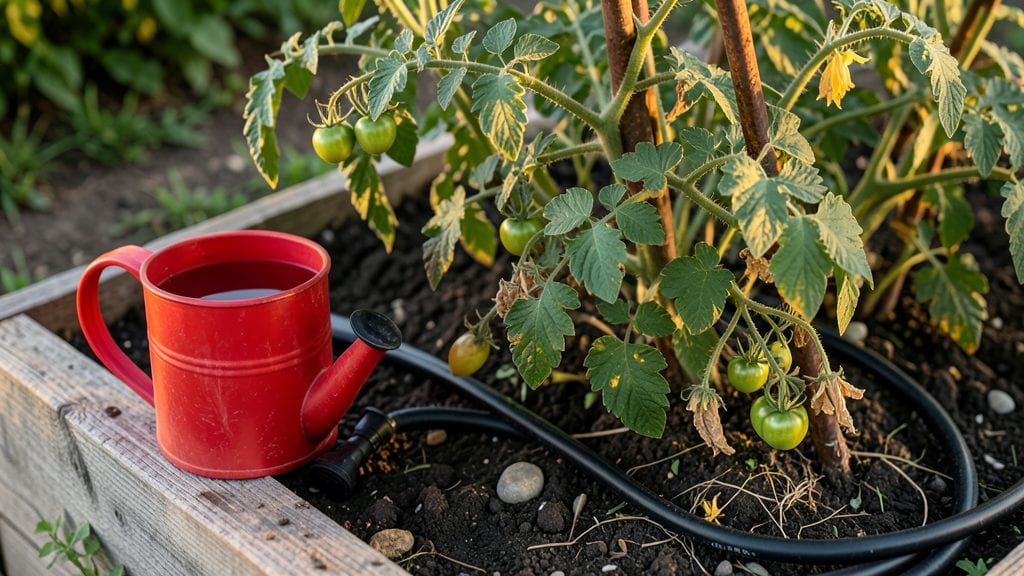
Your tomato plant’s crispy leaves and drooping vines aren’t a death sentence—this is exactly how I fix an underwatered tomato plant in just 24 hours. 🌱 The key isn’t just dumping water; it’s understanding why it’s struggling and giving it what it truly needs.
I’ve nursed back plants that looked like they’d give up, and with the right approach, yours can bounce back too.
The first step is diagnosing the damage: check the soil—if it’s dry 2 inches down, that’s your answer. Wilting leaves often start at the bottom, and the stems feel hollow when squeezed.
But here’s the game-changer: deep watering (not just a quick sprinkle) and improving soil moisture retention with organic matter. I’ll show you how to revive the roots and keep them happy long-term.
Within a day, you’ll see the leaves perk up and new growth emerge. The secret is consistency—tomatoes hate dry spells but also despise soggy roots. By the end, you’ll have a thriving plant that produces juicy, flavorful fruit all season. Let’s get those roots drinking again.
This works for both container-grown and in-ground tomatoes, and the same principles apply to peppers and eggplants too. Once you master this, you’ll spot the signs early and keep your plants hydrated without guesswork. Ready to bring your tomato back to life?
Root Causes of Plant Stress
Underwatered tomato plants don’t just happen by chance—they’re usually the result of specific environmental or human-induced factors. Understanding these causes is the first step to fixing the problem and preventing future stress.
Let’s break down the most common reasons why your tomato plant might be thirsty for more than you’re giving it.
Tomatoes thrive on consistent moisture, but their shallow root systems dry out quickly—especially in hot, windy, or sandy conditions. If you’re watering sporadically (e.g., only when the soil feels dry to the touch), the roots struggle to absorb enough water to sustain the plant’s needs.
Why it happens:
- Evaporation rates exceed water intake: Sandy or loamy soils drain water faster than clay or compost-rich soils, leaving roots parched.
- Surface-level watering fails to reach deeper roots: A light sprinkle or drip from the top only wets the top inch of soil, while roots may extend 12–18 inches deep in mature plants.
- Irregular schedules disrupt hydration cycles: Plants rely on predictable moisture; sudden dry spells cause stress hormones (like abscisic acid) to trigger wilting as a survival mechanism.
Actionable insight: Use your finger to check soil moisture 2–3 inches deep—if it’s dry, it’s time to water. Aim for 1–1.5 inches of water per week (more in extreme heat).
Even if you’re watering enough, clay-heavy or compacted soil acts like a sponge that traps air pockets, preventing roots from accessing water efficiently. Over time, this leads to root suffocation and dehydration despite wet-looking soil.
Why it happens:
- Clay soil holds water but blocks oxygen, forcing roots to "drown" in saturated conditions while still starving for hydration.
- Compacted soil (from foot traffic or heavy machinery) crushes root pathways, reducing water absorption by up to 50%.
- Lack of organic matter (like compost or mulch) breaks down soil structure, making it harder for water to penetrate.
Actionable insight: Test your soil’s drainage by filling a jar with soil and water—if water drains in <1 hour, it’s too sandy; if it takes >4 hours, amend with perlite or coarse sand. Add 2–3 inches of mulch to retain moisture and improve structure.
Tomatoes aren’t just wilting because of water—they’re also battling heat, wind, and sunlight that accelerate moisture loss. These factors create a double whammy of dehydration, even with adequate watering.
Why it happens:
| Stressor | Effect on Plant | Science Behind It |
|---|---|---|
| High temperatures | Leaves lose water 3x faster in heat (via transpiration). | Stomata (leaf pores) open wider to cool the plant, but this speeds up evaporation. |
| Strong winds | Strips moisture from leaves like a desert breeze. | Wind increases the vapor pressure deficit, forcing plants to work harder to retain water. |
| Intense sunlight | Overheats roots, reducing their ability to absorb water efficiently. | Soil temperatures above 85°F (29°C) can cook roots, damaging their cell membranes. |
Actionable insight:
- Shade cloth (30–50%) can reduce heat stress in peak sun hours.
- Water deeply in the early morning to minimize evaporation losses.
- Windbreaks (like trellises or tall plants) shield tomatoes from drying gusts.
When tomato plants compete for water in tight spaces or after being transplanted, their root systems take weeks to adjust. This delay in establishing a strong water-uptake network leaves them vulnerable to wilting.
Why it happens:
- Root-bound pots: Roots circling in containers can’t spread out, limiting water absorption.
- Transplant trauma: Disturbed roots take 7–14 days to regrow, during which the plant relies on stored moisture.
- Competition with weeds: Weeds steal 30–50% of available water, leaving tomatoes high and dry.
Actionable insight:
- Space seedlings 18–24 inches apart to reduce competition.
- Water thoroughly after transplanting to encourage root growth into new soil.
- Mulch heavily (4+ inches) to suppress weeds and retain soil moisture.
Potted tomatoes have far less soil volume to hold water, making them dry out 2–3x faster than in-ground plants. Small pots, plastic containers, and lack of drainage holes all contribute to underwatering.
Why it happens:
- Limited soil mass: A 5-gallon pot holds ~10–15 lbs of soil, which can dry out in 2–3 hours on a sunny day.
- Plastic pots heat up in sunlight, increasing evaporation rates.
- No drainage holes lead to root rot (which blocks water uptake) or surface crusting (preventing water penetration).
Actionable insight:
- Upgrade to 5-gallon+ containers for mature plants.
- Use self-watering pots or drip irrigation for consistency.
- Line pots with burlap to prevent soil from drying out against the container walls.
While water is the obvious culprit, lack of key nutrients (like potassium or calcium) weakens a tomato’s ability to regulate moisture. Without proper cellular function, roots can’t absorb water efficiently, even when soil is damp.
Why it happens:
- Potassium deficiency: Acts like a "dehydration switch," causing stomata to close prematurely and leaves to wilt.
- Calcium deficiency: Weakens cell walls in roots, leading to blossom-end rot (a sign of poor water/nutrient transport).
- Nitrogen excess: Promotes leafy growth at the expense of roots, leaving the plant top-heavy and thirsty.
Actionable insight:
- Test soil pH (aim for 6.0–6.8)—nutrient uptake drops outside this range.
- Add compost or balanced fertilizer (10-10-10) at planting and mid-season.
- Foliar spray with calcium (like crushed eggshells) can help root strength.
💡 Pro Tip: Combine fixes! For example, amend clay soil + mulch + deep watering will address multiple causes at once. The key is observing your plant’s environment—not just its watering schedule.
Revive Your Tomato Plant Fast
If your tomato plant is looking thirsty and you’re ready to turn things around, here’s your step-by-step guide to bringing it back to life—fast. The key is to identify the root cause (literally!) and act with precision.
Below, we’ll map common issues to their fixes, so you can skip the guesswork and get straight to saving your plants. 💦🌱
Before diving into solutions, confirm whether your plant is truly underwatered or suffering from another issue.
Here’s a quick checklist: - Underwatered signs: Dry, crispy leaf edges, wilting (even in the morning), soil pulling away from the pot, and a dull, grayish-green hue. - Overwatered signs: Yellowing leaves (especially lower ones), mushy stems, root rot (smells sour or looks slimy), and soil that stays soggy for days. - Other culprits: Pests (like aphids), nutrient deficiency, or disease (e.g., blight) can mimic drought stress.
Pro tip: Stick your finger 2 inches into the soil. If it’s bone-dry, it’s time to water. If it’s damp but your plant is still wilting, check for root issues. 🌡️
1. Deep Watering: The Golden Rule
Shallow watering is the enemy of tomato plants. They need a slow, deep drink to encourage strong root growth.
- 🔥 Step 1: Water until the soil is thoroughly moist—about 6–8 inches deep. Use a hose, watering can with a long spout, or a drip irrigation system.
- 🍳 Step 2: Water in the morning (6–8 AM) to reduce evaporation and fungal risks. Avoid evening watering, as damp leaves overnight can invite disease.
- 👨🍳 Step 3: Let the top 1–2 inches of soil dry out between waterings. For potted tomatoes, this might mean watering every 1–2 days in hot weather.
Pro tip: If your plant is severely wilted, give it a soak—place the pot in a basin of water for 15–20 minutes to rehydrate the roots. Drain well afterward to avoid root rot. 💡
2. Adjust Your Watering Schedule
Tomatoes are thirsty but hate inconsistency. Here’s how to nail the timing:
| Condition | Watering Frequency | Notes |
|---|---|---|
| Hot, dry climate | Every 1–2 days (or daily for potted plants) | Mulch with straw or wood chips to retain moisture. |
| Moderate climate | Every 2–3 days | Check soil moisture daily—don’t rely on a rigid schedule. |
| Cool or rainy weather | Every 3–4 days (or less) | Overwatering is a bigger risk here. Let the soil dry slightly. |
| Potted tomatoes | Daily in summer; every other day in spring/fall | Pots dry out much faster than ground soil. |
Pro tip: Use a moisture meter or the finger test to avoid over- or under-watering. If you’re unsure, under-water slightly—tomatoes tolerate drought better than soggy roots. ✨
3. Improve Soil Drainage & Mulch
If your soil drains poorly or dries out too quickly, your tomato’s roots are stuck in a no-win situation.
- 🔪 Amend heavy clay soil: Mix in compost, perlite, or coconut coir to improve aeration and drainage.
- 🥘 Add mulch: Spread a 2–3 inch layer of straw, grass clippings, or wood chips around the base (but not touching the stem). This locks in moisture and cools roots.
- ⏰ Upgrade pots (if potted): Ensure pots have drainage holes and use a well-draining mix (e.g., 60% potting soil, 30% perlite, 10% compost).
Pro tip: For container gardens, use self-watering pots or terracotta (which dries out faster, encouraging deeper watering). 🎯
4. Prune Damaged Leaves & Boost Recovery
Wilting leaves can’t photosynthesize efficiently, so trim the dead weight to help your plant focus on recovery.
- 🌿 Remove crispy or yellow leaves: Snip off leaves with brown edges or spots using clean pruners.
- 💪 Fertilize lightly: Once the plant perks up, feed it with a balanced fertilizer (10-10-10) or a seaweed tonic to rebuild strength.
- ☀️ Provide shade temporarily: If your plant is in peak sun and stressed, move it to partial shade for 2–3 days to reduce transpiration.
Pro tip: Avoid high-nitrogen fertilizers right after reviving—they promote leafy growth at the expense of roots. Wait until new growth appears. 💡
Once your tomato plant is back on track, keep these habits to avoid future drought stress: - 🌡️ Monitor soil temperature: Roots struggle in cold, compacted soil.
Wait until soil is at least 50°F (10°C) before planting. - 💧 Water at the base: Avoid wetting leaves to prevent fungal diseases like early blight. - 🌱 Use drip irrigation: It delivers water directly to the roots and reduces waste. - 🍅 Choose drought-tolerant varieties: If you struggle with watering, try ‘Solar Fire,’ ‘Heatmaster,’ or ‘Mountain Merit’ tomatoes—they handle heat and drought better. - 📅 Plan ahead: Group tomatoes with other thirsty plants (like peppers or basil) to create a microclimate that retains moisture.
With these fixes, your tomato plant should show signs of recovery within 24–48 hours—think perky leaves, firmer stems, and maybe even a new flower or two! 🌟 Stay consistent, and your plants will reward you with a bountiful harvest.
Frequently asked questions
How can I tell if my tomato plant is truly underwatered vs. just wilting from heat?
Check the soil 2 inches deep—if it’s bone-dry, that’s your answer. Underwatered plants also have crispy leaf edges and stems that feel hollow when squeezed. Heat-wilting happens during peak sun but recovers overnight, while thirsty plants stay droopy even in the morning.
Can I fix an underwatered tomato plant overnight?
For severe cases, give it a deep soak by placing the pot in a basin of water for 15–20 minutes (drain well after). Within 24 hours, you’ll see leaves perk up if the roots are still healthy. If the stems stay mushy, the damage may be permanent—prune back dead growth and focus on new shoots.
Why does my tomato plant wilt even after I water it?
This often means root stress from compacted soil, poor drainage, or nutrient deficiencies (like potassium). Test soil moisture deeper than 2 inches—if roots can’t absorb water efficiently, even wet soil won’t help. Amend with compost and mulch to improve hydration.
Is it better to underwater or overwater a tomato plant?
Tomatoes tolerate drought better than soggy roots. Overwatering causes root rot, while underwatering triggers wilting (which recovers faster). The key is consistency—aim for 1–1.5 inches of water weekly, adjusting for heat/wind.
Can I save a tomato plant with brown, crispy leaves?
Prune off the dead leaves immediately to redirect energy to healthy growth. If the stems are still firm, the plant can recover. For severe cases, focus on deep watering + mulching—new leaves will emerge within 1–2 weeks if roots are intact.