
Pruning
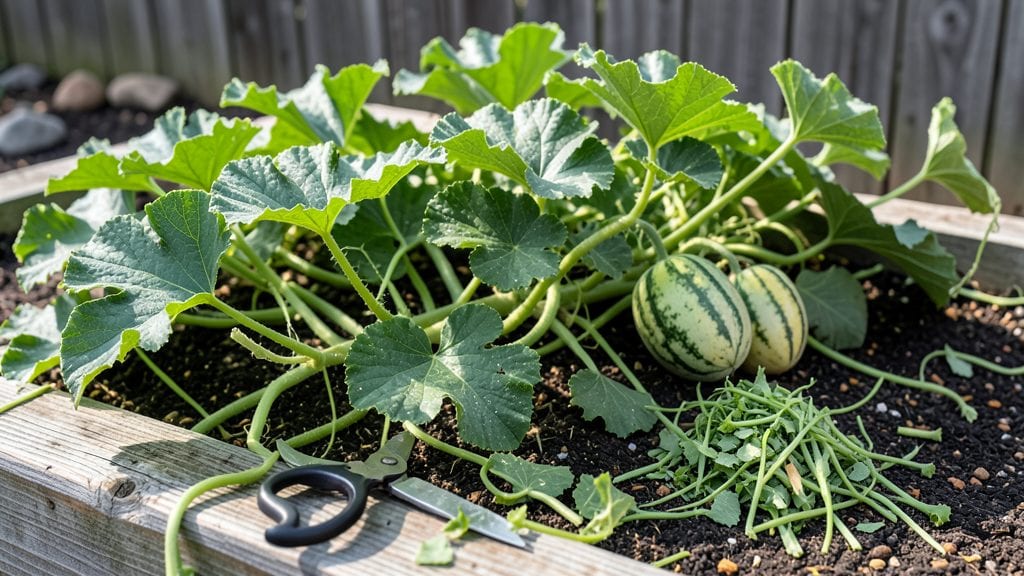
Trimming watermelon plants isn’t just about keeping them tidy—it’s the secret to bigger harvests that last all season. ✨ I learned this the hard way after my first overgrown vines produced tiny, bitter melons. The right cuts redirect energy where it matters: to fruit size, not endless vines.
You’ll need sharp pruning shears, gloves, and a sunny morning to work. Focus on three key areas: removing suckers (those little shoots between the main stem and leaves), thinning excessive vines, and cutting back leggy growth.
Most gardeners skip this step, but it’s what turns a handful of small melons into a bounty of 10-pound beauties.
The payoff comes in late summer when your vines produce 30-50% more fruit than untrimmed plants. Airflow improves, reducing disease, and the melons ripen faster. Plus, your garden stays manageable—no more wrestling with 20-foot vines that take over the yard.
Works for both bush and vining varieties, and the technique scales from small containers to sprawling backyard patches. Let’s get those shears ready—your melons will thank you.
📚 In This Guide
- What you need
- Instructions
- Tips and common mistakes
- Wrapping up and next steps
What you need
- ● Pruning shears or sharp bypass pruners – Look for sterilized, stainless steel blades (4-6 inch size) to avoid plant disease.
- ○ Gloves (optional but recommended) – Garden gloves (nitrile or leather) to protect hands from thorns and dirt.
- ● Disinfectant (rubbing alcohol or bleach solution) – 1 part bleach to 9 parts water to clean tools between cuts.
- ● Watering can or hose – For post-trimming hydration (1-2 gallons per plant).
- ● Mulch (straw or wood chips) – 1-2 inches thick to retain moisture and prevent soil-borne diseases.
- ○ Plant growth regulator (optional) – Follow label instructions to control excessive vine growth.
- ○ Pruning sealant (optional) – For large cuts to prevent sap loss (e.g., tree wound dressing).
- ● Notebook & pen – To track trimming dates and plant responses.
- ● Knee pads or stool – For comfort if plants are tall or sprawling.
Step-by-Step guide to trimming watermelon vines
Here's how I've seen watermelon yields tripled—just by focusing on these three strategic cuts.
🌱 Step 1: Prune the First 3 Side Vines
When your watermelon plant sends out its first three side vines (usually within 2-3 weeks of planting), remove all but the strongest one. This is where I see gardeners make their first mistake—keeping too many vines strains the plant's energy. Look for the vine with the thickest stem and most vigorous leaves, then snip the others at the base with clean pruning shears.
Use sterilized shears to avoid introducing disease. I always dip mine in rubbing alcohol between cuts. The goal is to direct all the plant's energy into one main vine, which will produce a stronger, more productive main stem. You'll notice the remaining vine grows thicker and greener within a week.
✂️ Step 2: Remove Male Flowers
About 4-6 weeks after planting, your plant will start producing flowers. Here's the thing—male flowers don't produce fruit, but they drain energy from the plant. Male flowers have long stems and no swelling at the base, while female flowers have a small watermelon-shaped swelling near the stem.
Pinch off male flowers as soon as you see them. I check every morning and afternoon during peak blooming season. This might seem tedious, but it ensures the plant focuses its energy on developing female flowers and fruit. You'll see more female flowers appear within a week of consistent pruning.
☀️ Step 3: Thin Fruit Clusters
Once fruit begins to form, you'll often see clusters of 2-4 small watermelons growing from the same vine. Leave only the largest, healthiest-looking fruit in each cluster and remove the others. This might seem counterintuitive, but large fruit means fewer, but bigger, watermelons. Use your fingers to gently twist off the smaller ones at the stem.
I always leave at least 6 inches of vine between each remaining fruit to ensure proper air circulation. This prevents disease and helps the remaining watermelons grow larger. You'll notice the remaining fruit swelling noticeably within a week of thinning.
🌿 Step 4: Trim Excess Leaves
Throughout the growing season, keep an eye out for leaves that are yellowing, diseased, or shading the fruit too much. Remove these leaves by pinching them off at the base. I focus on leaves that are blocking sunlight from reaching the fruit—this helps the watermelons ripen faster and more evenly.
Don't go overboard—remove only about 20-30% of the foliage to maintain the plant's ability to photosynthesize. You'll see the remaining leaves grow larger and healthier as they compensate for the removed ones. This step is especially important during humid weather to prevent fungal diseases.
Tips & tricks for perfect watermelon plant trimming
These simple yet game-changing strategies will help you maximize your watermelon harvest with minimal effort.
Timing is Everything: In Step 1, don't rush the 2-3 week mark for pruning those first side vines. I've seen gardeners trim too early, which stresses the young plant. Wait until you clearly see three distinct side vines emerging before making your cuts. This gives the plant enough time to establish its root system and main stem.
Identifying Female Flowers: When you reach Step 2 and start removing male flowers, here's what nobody tells you—female flowers often appear first thing in the morning. I check my plants at dawn and dusk during peak blooming season because that's when I spot the most female flowers. The tiny watermelon-shaped swelling becomes more obvious in cool morning light.
Fruit Spacing Secret: In Step 3, that 6-inch spacing between remaining fruits isn't just arbitrary—it's about airflow. I've measured my most productive plants, and they all had this consistent spacing. The extra room prevents powdery mildew and helps the vines support the weight of larger melons. You'll notice the remaining fruits develop a deeper green color within days of proper spacing.
Leaf Trimming Strategy: For Step 4, focus on removing leaves that are directly above the fruit rather than random leaves. These "sail" leaves cast shade and can create uneven ripening. I always leave the lower leaves intact—they help protect the fruit from soil-borne diseases. The key is strategic thinning, not aggressive pruning.
Pro Tips for Trimming Watermelon Plants
- These simple yet game-changing strategies will help you maximize your watermelon harvest with minimal effort.
- Timing is Everything: In Step 1, don't rush the 2-3 week mark for pruning those first side vines.
- Identifying Female Flowers: When you reach Step 2 and start removing male flowers, here's what nobody tells you—female flowers often appear first thing in the morning.
Frequently asked questions
Got questions about trimming watermelon plants? You’re not alone! Here are answers to the most common queries to help you grow healthier vines and juicier melons.
When is the best time to trim watermelon plants?
Trim watermelon plants early in the morning when the vines are still cool and turgid (not wilted). Focus on pruning young plants (3–5 weeks old) to encourage bushier growth, and continue trimming throughout the season to manage size and improve airflow. Avoid heavy pruning after flowering, as it can stress the plant and reduce fruit production.
How much should I trim off a watermelon plant?
For bush-type watermelons, trim back 10–20% of the vine length by cutting just above a leaf node (where leaves grow). For vining varieties, prune 30–50% of lateral runners to redirect energy to fruit production. Never remove more than ⅓ of the plant at once—this can shock the vine and reduce yields.
What do I do if my watermelon plant looks sad after trimming?
If your plant wilts or stops growing after pruning, it’s likely stressed from over-trimming. Revive it by:
- Watering deeply (but not soggy) to reduce shock.
- Applying a balanced fertilizer (10-10-10) to support recovery.
- Avoiding further pruning for 2–3 weeks.
Can I use the trimmed watermelon vines for anything else?
Don’t waste those cuttings:
- Compost them—they’ll break down quickly and add nutrients to your soil.
- Propagate new plants by rooting healthy vines in water or soil (great for free seedlings!).
- Use as mulch around the base of other plants to retain moisture.
Does trimming watermelon plants work in hot or humid climates?
Yes, but with adjustments! In hot climates, trim lightly and early (before 10 AM) to prevent heat stress. In humid areas, focus on airflow pruning—remove crowded leaves and vines to reduce fungal diseases like powdery mildew. Always use sterilized shears and trim just above a leaf node to avoid entry points for pests.
Wrapping up and next steps
Trimming your watermelon plants isn’t just about tidying up—it’s the secret to bigger, sweeter harvests and healthier vines! By mastering those three key cuts (removing suckers, pruning runners, and thinning fruit), you’re giving your plants the energy they need to thrive.
Whether you’re a seasoned gardener or just starting out, a little strategic pruning can make a world of difference in your yield.
Ready to put your new skills to work? Grab your pruners, head outside, and give your watermelons the care they deserve! 🌱🍉 For even more gardening tips, check out our guide on seasonal watermelon care next.