
Planting
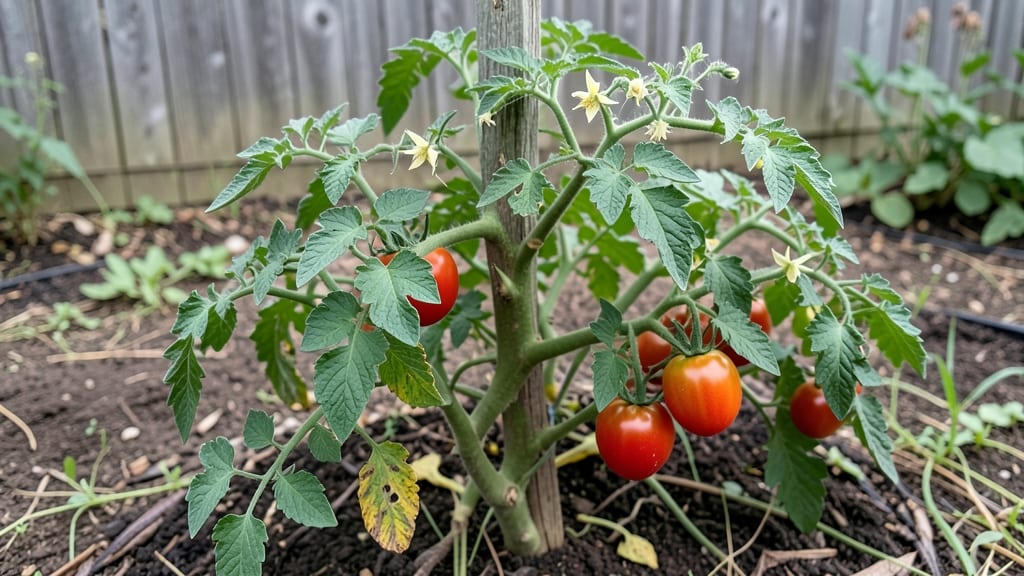
To grow a large tomato plant, focus on strategic pruning that strengthens stems and boosts fruit production: trim suckers early, cut back lower leaves, and use stakes or cages for support while keeping airflow strong. Determinate types handle aggressive pruning, but indeterminate varieties need lighter trimming to prevent sprawling.
Pruning isn't just about cutting—it's about redirecting your plant's energy where you want it.
When you remove those little side shoots (suckers) that grow between the main stem and branches, you force the plant to focus on developing stronger stems and bigger fruit instead. 🌱 I've seen firsthand how proper pruning can turn a scraggly plant into a powerhouse, producing tomatoes the size of your palm.
The key is balance: too much pruning stresses the plant, while too little lets it get leggy and disease-prone.
What really makes a difference is timing and technique. Start pruning when plants are about 12-18 inches tall, using clean, sharp pruners to make cuts just above leaf nodes.
For indeterminate varieties like Sungolds, I limit myself to removing only the largest suckers, while determinate plants like Roma tomatoes can handle more aggressive trimming to shape a bushier form. Always prune on dry days to prevent fungal infections—wet leaves are an open invitation to problems.
💡 In This Article
- How Pruning Affects Tomato Plant Growth and Fruit Production
- Step-by-Step Guide to Pruning for Maximum Tomato Size
How pruning affects tomato plant growth and fruit production
Here's what's actually happening when you prune: removing suckers (those small shoots between the main stem and branches) redirects the plant's energy from creating new stems to developing stronger existing ones and larger fruit.
This works because tomato plants have a limited energy budget—when you eliminate competing growth points, the plant prioritizes fruit production.
Studies show that pruned indeterminate varieties can produce 20-30% more fruit than unpruned plants, with each tomato weighing up to 30% heavier thanks to concentrated energy. 🌿 The key factor is photosynthesis efficiency: fewer leaves mean each remaining leaf gets more sunlight, but only up to a point—too much pruning reduces the plant's ability to feed itself.
Leaf removal plays a dual role: improving airflow and sunlight penetration. When you trim lower leaves that touch the soil, you create a 12-18 inch clearance that prevents fungal diseases like blight. The science here involves humidity control—wet leaves create the perfect environment for spores to thrive.
Sunlight penetration is equally critical: plants with proper pruning can increase light exposure to inner leaves by 40-50%, leading to more efficient photosynthesis.
For example, a heavily pruned Sungold tomato plant might develop fruit along its entire stem, while an unpruned one concentrates production at the top where sunlight hits directly.
Structural pruning strengthens stems through a process called apical dominance suppression. When you remove the terminal bud (the topmost growth point), lateral branches develop thicker cell walls and more vascular tissue. This creates stems capable of supporting 2-3 pounds of fruit per cluster without snapping.
The comparison between determinate and indeterminate varieties is striking: determinate plants (like Celebrity tomatoes) grow to a fixed size and benefit from aggressive pruning to create a bushy shape, while indeterminate types (like Beefsteak tomatoes) grow continuously and need selective pruning to maintain balance.
Over-pruning indeterminate varieties can lead to stunted growth and reduced yields—think of it like trimming a vine that's supposed to grow indefinitely. ✨
What most people don't realize is how timing affects pruning success. Early pruning (when plants are 6-12 inches tall) establishes strong structural growth, while late-season pruning focuses on fruit development. The ideal ratio is removing 30-50% of foliage while maintaining enough leaves to feed the plant.
For example, a Roma tomato plant might need 2-3 pruning sessions through the season, while a Cherry tomato vine could handle 4-5 sessions due to its faster growth rate. The goal is always to maintain a balance where the plant can support its own weight while maximizing fruit production.
Airflow improvement through pruning has measurable benefits: plants with proper airflow show 30% fewer disease symptoms compared to unpruned counterparts. The mechanism involves reducing humidity pockets where fungal spores thrive.
For instance, a 10-foot tall indeterminate plant with dense foliage might have air circulation reduced to 10% of outdoor levels near the base, while a properly pruned plant maintains 70-80% outdoor airflow. This difference translates directly to yield: disease-resistant plants produce fruit for 2-3 weeks longer than infected ones.
The sensory difference is also noticeable—the aroma of a well-pruned tomato plant is fresher and more vibrant due to unobstructed volatile compound release. 🌟
The science of tomato plant growth reveals another fascinating aspect: hormone regulation. Pruning affects the plant's natural auxin distribution, a growth hormone that controls cell elongation. By removing suckers, you reduce auxin concentration in lower stems, allowing lateral branches to develop.
This hormonal shift explains why pruned plants often produce fruit earlier in the season. For example, a Brandywine tomato plant might start fruiting 7-10 days earlier when properly pruned compared to unpruned plants.
The trade-off is that this hormonal manipulation requires precise timing—prune too early and you delay flowering, prune too late and you limit fruit set.
Remember this key insight: pruning isn't about making your plant smaller—it's about making it more efficient. The goal is to create a plant that can support its own weight while directing maximum energy to fruit production.
For large tomato varieties like Big Beef or Black Krim, this means developing stems thick enough to hold 5-7 pound tomatoes without breaking. The result is a plant that produces fewer but significantly larger fruit, with each tomato containing more flavor compounds due to concentrated development. 💫