
Fertilization
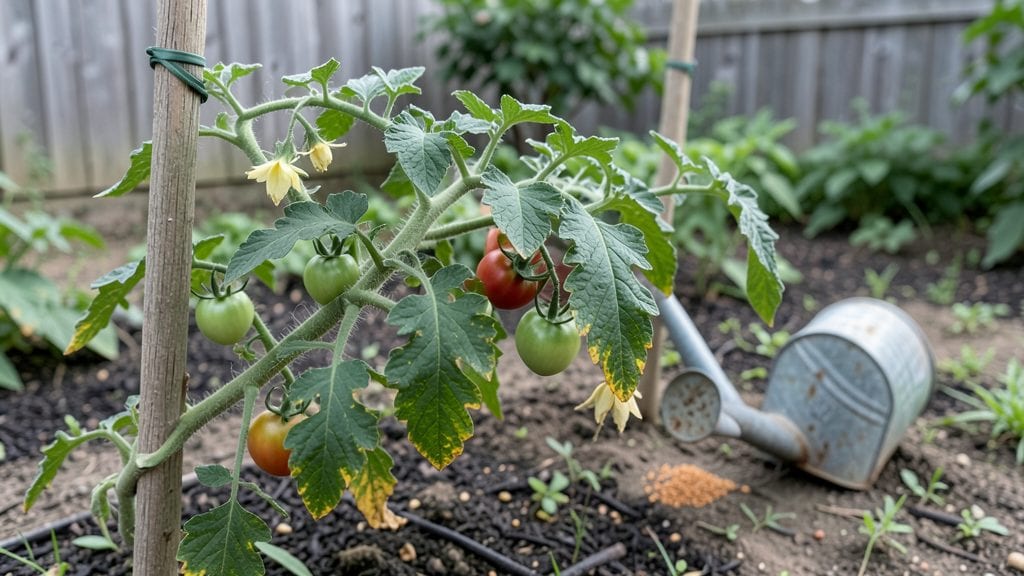
That demonstrative tomato plant fertilizer burn can strike fast—turning vibrant leaves to brittle brown in just 24 hours after one overzealous feeding. 🌱 I’ve seen it happen.
The good news? You can often reverse it within 24 hours with the right moves, and I’ll walk you through exactly what to do.
This usually happens when synthetic fertilizers build up too fast, or when you’re using high-nitrogen blends meant for leafy greens instead of fruiting plants.
My first year growing tomatoes, I nearly lost an entire plant after using too much 10-10-10—until I flushed the soil and switched to a balanced organic fertilizer. The key is acting fast before the roots get permanently damaged.
You’ll be able to see new, healthy growth within a few days if you flush the soil, adjust your feeding schedule, and switch to a tomato-specific fertilizer.
The leaves will soften, regain their vibrant green color, and your plants will bounce back stronger than ever. Let’s get those tomatoes back on track!
This works for both backyard gardens and container-grown plants—just scale the watering down for smaller pots. The same principles apply whether you’re dealing with crispy edges or sudden yellowing. Here’s how to bring them back to life.
Root Causes of Leaf Scorch
When your tomato plants show signs of fertilizer burn—think crispy, brown edges or yellowing leaves—it’s rarely just "too much fertilizer." The problem usually stems from a mix of improper application, soil chemistry mismatches, or plant stress.
Let’s break down the science behind why this happens and how to spot the culprits.
Fertilizers, especially synthetic ones, are packed with soluble salts like nitrates, phosphates, and potassium. When these salts accumulate faster than roots can absorb them, they create a hypertonic environment—meaning the soil’s water concentration drops below that of the plant’s cells.
This forces roots to lose water to the soil in a desperate attempt to balance the gradient, leading to:
- Osmotic stress: Roots shrink and struggle to uptake nutrients or water, causing wilting or leaf burn.
- Toxicity buildup: Excess ammonium (from urea-based fertilizers) or chloride can poison root tissues, blocking nutrient flow.
- pH swings: High salt levels disrupt soil pH, locking out essential nutrients like iron or manganese, even if they’re present.
💡 Pro Tip: Test your soil’s electrical conductivity (EC)—readings above 4.0 dS/m indicate dangerous salt buildup. Flush the soil with 2–3 inches of water to leach excess salts.
Tomatoes are heavy feeders but have phases where they need specific nutrients. Applying the wrong fertilizer—or too much of one nutrient—throws their balance off. Common offenders:
| Nutrient Imbalance | Symptoms | Why It Burns |
|---|---|---|
| Excess Nitrogen (N) | Dark green, soft leaves; stunted growth | Nitrogen floods roots, blocking phosphorus (P) and potassium (K) uptake. Leaves overproduce chlorophyll but can’t photosynthesize efficiently, leading to oxidative stress (brown edges). |
| Too Much Potassium (K) | Yellowing between leaf veins; weak stems | High K suppresses magnesium (Mg) and calcium (Ca), causing interveinal chlorosis. Roots also struggle to absorb water, mimicking drought stress. |
| Phosphorus (P) Overload | Purple stems/leaves; slow root growth | Excess P binds with iron and zinc, making them unavailable. Roots stop elongating, leaving the plant vulnerable to salt burn. |
🎯 Fix: Use a balanced fertilizer (e.g., 10-10-10 or 5-5-5) and avoid "high-test" blends (like 20-10-20) unless your soil test confirms a deficiency. Organic options (compost, worm castings) release nutrients slowly, reducing burn risk.
Fertilizer burn isn’t just about how much you apply—it’s also about when. Applying fertilizer to dry soil or under heat stress accelerates damage because:
- Dry soil = concentrated salts: Without water, salts don’t dissolve properly, creating "hot spots" that sear roots.
- Hot weather = faster uptake: Plants transpire (sweat) more, pulling nutrients into leaves before roots can process them, leading to oxidative damage.
- Post-transplant shock: Freshly planted tomatoes have limited root zones. Fertilizing too soon overloads their tiny root systems.
🔥 Rule of Thumb: Always water 1–2 days before fertilizing and afterward to dilute salts. Avoid fertilizing in peak sun (10 AM–4 PM)—opt for early morning or evening.
Compacted or clay-heavy soils hold onto salts like a sponge, preventing roots from accessing clean water. Even well-draining soil can become a problem if:
- Organic matter is low: Less than 2–3% organic content means poor cation exchange, so nutrients stay suspended in the soil solution as harmful salts.
- Drainage is slow: Waterlogged roots can’t flush out excess salts, leading to a toxic buildup around root tips.
- Old fertilizer residue: Leftover granules from last season can re-release salts when new fertilizer is added, doubling the burn risk.
🌡️ Soil Check: Dig a 6-inch hole. If the soil feels hard or sticky when wet, amend with compost or perlite. For clay soil, mix in sand or coconut coir to improve aeration.
Quick Fixes For Over-Fertilized Tomato Leaves
When your tomato plants show signs of fertilizer burn—crispy edges, yellowing leaves, or stunted growth—acting fast can save your harvest. The good news? Most cases can be reversed with simple, garden-friendly solutions. Below, we’ll map the most common causes to their fixes, plus prevention tips to keep your plants thriving.
Cause: Excessive synthetic fertilizers (especially high in nitrogen, phosphorus, or potassium) leave behind salt deposits that disrupt water absorption.
Fix:
- Water Deeply 💦 – Run a slow drip irrigation or hose at the base of the plant for 15–20 minutes to leach out excess salts. Do this twice daily for 2–3 days.
- Use Rainwater or Distilled Water – Tap water often contains chlorine or minerals that worsen salt buildup. Collect rainwater in barrels if possible.
- Add Organic Matter 🌱 – Mix 1–2 inches of compost or well-rotted manure into the top 6 inches of soil. This improves drainage and dilutes salts naturally.
Prevention Tip: ✨ Test your soil before fertilizing—use a cheap DIY soil test kit (available at garden centers) to check pH and nutrient levels. Aim for pH 6.0–6.8 for tomatoes.
Cause: Concentrated liquid fertilizers (like 10-10-10 or bloom boosters) applied too strongly can scorch roots and leaves.
Fix:
- Dilute the Soil 🌊 – Mix 1 part compost or peat moss with 2 parts soil around the plant’s root zone. This reduces salt concentration.
- Apply a Chelating Agent 🧪 – Sprinkle 1 tbsp of Epsom salt (magnesium sulfate) per gallon of water and water the plant. This helps neutralize excess nutrients.
- Avoid Fertilizer for 2–3 Weeks ⏳ – Let the plant recover before reapplying nutrients. Switch to fish emulsion (diluted to half-strength) if you must feed.
Prevention Tip: 💡 Always follow the “little and often” rule—apply half the recommended dose of synthetic fertilizer and water thoroughly after each application.
Cause: Too much water + fertilizer creates a nutrient soup that roots can’t absorb, leading to burn.
Fix:
- Let the Soil Dry Slightly 🌡️ – Water only when the top 1–2 inches of soil feel dry. Use your finger to check!
- Prune Damaged Leaves ✂️ – Snip off yellowed or crispy leaves with clean scissors to redirect energy to healthy growth.
- Use a Weak Fertilizer Tea ☕ – Brew compost tea (steep compost in water for 24 hours, strain, and dilute 1:1 with water) to gently feed roots without shock.
Prevention Tip: 🎯 Water deeply but infrequently—1–1.5 inches per week (including rain) is ideal. Use drip irrigation to avoid wetting leaves, which reduces burn risk.
Once your tomatoes bounce back, keep these habits to avoid repeat issues:
| Problem | Solution | Prevention Hack |
|---|---|---|
| High salt buildup | Flush soil + compost | Use organic fertilizers (like worm castings) instead of synthetics. |
| Chemical sensitivity | Dilute fertilizers + Epsom salt | Foliar spray (diluted seaweed extract) instead of soil drenches. |
| Overwatering + burn | Adjust watering + prune leaves | Mulch heavily (straw or shredded leaves) to retain moisture evenly. |
Final Pro Tip: 🌿 If your tomatoes are still struggling after 3 days, consider repotting into fresh, nutrient-light soil. Sometimes, a clean slate is the fastest fix!
With these steps, your tomato plants should show new growth within a week, and you’ll be back to harvesting juicy, vine-ripened tomatoes in no time. 🍅😊
Frequently asked questions
Why do tomato leaves turn brown and crispy after fertilizing?
This is classic fertilizer burn, caused by excess salts from concentrated nutrients overwhelming your plant's roots. When too many salts build up faster than roots can absorb them, the soil becomes hypertonic, forcing water out of the leaves. This often happens with synthetic fertilizers or when feeding dry soil.
Can I save my tomato plant if the leaves are already burned?
Yes! Act fast by flushing the soil with 2-3 inches of water over 2-3 days to leach out excess salts. Remove severely damaged leaves and switch to organic fertilizers like compost tea. With proper care, new growth should appear within 5-7 days.
Is it safe to use homemade compost tea after fertilizer burn?
Compost tea is gentle and nutrient-rich, perfect for recovering plants. Brew it by steeping 1 cup compost in 5 gallons water for 24 hours, then dilute 1:1 before applying. It won't cause burn and provides beneficial microbes to help roots recover.
How often should I fertilize tomatoes to avoid burn?
For tomatoes, follow the "little and often" rule: feed every 2-3 weeks with half the recommended dose. Always water before and after applying fertilizer to dilute salts. Organic options like worm castings release nutrients slowly, reducing burn risk.
Will rain help flush fertilizer salts from the soil?
Rain can help, but it's not as effective as controlled flushing. Natural rainfall often lacks the volume needed to fully leach salts. For best results, use a hose to deliver 1-2 inches of water slowly over 15-20 minutes at the plant's base, repeating daily until you see improvement.