
Blooming
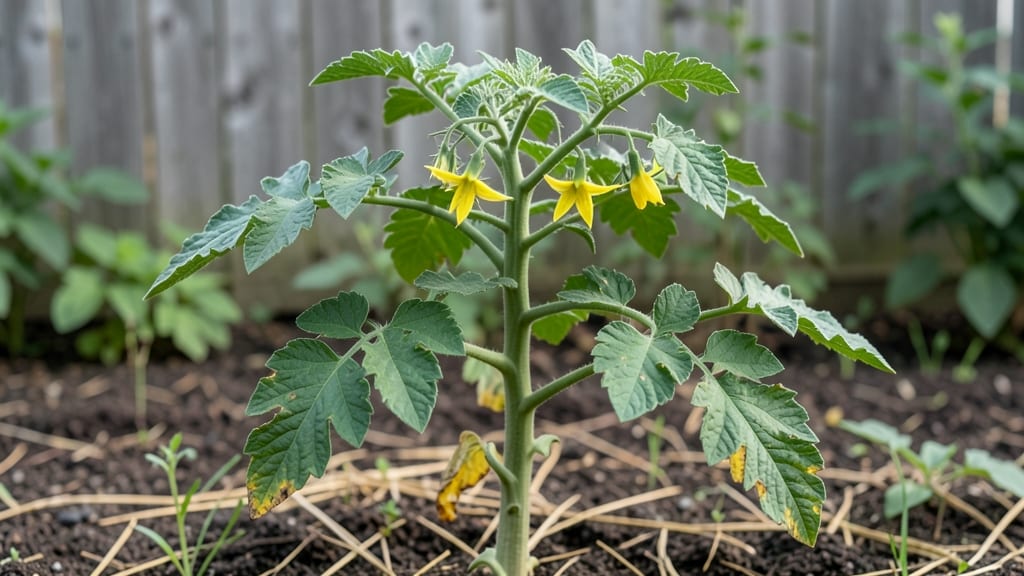
When tomato plants bloom early, it typically reflects warm conditions or intentional care adjustments, but those early flowers often need extra attention to develop into fruit—focus on consistent sunlight, proper hydration, and stable temperatures to prevent blossom drop and ensure strong fruit set.
Early blooms in tomato plants usually mean your plant is responding to ideal growing conditions, like 60-85°F temperatures and 6-8 hours of sunlight daily. 🌿 However, these flowers can be fragile without proper support—too much heat or inconsistent watering might cause them to drop before fruiting.
I’ve found that hand-pollinating with a small brush helps when indoor plants lack natural pollinators, and adding a balanced fertilizer (especially phosphorus) can encourage stronger blooms and fruit development.
If your plant is blooming early outdoors, monitor soil moisture closely—lettuce it dry slightly between waterings to prevent blossom end rot, a common issue with uneven hydration. For indoor plants, supplement with grow lights if natural light is limited, and prune suckers regularly to redirect energy toward fruit production.
The key is balancing growth and flowering to avoid overloading the plant.
💡 In This Article
- Environmental Triggers for Early Tomato Plant Blooming
- Supporting Early Blooms for Healthy Tomato Fruit
Environmental triggers for early tomato plant blooming
Here's what's actually happening when tomato plants start flowering early: the plant's internal clock, governed by the hormone florigen, gets triggered by a combination of warmth and daylight.
Tomatoes thrive when daytime temperatures reach 70-80°F—this range accelerates the production of florigen, which travels from leaves to the plant's growing tips, signaling them to form flowers.
Daylight exposure also plays a critical role, with 12-16 hours of light per day pushing the plant into reproductive mode faster than shorter daylight periods.
The science behind this involves a delicate balance of temperature and light cycles. Tomatoes are short-day plants, meaning they flower more quickly when they experience 14+ hours of daylight, regardless of temperature. However, if nights stay above 65°F, the plant's metabolic rate increases, accelerating florigen production.
This is why early blooms often appear in greenhouses or indoor setups with supplemental grow lights—artificial light extends the day length, while consistent warmth mimics ideal growing conditions. 🌱
Nutrient levels, particularly phosphorus, act as the final accelerator. Phosphorus is essential for energy transfer in plants, and when available in sufficient quantities (aim for 0.1-0.2% in soil tests), it helps the plant allocate resources toward flower development rather than just foliage growth.
A balanced fertilizer with a higher middle number (like 5-10-5) ensures phosphorus is available when the plant needs it most. Without enough phosphorus, early blooms may appear but lack the strength to develop into fruit.
Monitoring these conditions is key to maintaining consistent blooms. Use a thermometer and light meter to track temperature and daylight hours—ideal ranges are 60-85°F during the day and 55-65°F at night.
For indoor plants, supplement with LED grow lights that mimic sunlight spectra, and adjust fertilizer schedules to match the plant's growth phases. Too much nitrogen early on can delay flowering, while phosphorus-heavy feeds at the right time encourage abundant blooms.
What most people don't realize is how soil moisture interacts with these triggers. Overwatering or uneven hydration can stress the plant, causing early blooms to drop before setting fruit.
Let the top 1-2 inches of soil dry between waterings to encourage strong root development, which supports the energy demands of flowering. Mulching helps maintain consistent soil moisture and temperature, creating a stable environment for the plant to focus on fruit production.
For example, in my own garden, I noticed that tomato plants in raised beds with compost-rich soil bloomed 2-3 weeks earlier than those in standard garden plots. The extra organic matter provided both phosphorus and consistent moisture, while the raised bed's warmer soil temperature accelerated florigen production.
This shows how combining multiple environmental factors can create optimal conditions for early, healthy blooms.