
Diseases
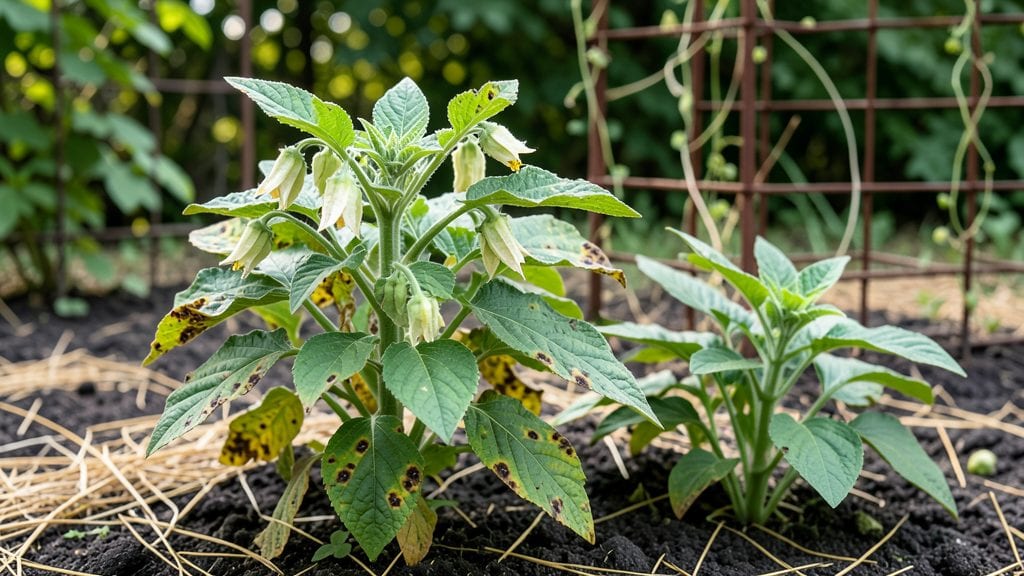
Tomatillo plant diseases strike fast when humidity and crowded plants team up. 🌱 I’ve seen bacterial spot turn vibrant green leaves into a skeleton of brown spots within days—unless you catch it early.
The key is recognizing the warning signs before they spread, because once those spots appear, the damage is already done.
Most fungal threats—like powdery mildew or early blight—love warm, damp conditions, which is why spacing plants 18 inches apart and watering at the base (not overhead) makes all the difference.
I’ve saved entire harvests by adjusting these simple habits, and you can too. The right mix of airflow, sunlight, and timing keeps those spores from getting a foothold.
You’ll spot the first signs in just a few days if you check regularly: yellowing leaves, white powdery coatings, or dark spots with yellow halos. Once identified, organic remedies like neem oil or copper spray can stop the spread—if applied before the disease takes hold.
Fast action means the difference between a thriving plant and a lost season.
For stubborn cases, don’t hesitate to pull affected plants and consult a local extension office. Prevention is always easier than cleanup, and tomatillos reward proactive care with sweet, tangy harvests all season long. Let’s keep those plants healthy and productive!
Root Causes Behind Tomatillo Troubles
Tomatillos, those tangy green gems of Mexican cuisine, are surprisingly vulnerable to a range of diseases—especially fungal and bacterial infections. But why do these issues pop up in the first place?
Understanding the environmental, biological, and cultural factors behind tomatillo plant diseases helps you take proactive steps to protect your harvest. Let’s break down the key culprits and their science-backed explanations.
Fungal diseases like Phytophthora blight and early blight thrive in excess moisture, whether from heavy rain, poor drainage, or overhead watering. Here’s why:
- Spores spread like wildfire: Fungal spores (tiny reproductive cells) splash onto leaves and stems when water droplets move across surfaces. Think of it like a microscopic game of tag—once spores land on a susceptible plant, they germinate and infect within 24–48 hours.
- Stunted gas exchange: Wet foliage blocks stomata (tiny leaf pores), trapping humidity and creating the perfect greenhouse effect. This slows photosynthesis and weakens the plant’s defenses.
- Root rot’s silent takeover: Poor drainage leads to Phytophthora or Pythium fungi, which gnaw at roots until the plant can’t absorb water or nutrients. Result? Wilting, yellowing, and eventual collapse.
Actionable fix: Space plants for airflow (18–24 inches apart), water at the base early in the day, and avoid mulching too close to stems.
Tomatillos need breathing room. When plants are packed too tightly, stagnant air becomes a breeding ground for diseases like powdery mildew and septoria leaf spot. Here’s the science:
- High humidity pockets: Dense foliage traps moisture, creating microclimates where fungal spores flourish. Erysiphe cichoracearum (powdery mildew) spreads via windborne spores, but it explodes in still, damp air.
- Leaf wetness duration: Studies show that leaves staying wet for just 6 hours increase disease risk by 30%. In crowded beds, this happens daily.
- Stress = weaker defenses: Overcrowded plants compete for sunlight and nutrients, making them more susceptible to pathogens.
Actionable fix: Prune lower leaves to improve airflow, stake plants vertically, and thin seedlings to 12–18 inches apart.
Soil isn’t just dirt—it’s a living ecosystem. Pathogens like Fusarium wilt or bacterial spot lurk in old garden beds, compost, or even dirty pruners. Here’s how they hijack your tomatillos:
- Survivor spores: Fungi like Fusarium produce chlamdospores, thick-walled spores that can survive for years in soil, waiting for a vulnerable host.
- Tool-borne spread: Pruners, trellises, or even gloves can transfer Xanthomonas bacteria (cause of bacterial spot) from plant to plant in seconds.
- Organic matter overload: Too much compost or manure introduces excess nitrogen, which promotes lush but susceptible foliage.
Actionable fix:
- Solarize soil (cover with clear plastic for 4–6 weeks) to kill pathogens.
- Disinfect tools with 1 part bleach to 9 parts water or 70% rubbing alcohol.
- Rotate crops—avoid planting tomatillos in the same spot for 3+ years.
A tomatillo starved of key nutrients is like a soldier without armor—easy pickings for diseases. Here’s how deficiencies play a role:
- Low calcium = cell wall collapse: Blossom end rot (yes, it affects tomatillos too!) occurs when calcium levels drop, causing fruit tissue to break down and invite secondary infections.
- Excess nitrogen = soft, sappy growth: Too much N (from fertilizer or compost) makes plants more attractive to pests and pathogens like Alternaria leaf spot.
- Micronutrient gaps: Zinc or magnesium deficiencies weaken cell membranes, making plants more permeable to fungal invaders.
Actionable fix: Test soil pH (aim for 6.0–7.0) and amend with calcium-rich materials like crushed eggshells or gypsum. Use a balanced fertilizer (e.g., 5-5-5) to avoid N overload.
Pro tip: 🌡️ Monitor weather forecasts! Extended humidity (above 75% for 24+ hours) is a red flag for fungal outbreaks. Adjust watering or use shade cloth proactively.
Quick Fixes for Tomatillo Troubles
When your tomatillo plants show signs of distress, acting fast can mean the difference between a thriving harvest and a lost crop. Below are practical, step-by-step solutions tailored to the most common diseases affecting tomatillo plants—from fungal infections to bacterial blights.
Each fix includes prevention tips to keep your plants healthy long-term.
🔥 Remove Infected Leaves Immediately
Fungal spores spread quickly, so prune away any yellowing, spotted, or powdery leaves using clean, sharp scissors. Dispose of them in the trash (not compost)—don’t let them touch the soil or nearby plants.
🍳 Apply Fungicidal Sprays (Organic or Chemical)
- For early signs (preventative): Mix 1 tbsp baking soda + 1 tsp dish soap + 1 gallon water in a spray bottle.
Apply every 7–10 days in the morning for best results. - For severe infections: Use a copper fungicide (like Cupric Hydroxide) or a neem oil spray (1 tsp neem oil + 1 tsp mild soap per quart of water).
Reapply every 5–7 days until new growth appears healthy. - 💡 Pro Tip: Rotate sprays to prevent resistance—alternate between neem, copper, and baking soda solutions.
🌡️ Improve Air Circulation & Watering Habits
Fungi thrive in humid, stagnant conditions. Space plants 18–24 inches apart and avoid overhead watering.
Instead: - Water at the base in the early morning so leaves dry quickly. - Use drip irrigation or soaker hoses to keep foliage dry. - 🎯 Prevention Tip: Mulch with straw or grass clippings (not wood chips) to reduce soil splashing onto leaves.
👨🍳 Prune & Sterilize Tools
Bacterial infections cannot be cured—only contained. Cut off infected leaves and stems (including ½ inch of healthy tissue below the spot) and sterilize pruners with rubbing alcohol between cuts.
🥘 Use Copper-Based Bactericides
Since bacteria don’t respond to fungicides, copper sprays (like Copper Sulfate) are your best bet. Apply every 7–10 days in the early morning (avoid spraying when rain is forecasted). For organic growers, hydrogen peroxide (3%) can help—spray a 1:1 dilution with water weekly.
⏰ Avoid Overwatering & Crowding
Bacteria spread through water splashes and wounded plants.
To prevent outbreaks: - Water deeply but infrequently—let the top 1–2 inches of soil dry between waterings. - Rotate crops—don’t plant tomatillos (or peppers/tomatoes) in the same spot for 3+ years. - 🔥 Pro Tip: Plant basil or marigolds nearby—they repel pests that can introduce bacteria.
🔪 Blast Off Pests with Water or Soap
For light infestations, spray plants with a strong stream of water (aphids hate this!) or a soapy water mix (1 tsp mild castile soap per quart of water). Reapply every 2–3 days until pests disappear.
🌿 Introduce Beneficial Insects
- Ladybugs eat aphids.
- Lacewings devour whiteflies.
- Predatory mites control spider mites.
Buy them online or attract them naturally with dill, fennel, or marigolds nearby.
🎯 Prevent Future Infestations
- Yellow sticky traps catch flying pests like whiteflies.
- Row covers (lightweight fabric) block pests while allowing sunlight.
- 💡 Pro Tip: Reflective mulch (aluminum foil or silver plastic) confuses whiteflies and reduces egg-laying.
🍽️ Feed with Compost & Balanced Fertilizer
Weak plants are more susceptible to diseases.
Boost immunity with: - Compost tea (weekly spray). - Balanced fertilizer (10-10-10 or fish emulsion) every 4–6 weeks. - 📊 Prevention Tip: Avoid high-nitrogen fertilizers—they promote lush foliage but weaken fruit production.
🌿 Strengthen Soil & Drainage - Test your soil pH—tomatillos prefer 6.0–7.0.
Adjust with lime (to raise) or sulfur (to lower). - Improve drainage by amending soil with perlite or sand if water pools after rain. - 🔥 Pro Tip: Plant in raised beds if your garden has poor drainage—this reduces fungal risks.
Remember: The key to healthy tomatillos is early action + prevention. Once you spot a problem, act fast, adjust habits, and keep your plants happy—your future salsas will thank you! 🌶️😉
Frequently asked questions
What are the first signs of fungal diseases on tomatillo plants?
Watch for powdery white coatings (powdery mildew) or dark spots with yellow halos (early blight) on leaves. Fungal infections often start as small discolorations between leaf veins, then spread rapidly in humid conditions. Check undersides of leaves first—they’re prime infection zones.
Can I save a tomatillo plant with bacterial spot?
Bacterial spot (Xanthomonas) is incurable—but you can contain it. Prune infected leaves immediately (including ½ inch of healthy tissue) and sterilize tools with rubbing alcohol. Copper sprays (applied every 7–10 days) may slow spread, but remove severely infected plants to prevent contamination.
How often should I spray neem oil on my tomatillos?
Apply neem oil every 5–7 days at dusk for best results. Mix 1 tsp neem oil + 1 tsp mild soap per quart of water and spray until leaves glisten. Stop 24 hours before rain to avoid washing it off. Rotate with copper sprays to prevent resistance.
Why do my tomatillos get root rot even with good drainage?
Root rot often stems from overwatering or compacted soil, even if drainage seems fine. Test soil moisture—water only when the top 1–2 inches feel dry. Amend soil with perlite or sand and avoid mulching too close to stems. Raised beds also help prevent waterlogging.
Are there disease-resistant tomatillo varieties?
Most commercial tomatillo varieties lack strong disease resistance, but ‘Purple Tomatillo’ and ‘Green Mexican’ show slightly better tolerance to fungal issues. For extra protection, focus on cultural practices (spacing, airflow, and soil health) rather than relying on variety alone.