
Diseases
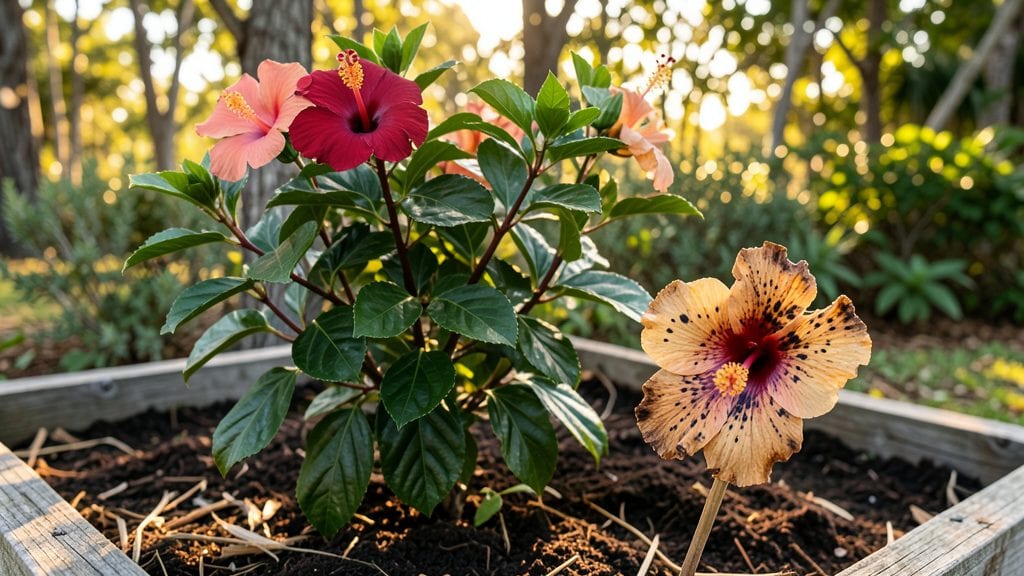
Hibiscus plant diseases can turn your showstopping blooms into a sad, spotted mess—unless you catch them early. 🌿 I’ve spent years watching fungal threats like powdery mildew and leaf spot creep in, and the difference between a thriving bush and a struggling one often comes down to spotting the warning signs before they spread.
The worst offenders usually start with tiny white or brown spots on leaves, then spread like wildfire if humidity stays high or water pools at the base.
My hardy hibiscus nearly died from a fungal outbreak last summer, but once I recognized the powdery white coating as mildew, I acted fast—pruning infected leaves and switching to morning watering. Within weeks, new growth emerged.
You’ll learn to distinguish fungal spots from pest damage (aphids leave sticky residue, not crusty patches) and how to treat infections organically with neem oil or copper fungicide. The key is acting before the disease moves from leaves to stems—once it does, recovery gets a lot harder.
Whether you’re growing tropical hibiscus in pots or hardy varieties in the ground, these strategies work for both. Let’s get your plants back to their vibrant best before the next bloom season arrives.
Root Causes Of Hibiscus Ailments
Hibiscus plants, with their vibrant blooms and lush foliage, are stunning additions to any garden—but they’re not immune to trouble. Understanding why these diseases strike is the first step to prevention. Below, we break down the science behind the most common culprits, from microscopic invaders to environmental stressors.
Fungi are the #1 enemy of hibiscus health, thriving in warm, humid conditions. These organisms release spores that latch onto leaves, stems, or roots, creating ideal conditions for infections like anthracnose, powdery mildew, and root rot.
- Overhead Watering 💦: Splashing water onto leaves creates a damp film, giving fungi a perfect breeding ground. Unlike roots, leaves aren’t designed to dry quickly, so excess moisture lingers.
- Poor Air Circulation ⛈️: Dense foliage or crowded plants trap humidity, raising moisture levels near 100%—fungi love this environment. Without airflow, spores spread unchecked.
- Weakened Plant Defenses 🛡️: Stress from drought, nutrient deficiencies, or pests lowers a hibiscus’s natural resistance. Fungi exploit these vulnerabilities like a burglar casing a home.
- Contaminated Tools or Soil 🌱: Fungal spores can hitchhike on pruners, pots, or compost, introducing new infections. Even "clean" soil may harbor dormant pathogens.
💡 Pro Tip: Fungi spread fastest in consistently wet conditions. If your hibiscus stays damp for more than 6 hours, you’re flirting with disaster.
Unlike fungi, bacteria don’t need spores—they multiply via direct contact or water splashes. Bacterial leaf spot and stem rot are classic examples, often appearing as oily, water-soaked lesions that ooze when touched.
- Wounded Tissues 🔪: Pruning cuts, insect bites, or hail damage create entry points. Bacteria slip in like thieves in the night.
- High Humidity + Warmth ☀️💨: Temperatures between 77–86°F (25–30°C) with 90%+ humidity? Bacteria party time. They thrive in these conditions, doubling in numbers every few hours.
- Contaminated Water 💧: Using untreated rainwater, recycled garden water, or even tap water from a dirty hose can introduce pathogens. Always sanitize water sources.
- Over-Fertilization 🌿: Too much nitrogen (especially synthetic fertilizers) makes hibiscus soft and susceptible. Think of it like feeding junk food—your plant gets weak and sickly.
⚠️ Warning: Bacterial diseases spread 10x faster than fungal ones. Once symptoms appear, act within 48 hours or risk losing the plant.
Not all hibiscus problems come from pathogens—sometimes, the issue is environmental. Extreme conditions stress plants, making them easy targets for diseases.
| Stressor | How It Helps Diseases | Fix It With |
|---|---|---|
| Drought 🏜️ | Weakens cell walls, making roots and leaves prone to fungal entry. | Deep watering 2–3x/week (check soil moisture 2" down). |
| Frost or Cold Snaps ❄️ | Damages foliage, creating wounds for bacteria/fungi. | Mulch heavily in fall; use frost cloths in zones below 10. |
| Poor Drainage 🚰 | Soggy soil = root rot (fungal) and bacterial stem rot. | Amend soil with perlite/sand; elevate pots. |
| Pest Infestations 🐜 | Insects like aphids or mites pierce tissues, opening doors for infections. | Neem oil sprays; introduce ladybugs for natural control. |
🎯 Key Insight: A hibiscus under stress is like a person with a compromised immune system—any pathogen can turn a mild issue into a full-blown crisis.
Now that you know why hibiscus diseases strike, the next step is spotting the early warning signs before they spiral. Stay tuned!
Quick Fixes for Common Hibiscus Troubles
Now that you’ve identified the issue plaguing your hibiscus, let’s roll up our sleeves and get it back to blooming glory! 🌿✨ Below are practical, step-by-step solutions tailored to each problem, plus prevention tips to keep your plant thriving long-term. No green thumb? No problem—these fixes are beginner-friendly and effective.
🔥 Step 1: Isolate & Remove Infected Parts
- 🔪 Snip off yellowing, spotted, or powdery leaves with sterilized pruning shears (wipe with rubbing alcohol between cuts).
- 🗑️ Dispose of severely infected foliage in the trash (not compost)—fungi can spread through organic matter.
🍳 Step 2: Apply Fungicide (Store-Bought or Homemade)
- Commercial option: Use a copper-based fungicide (like Bonide Copper Fungicide) or a neem oil solution (1 tsp neem oil + 1 tsp mild soap + 1 quart water). Spray evenly on both sides of leaves and stems. Reapply every 7–10 days until the issue clears.
- DIY baking soda spray (for powdery mildew):
- Mix 1 tsp baking soda + 1 tbsp vegetable oil + 1 quart water.
- Add a drop of dish soap as a surfactant.
- Spray early in the morning (avoid direct sunlight to prevent leaf burn).
🌡️ Step 3: Improve Airflow & Light
- ✂️ Thin out crowded branches to allow 3–4 inches of airflow around the plant.
- 🌞 Move to brighter, indirect light (fungi thrive in damp, shaded spots). A south- or west-facing window is ideal.
- 💨 Use a small fan on low setting for 10–15 minutes daily to dry leaves faster.
💡 Prevention Tips:
- Water at the base (not overhead) to keep foliage dry.
- Space plants 2–3 feet apart to reduce humidity buildup.
- Rotate your hibiscus every few weeks for even sunlight exposure.
👨🍳 Step 1: Blast Off Pests with Water
- 💦 Hold the hose nozzle 6–12 inches away and spray pests off leaves and stems. Repeat every 2–3 days for heavy infestations.
🍳 Step 2: Soap or Oil Spray (Safe & Effective)
- Insecticidal soap: Mix 2 tbsp castile soap + 1 quart water. Spray directly on pests (avoid flowers). Reapply every 5–7 days.
- Neem oil spray: Combine 1 tbsp neem oil + 1 tsp mild soap + 1 quart water. Shake well and spray evenly. Pests will disappear within 3–5 days.
🔪 Step 3: Manual Removal (For Stubborn Clusters)
- 🪴 Wipe leaves with a damp cloth dipped in rubbing alcohol (50% water, 50% alcohol) to dissolve sticky residues (like honeydew from aphids).
- 🕷️ Use a cotton swab dipped in alcohol to pick off mealybugs from crevices.
💡 Prevention Tips:
- 🕸️ Inspect new plants for pests before bringing them indoors.
- 🌿 Introduce beneficial insects like ladybugs or lacewings (available at garden centers).
- 🍃 Avoid over-fertilizing—soft new growth attracts pests.
💧 Step 1: Check the Soil & Watering Habits
- 🕵️ Stick your finger 1–2 inches into soil—if it’s soggy, your hibiscus is overwatered.
- ⏰ Water only when the top 1–2 inches are dry (usually 2–3 times per week in summer, less in winter).
🍳 Step 2: Fix Root Rot (If Soil is Waterlogged)
- 🪴 Gently remove the plant from its pot and trim black, mushy roots with sterilized scissors.
- 🌱 Repot in fresh, well-draining soil (mix potting soil + perlite or sand in a 2:1 ratio).
- 🏺 Use a pot with drainage holes—no exceptions!
🌡️ Step 3: Adjust Light & Temperature
- 🌞 Move to indirect sunlight if leaves are bleached or crispy (signs of sunburn).
- 🌡️ Keep temps between 60–85°F—hibiscus hates drafts or cold snaps (below 50°F).
- 💨 Increase humidity (if air is dry) with a pebble tray or misting (avoid wetting leaves).
💡 Prevention Tips:
- 📅 Water in the morning so leaves dry before nightfall.
- 🌡️ Use a moisture meter to track soil dampness accurately.
- 🍃 Mulch the soil (with bark or straw) to retain moisture without sogginess.
If your hibiscus doesn’t improve in 2–3 weeks despite your efforts, or if you spot blackened stems, wilting despite dry soil, or moldy soil, it may be beyond home treatment.
A local nursery or plant doctor can diagnose bacterial infections or advanced root rot that require systemic fungicides or repotting.
🎯 Final Pro Tip: Keep a plant journal! Note watering schedules, light changes, and treatments—this helps you spot patterns and prevent future outbreaks. Happy gardening! 🌺🌿
Frequently asked questions about hibiscus plant diseases
How do I tell if my hibiscus has a fungal infection vs. a bacterial one?
Fungal infections like powdery mildew or leaf spot show up as crusty white or brown patches that may have fuzzy textures. Bacterial issues appear as oily, water-soaked spots that often ooze when touched. Check the edges: fungal spots have irregular borders, while bacterial spots are usually circular and darken over time.
Can I save my hibiscus if the stems are already black and mushy?
If stems are blackened and mushy, it’s likely advanced root or stem rot, and recovery is unlikely. However, try cutting back healthy growth to 6 inches above soil level and repotting in fresh, sterile soil. Use a copper fungicide for 2 weeks, but expect limited success at this stage. Prevention is key—always use pots with drainage holes!
Why does my hibiscus keep getting powdery mildew even after I treat it?
Powdery mildew thrives in high humidity + poor airflow. If it keeps returning, check these factors: Are leaves touching each other? Is your plant in a shady, damp spot? Try spacing plants 2–3 feet apart, watering at the base in the morning, and using a small fan for 10 minutes daily to dry foliage faster. A baking soda spray (1 tsp baking soda + 1 quart water) can also help as a preventative.
Is neem oil safe to use on hibiscus flowers?
Neem oil is safe for hibiscus foliage and stems but can damage delicate petals if sprayed directly. Always apply neem oil only to leaves and stems, avoiding open blooms. For flowers, use a soft cloth dipped in diluted neem oil to wipe down stems, or opt for a copper fungicide instead. Always test a small area first!
How often should I sterilize my pruning tools to prevent disease spread?
Sterilize pruning shears before and after each use—even between cuts on the same plant. Wipe blades with rubbing alcohol (70% or higher) or hold them over a flame for 10 seconds. Fungal spores can hitchhike on tools and reinfect your hibiscus. Store tools in a dry place between uses to prevent rust, which can also harbor pathogens.