Pruning
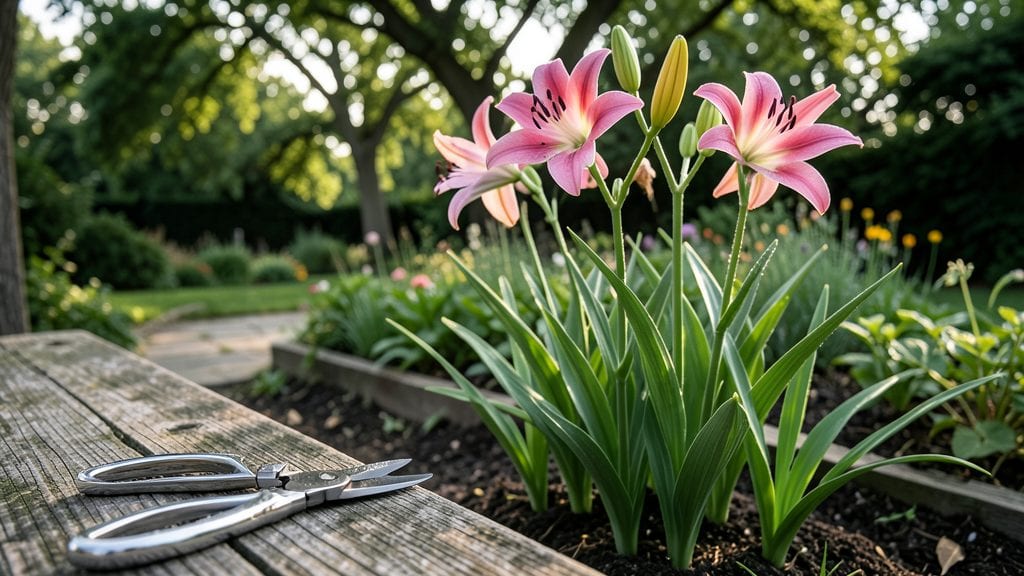
Pruning lily plants isn't just about cleaning up—it's how you guarantee next year's showstopper blooms. 🌸 I learned this the hard way after my Stargazer lilies produced half-sized flowers because I cut back too aggressively.
The right timing and technique make all the difference between a spectacular display and a sad, leggy mess.
You only need a few basic tools: sharp pruners, gloves, and a bucket for clippings. The key is working in stages—first removing spent blooms, then trimming foliage after it yellows, and finally cleaning up completely in late fall.
This three-step approach keeps the bulbs strong without starving them of energy. Most people overdo it by cutting too early or too much, which weakens the plant for next season.
When done right, you'll see thicker stems, larger blooms, and healthier foliage the following year. The bulbs store nutrients from the leaves to fuel next season's flowers, so never cut back before the leaves yellow naturally.
Even in colder climates, this method works—just adjust your timing for your last frost date.
For Asiatic and Oriental lilies, the process is identical, though Asiatics bloom earlier and can handle slightly earlier pruning. The payoff? Lilies that keep blooming longer, resist disease better, and come back stronger every year. Trust the process, and your garden will thank you with dramatic, repeat performances.
📚 In This Guide
- What you need
- Instructions
- Tips and common mistakes
- Wrapping up and next steps
What you need
- ● Pruning shears or bypass pruners: Sharp, clean bypass pruners (4-6 inch blades) for clean cuts. Avoid anvil pruners—they can crush stems.
- ● Garden gloves: A pair of cut-resistant gloves (e.g., leather or heavy-duty nylon) to protect your hands from thorns and sharp edges.
- ● Disinfectant (70% isopropyl alcohol or bleach solution): 1 part bleach to 9 parts water to sterilize tools between cuts and prevent disease spread.
- ○ Garden twine or plant ties: 1-2 rolls (for optional staking of tall lilies like Asiatic or Oriental hybrids).
- ○ Sharp knife or hedge shears: For larger clumps or thick stems (optional but helpful for bulkier varieties).
- ● Compost bin or mulch: To recycle trimmed foliage or cover the soil after pruning.
- ● Staking materials: Bamboo stakes or metal plant supports (if your lilies are top-heavy).
- ● Pruning sealant: For sealing larger cuts (e.g., tree wound pruning paste), though lilies typically don’t need this.
- ● Knee pads or stool: For comfort if you’re working with large or ground-level lilies.
- ● Know your lily variety: Deciduous lilies (e.g., Asiatic) can be pruned aggressively after blooming, while evergreen types (e.g., Candida) need gentler trims.
- ● Check the weather: Prune on a dry, overcast day to reduce stress on the plant (avoid midday heat!).
- ● Timing: Wait until after flowering (for most types) or during dormancy (late fall/winter) for best results.
Instructions for pruning lily plants to encourage healthy growth
Lilies reward precise trimming with bigger blooms and stronger stems. Here's how to prune them at the right times.
✂️ Step 1: Deadhead Spent Blooms After Flowering
As soon as your lilies finish blooming, trim the flower stalks down to just above the first set of leaves using clean, sharp pruners. This redirects the plant's energy from seed production back into next year's growth. I always use sterilized tools to prevent fungal spread between plants.
Wait until the blooms fully wilt and brown before cutting—removing them too early stresses the plant. You'll know it's time when the petals drop naturally and the stem begins to yellow. Never cut into the green foliage, as this weakens the plant's ability to store energy for winter.
🌿 Step 2: Remove Damaged or Diseased Foliage Mid-Season
Throughout the growing season, inspect your lilies weekly for yellowing, spotted, or mushy leaves. Snip these off at the base with your pruners, cutting cleanly to avoid tearing the stem. Healthy foliage should remain deep green and upright—anything that looks sickly needs immediate removal.
Diseased leaves spread problems quickly, so discard them in the trash (not compost). I like to prune on a dry morning when the foliage is less likely to trap moisture. If you notice black spots or powdery coatings, treat the plant with neem oil immediately after trimming.
⏰ Step 3: Cut Back Foliage in Late Fall After Browning
When the leaves turn completely brown and crispy in late fall, it's time for your final prune. Cut the stems back to about 2 inches above the soil line using sharp shears. This prevents pests from overwintering in the dead foliage while leaving enough stem to protect the bulb.
Don't rush this step—wait until the leaves are fully brown and dry, usually after the first frost. I mark my calendar for this because lilies need that foliage to photosynthesize until winter. If you cut too early, the bulb won't store enough energy for next spring's blooms.
🌱 Step 4: Spring Cleanup Before New Growth Appears
In early spring, remove any remaining dead stems or leaves from last season's growth. Use your pruners to cut at the base, clearing away debris that could harbor pests. This also gives you a clear view of the emerging shoots—you'll see them pushing through the soil in 2-3 weeks.
I like to do this cleanup when the soil is still damp from winter rains, as it makes the stems easier to cut cleanly. Avoid pruning when the ground is frozen, as the shock can damage emerging buds. Once you've cleared the area, apply a 2-inch layer of mulch to protect the bulbs and retain moisture.
Tips & tricks for perfect lily plant pruning
A few strategic tricks will help you transform your lilies into blooming powerhouses year after year.
The Timing Secret: I can't stress enough how important it is to wait until blooms are fully wilted and brown before deadheading in Step 1. The plant needs to complete its natural cycle—cutting too early sends mixed signals and stresses the bulb. Look for petals that have completely fallen away and stems that feel dry to the touch. This patience pays off with bigger blooms next season.
Tool Intelligence: Don't just grab any scissors—use pruners specifically designed for garden work. They make clean cuts that heal faster, and their sharp blades prevent crushing stems. I sterilize my pruners between plants using rubbing alcohol on a cloth, which takes just seconds and prevents spreading fungal diseases between your lilies.
Seasonal Strategy: The late fall pruning in Step 3 is where many gardeners go wrong. Wait for that first frost to brown the leaves completely before cutting back to 2 inches above soil level. This timing ensures the bulb has finished storing energy for next year. I mark my calendar for this step because rushing it can weaken the plant's winter reserves.
Visual Cues for Healthy Growth: After your spring cleanup in Step 4, healthy lilies should show new shoots emerging within 2-3 weeks. If you don't see this within that timeframe, check for signs of rot or pests in the bulb area. The 2-inch mulch layer helps maintain consistent moisture and protects emerging shoots from temperature fluctuations.
Pro Tips for Pruning Lily Plants
- A few strategic tricks will help you transform your lilies into blooming powerhouses year after year.
- The Timing Secret: I can't stress enough how important it is to wait until blooms are fully wilted and brown before deadheading in Step 1.
- Tool Intelligence: Don't just grab any scissors—use pruners specifically designed for garden work.
Frequently asked questions
Got questions about pruning lilies? You’re not alone—even experienced gardeners need a little guidance now and then! Below, we’ve answered the most common questions to help you keep your lilies thriving with confidence.
When is the best time to prune lily plants?
The ideal time to prune lilies is after they’ve finished blooming in late summer or early fall. This allows the plant to redirect energy to its bulbs for next year’s growth. Avoid pruning in spring, as new shoots need all their strength to emerge. For deadheading (removing spent blooms), do it as soon as flowers fade to encourage reblooming varieties.
How much of the lily plant should I cut back?
Trim back the foliage to about half its height after blooming, but leave some leaves until they yellow naturally. This ensures the bulbs store enough energy for winter. For stem pruning, cut just above a leaf node or bud to promote new growth. Never remove more than ⅔ of the plant—this can stress the bulb.
What if I prune lilies at the wrong time?
Pruning too early (spring) or too late (deep winter) can stunt growth or weaken bulbs. If you’ve already made a mistake, don’t panic! Focus on watering deeply and fertilizing lightly with bulb-specific food. Most lilies are resilient—just adjust your timing next season.
Can I prune lilies in winter?
Light trimming (removing dead or damaged foliage) is fine in winter, but avoid heavy pruning. Lilies are dormant, and cutting back too much can expose bulbs to cold or pests. Wait until early spring to remove any remaining debris—this prevents fungal issues and keeps the garden tidy.
Do I need special tools to prune lilies?
Not necessarily! While bypass pruners or clean, sharp shears make the job easier, you can use sterilized scissors or even a knife in a pinch. The key is cleanliness: Disinfect tools with rubbing alcohol between cuts to prevent disease spread. Avoid dull tools—they crush stems instead of cleanly cutting them.
Wrapping up and next steps
Pruning your lily plants is the secret to vibrant, long-lasting blooms and a healthier garden! 🌸 By following the right techniques—whether deadheading, cutting back foliage, or dividing clumps—you’ll encourage stronger growth and more stunning flowers year after year. Remember, timing and tools matter, so stay patient and consistent.
Now that you’re armed with the know-how, grab those shears and get pruning! Start with just one section of your garden to build confidence, and soon, you’ll be a lily-pruning pro. Happy gardening—your future blooms will thank you! 🌱✨