
Succulent
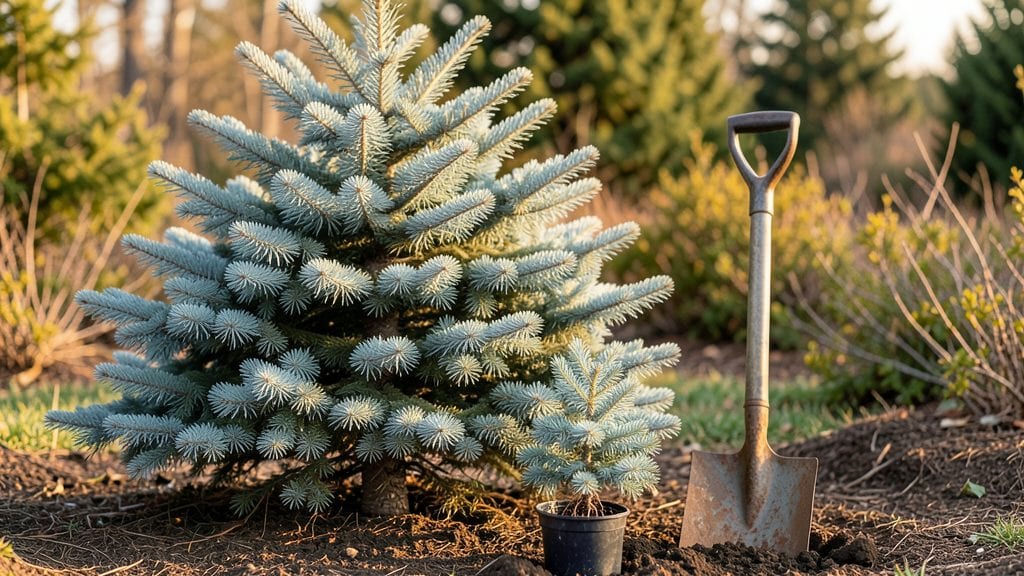
Planting blue spruce trees transforms your yard into a year-round privacy screen with striking blue-green foliage that never loses its color. I planted mine last fall, and within two years, the dense branches blocked nosy neighbors and harsh winter winds—something my old chain-link fence never did.
The secret isn’t just picking the right spot; it’s preparing the soil and spacing them correctly from day one so they grow straight and strong.
You’ll need a sunny location with well-draining soil—blue spruces hate soggy roots—and a shovel for digging holes twice as wide as the root ball. Amend heavy clay with compost, and space trees 6 to 10 feet apart depending on how tall you want them to grow.
Most nurseries sell them in 15-gallon containers, which makes planting easier than wrestling with bare-root saplings. Just loosen the roots before setting them in the hole.
After planting, water deeply to settle the soil, then mulch with 2 to 3 inches of wood chips to keep moisture in and weeds out. The first year is critical—keep the soil consistently moist but not waterlogged, and avoid heavy pruning.
By year three, your blue spruce will be tall enough to cast shade and create that cozy, secluded feeling you’re after.
Here’s the kicker: these trees thrive in full sun to partial shade and handle cold down to -40°F, making them one of the toughest evergreens for northern climates.
Just watch for spider mites in dry summers and deer nibbling on young shoots—both easy to prevent with the right care. Ready to plant yours?
📚 In This Guide
- What you need
- Instructions
- Tips and common mistakes
- Wrapping up and next steps
What you need
- ● Blue spruce saplings: 3–5 per 10-foot section (depending on desired spacing; standard spacing: 6–8 feet apart). Choose 1–3-year-old nursery-grown trees (5–6 ft tall) for faster growth.
- ● Shovel or spade: Heavy-duty, 12–14 inches wide for digging holes.
- ● Wheelbarrow or bucket: For mixing soil amendments (1–2 cubic feet capacity).
- ● Garden gloves: Waterproof, reinforced palms to protect hands.
- ● Measuring tape: 25-foot minimum for marking spacing.
- ● Pruning shears: Bypass-style, 6–8 inches for trimming dead branches.
- ○ Mulch (optional but recommended): Pine bark or wood chips: 2–3 inches deep, 3–4 cubic feet per tree.
- ● Organic compost: 5–10 lbs per hole for nutrient boost.
- ● Sunlight: Full sun (6+ hours/day)—blue spruces thrive in open, unshaded areas.
- ● Soil type: Well-draining, slightly acidic (pH 5.0–7.0). Amend clay soil with sand or perlite if needed.
- ● Water source: Hose with adjustable nozzle or drip irrigation system (spruces need 1–2 inches of water weekly).
- ● Weather check: Plant in early spring or fall (avoid extreme heat or frost).
- ● Local regulations: Verify height restrictions or permits if planting near property lines.
- ● 🌡️ Test soil pH with a kit—blue spruces hate alkaline soil! Adjust with sulfur or peat moss if needed.
- ● ✨ Stake young trees (1–2 inches wide, 4–5 ft tall) if planting in windy areas to prevent toppling.
- ● 🔥 Skip synthetic fertilizers the first year—focus on organic matter (compost/manure) to avoid root burn.
Instructions for planting blue spruce trees as a privacy screen
Here's how to plant four blue spruce trees for a lush, year-round privacy screen that grows with you.
Choose the Right Location and Prepare the Soil
Blue spruce thrive in full sun—select a spot where they’ll receive at least 6 hours of direct sunlight daily. Avoid low-lying areas where cold air settles, as these trees are sensitive to frost damage. Test the soil by digging a 6-inch hole—it should drain well, but not so fast that water runs through like sand.
If your soil is heavy clay, mix in 2 inches of compost to improve drainage. Spruce roots prefer slightly acidic soil, so a pH test kit (available at garden centers) helps confirm the ideal range of 5.0 to 7.0. Amend with sulfur or peat moss if needed, but skip this step if your soil tests fine—over-amending can harm the roots.
Dig Holes at the Correct Spacing and Depth
For a 4-tree privacy screen, space each 8 to 10 feet apart—this gives them room to grow into a dense barrier without crowding. Dig holes twice as wide as the root ball and 1 inch deeper than the container’s base. The goal is to avoid burying the trunk too deeply, which can cause rot.
Loosen the sides of each hole with a shovel to encourage root spread. If planting in cold climates, avoid digging in frozen ground—wait until the soil is workable in early spring or fall. Place a stake near each hole to mark the planting spot and help with alignment later.
Remove Trees from Containers and Plant Carefully
Gently squeeze the container sides to loosen the root ball, then slide the tree out. If roots are circling tightly, use your fingers to tease them outward—this prevents girdling as the tree matures. Place each tree in its hole so the top of the root ball sits level with the surrounding soil, not buried or exposed.
Backfill with the native soil, tamping lightly every 2 inches to remove air pockets. Water deeply after planting to settle the soil around the roots. A soaker hose works best—it delivers moisture slowly without disturbing the soil surface. Avoid mulch near the trunk; instead, spread 2 inches of mulch in a 3-foot radius to retain moisture and suppress weeds.
Water and Stake for Stability
Water each tree with 1 gallon of water immediately after planting, then 2 gallons weekly for the first year. Blue spruce are drought-tolerant once established, but young trees need consistent moisture to develop strong roots. Check soil moisture by sticking your finger 2 inches deep—if it’s dry, water again.
Stake only if necessary—young trees with top-heavy growth may need temporary support. Use two stakes per tree, positioned 4 inches from the trunk and tied loosely with soft tree ties. Remove stakes after 12 months to avoid girdling the trunk. Prune only to remove dead branches; blue spruce grow best with minimal intervention.
Monitor Growth and Adjust Care as Needed
Blue spruce grow about 12 inches per year, so you’ll see noticeable height gains in their first few seasons. Fertilize lightly in early spring with a balanced, slow-release fertilizer (like 10-10-10) if the soil was poor when planted. Avoid high-nitrogen fertilizers—they promote fast, weak growth that’s prone to winter damage.
Watch for bagworms or spider mites, common pests for spruce. If you spot webbing or yellowing needles, treat with neem oil or insecticidal soap as a preventative spray in late summer. Prune only to shape in early spring, removing no more than 25% of the foliage at a time to maintain health.
Tips & tricks for planting blue spruce trees
Planting blue spruce for privacy is simpler than you might think—these small adjustments make all the difference for long-term success.
Location Scouting Tip: Before digging, observe your yard during the day to confirm the chosen spot gets that full 6 hours of sunlight. Early morning sun is ideal—blue spruce can scorch in intense afternoon heat. I always check for overhead power lines too; blue spruce grow tall enough that branches can interfere with wires within 5-7 years.
Soil Preparation Secret: When testing drainage in Step 1, pour a cup of water into your 6-inch hole. If it drains within 10 minutes, your soil is perfect. If it pools or drains faster than 2 minutes, you'll need that 2 inches of compost. For clay-heavy soil, I recommend mixing in a 50/50 blend of compost and coarse sand to improve structure while maintaining moisture retention.
Planting Depth Watch: The most critical part of Step 3 is getting that root ball level with the soil surface. I use a small wooden stake as a reference marker—drive it next to each hole at the same height as the container's base. This visual guide prevents the common mistake of burying the trunk too deeply, which can cause rot and stunt growth.
Watering Strategy: Those first 2 gallons weekly are essential, but timing matters just as much. Water in the morning so foliage dries by evening, reducing disease risk. I set a reminder on my phone for the first year to ensure consistency. For extra insurance, consider installing a simple drip irrigation system near each tree—it delivers water directly to the roots without disturbing the soil.
Pro Tips for Planting Blue Spruce
- Planting blue spruce for privacy is simpler than you might think—these small adjustments make all the difference for long-term success.
- Location Scouting Tip: Before digging, observe your yard during the day to confirm the chosen spot gets that full 6 hours of sunlight.
- Soil Preparation Secret: When testing drainage in Step 1, pour a cup of water into your 6-inch hole.
Frequently asked questions
Got questions about planting your blue spruce? You’re not alone! Here are some of the most common concerns—plus clear, practical answers to help you grow a stunning evergreen privacy screen with confidence.
How deep should I plant a blue spruce?
Plant the root ball so the top of the soil sits just below the ground level—never deeper than it was in the nursery pot. This prevents rot while ensuring stability. For large trees, dig a hole twice as wide as the root ball to encourage root spread. Mulch lightly (2–3 inches) around the base, but keep it away from the trunk to avoid moisture bucketing.
When is the best time to plant blue spruce?
Fall (late September to early November) is ideal—cool temps and winter rains help roots establish before summer stress. Spring planting (March–April) works too, but water consistently to combat drought. Avoid planting in peak summer heat; young spruces struggle with transplant shock when temperatures exceed 85°F (29°C).
How much sun does a blue spruce need?
Blue spruces thrive in full sun (6+ hours daily), but they tolerate partial shade (3–6 hours), especially in hot climates. In shady spots, expect slower growth and less vibrant blue foliage. For privacy screens, space trees 6–10 feet apart (depending on mature size) to ensure sunlight reaches all plants. Pro tip: Monitor for brown needles—a sign of sunburn or drought.
What’s a good alternative if blue spruce won’t grow in my area?
If your climate is too hot (Zone 5+), try these drought-tolerant evergreens:
- Colorado Blue Spruce (Picea pungens) – Hardier in heat but needs well-drained soil.
- Eastern White Pine (Pinus strobus) – Fast-growing and adaptable to various soils.
- Thuja (Arborvitae) – Disease-resistant and great for hedges.
Why are my blue spruce needles turning brown?
Brown needles usually signal one of three issues:
- Overwatering – Check soil moisture; spruces hate soggy roots. Let the top 2 inches dry out between waterings.
- Underwatering – Deep water once a week (more in summer) and mulch to retain moisture.
- Pests/Disease – Inspect for spider mites or bagworms. Prune affected branches and treat with neem oil if needed.
Wrapping up and next steps
Planting a blue spruce is a rewarding way to add year-round beauty and privacy to your landscape! 🌲 With the right soil, spacing, and care, these stunning evergreens will thrive for decades—offering shade, windbreaks, and that coveted Pinterest-perfect curb appeal.
Whether you’re a beginner or a seasoned gardener, now’s the perfect time to roll up your sleeves and watch your privacy screen grow.
Ready to take the next step? Mark your calendar for early spring or fall (the ideal planting seasons), gather your tools, and double-check your supplies. Need help picking the perfect spot? Browse our FAQs for expert tips—then dig in and enjoy the process!
Your future self (and your neighbors) will thank you. 😊