
Planting
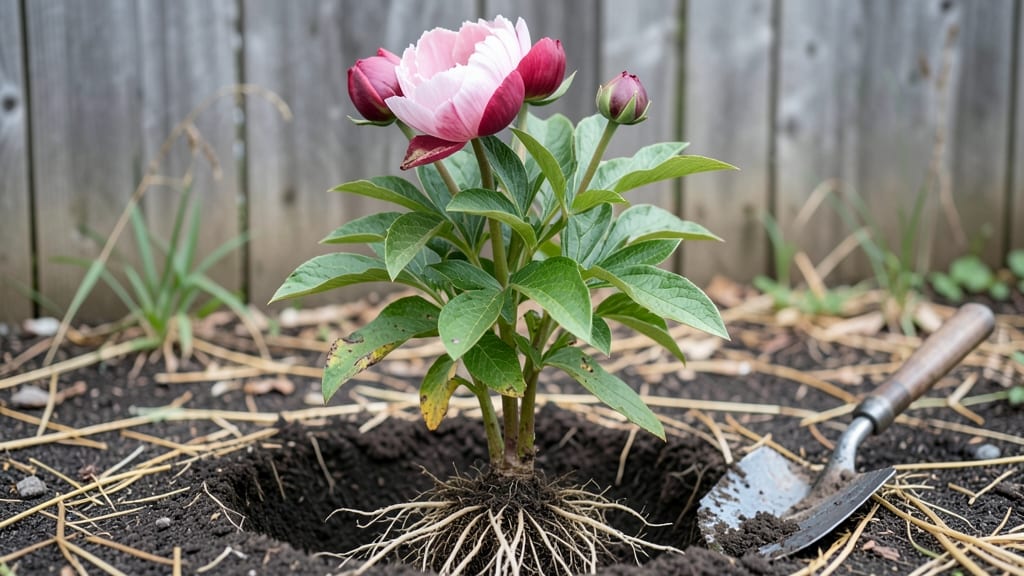
Here are some essential peony planting tips—get the depth and timing right, or risk stunted blooms for years. I’ve dug up struggling peonies that were planted too deep or pruned at the wrong time, and the difference is night and day once you get it right.
The secret starts with fall planting when soil temps drop below 60°F—bare-root peonies need 6-8 weeks to establish roots before winter. Container-grown ones can go in anytime, but spring planting means blooms arrive a year later.
Aim for 2-3 feet of space between plants so roots spread freely, and set the "eyes" (buds) just 1-2 inches below soil—any deeper and they rot.
📚 In This Guide
- What you need
- Instructions
- Tips and common mistakes
- Wrapping up and next steps
What you need
- ● Peony roots (eyes-up): 1-3 bare-root peony crowns (ensure they have 3-5 "eyes" or buds per crown).
- ● Well-draining soil: Mix of garden soil, compost, and perlite (or sand) for aeration. Aim for a pH of 6.0-7.0.
- ● Sunlight spot: A location with 6-8 hours of full sun daily (partial shade in hot climates is fine).
- ● Watering can or hose: For deep, consistent hydration.
- ● Organic mulch: 2-3 inches of shredded bark, straw, or wood chips to retain moisture and regulate soil temp.
- ● Garden trowel or shovel: For digging planting holes (6-8 inches deep).
- ● Pruning shears: Sterilized shears to trim dead foliage post-planting.
- ● Gloves: Heavy-duty gardening gloves to protect hands from thorns.
- ● Measuring tape or ruler: To ensure proper planting depth (eyes should sit 1-2 inches below soil).
- ● Slow-release fertilizer (balanced 10-10-10 or rose-specific).
- ● Soil test kit to check pH and nutrient levels.
- ● Peony support stakes (for heavy blooms) or a trellis.
- ● Drip irrigation system for automated watering.
Step-by-step guide for planting peonies
Peonies thrive with the right timing and technique—here’s how to plant them for decades of blooms.
Choose the Perfect Planting Spot
Peonies need full sun—at least 6 hours of direct sunlight daily—to produce their lush blooms. I always pick a location with morning sun and afternoon shade in hotter climates, as this prevents leaf scorch. The soil should drain well but retain moisture; peonies hate soggy roots. If your yard has heavy clay, amend it with 2-3 inches of compost mixed into the top 12 inches of soil.
Test the soil’s drainage by digging a 6-inch deep hole and filling it with water. If it drains in under 2 hours, the spot is ideal. If water pools after 4+ hours, improve drainage by adding sand or gravel before planting. Peonies also appreciate a slightly alkaline soil pH between 6.5 and 7.5, so test your soil and adjust with lime if needed.
Plant Bare-Root Peonies at the Right Depth
Plant peonies in early fall or late winter when the ground is workable but not frozen. The eyes—those plump buds on the root—should sit 2 inches below the soil surface at maturity. If planted too deep, they won’t bloom; too shallow, and they’ll flop over. I dig a hole 18-24 inches wide and deep to give roots plenty of room to spread.
Place the roots in the hole, spreading them out naturally without bending them. The eyes should face upward, and the roots should fan out like a half-circle. Backfill with soil, tamping it down gently to remove air pockets. Water deeply to settle the soil and eliminate gaps. Mulch with 2-3 inches of organic mulch (like shredded bark) to retain moisture and regulate soil temperature.
Prune Correctly for Year-Round Health
Peonies need minimal pruning but benefit from three key cuts to keep them strong and blooming. After the first hard frost (when foliage turns brown), cut back stems to 2-3 inches above the ground. This prevents disease and makes next year’s growth easier to manage. Never prune in late summer or fall, as this can damage the plant’s energy reserves for spring blooms.
In early spring, remove any dead or damaged stems before new growth appears. This ensures the plant directs energy to healthy shoots. After flowering, never cut back stems until they’ve fully browned—this is when the plant stores nutrients for next year. If you see blackened or mushy stems, prune those immediately to prevent rot from spreading.
Water and Fertilize for Long-Term Success
Peonies are drought-tolerant once established, but young plants need consistent moisture for the first 2 years. Water deeply once a week during dry spells, aiming for 1 inch of water per week. You’ll know they’re getting enough when the soil feels 2-3 inches deep and slightly damp. Overwatering leads to root rot, so always check before watering.
Fertilize in early spring with a balanced, slow-release fertilizer (like 10-10-10) applied 6 inches away from the plant. Avoid high-nitrogen fertilizers, which encourage leafy growth at the expense of blooms. I also top-dress with 1-2 inches of compost in early spring and fall to feed the soil naturally. Peonies rarely need extra care after the first few years—they’ll reward you with vibrant blooms for decades if planted correctly.
Tips & tricks for perfect peony planting
These simple yet game-changing tips will help you avoid common mistakes and get peonies blooming beautifully for years to come.
Soil Preparation Secret: Before planting, I always mix in a handful of pelletized chicken manure with the 2-3 inches of compost. This gives peonies a slow-release nitrogen boost without overpowering them with too much at once. The key is to work it into the soil 3-4 inches deep—not just on the surface—so roots can access it over time. This extra step makes a noticeable difference in early spring growth.
Planting Depth Visual: The 2-inch depth for the eyes might seem tricky at first, but here's my trick: Use a pencil to mark the soil level after placing the roots. Then, push the pencil into the hole until it's 2 inches above the soil line. This gives you a clear reference point for where to place the eyes. Too deep, and you'll struggle to get blooms; too shallow, and the plant may flop over in wind or rain.
Mulching Strategy: That 2-3 inches of organic mulch isn't just for moisture—it's also insulation. In winter, it protects roots from extreme temperature swings that can cause heaving. In summer, it keeps roots cool. I like to refresh the mulch layer every spring and fall, removing any old mulch that might have compacted. This keeps the soil loose and well-aerated, which peonies love.
Pruning Timing Tip: The three pruning cuts mentioned are crucial, but here's what nobody tells you: After the first hard frost, when you cut back to 2-3 inches, leave the stems attached to the plant. This helps prevent disease from entering through fresh cuts. Only remove them completely once the ground freezes solid. In early spring, I also look for any stems that have blackened at the base—these need immediate removal to prevent rot from spreading to healthy stems.
Pro Tips for Peony Planting Tips
- These simple yet game-changing tips will help you avoid common mistakes and get peonies blooming beautifully for years to come.
- Soil Preparation Secret: Before planting, I always mix in a handful of pelletized chicken manure with the 2-3 inches of compost.
- Planting Depth Visual: The 2-inch depth for the eyes might seem tricky at first, but here's my trick: Use a pencil to mark the soil level after placing the roots.
Frequently asked questions
Got questions about peony planting?
You’re not alone! Here are answers to the most common concerns—from timing to troubleshooting—to help you grow stunning blooms with confidence.
When is the best time to plant peonies?
Fall is ideal for planting peonies—typically 4 to 6 weeks before the ground freezes. This gives roots time to establish before winter. Spring planting is possible, but peonies may take longer to bloom. Avoid planting in extreme heat or drought conditions.
How long does it take for peonies to bloom after planting?
Peonies are patient! Expect 2 to 3 years of dormancy before your first blooms. Some varieties may take even longer (up to 5 years) if planted in less-than-ideal conditions. Patience pays off—healthy roots = bigger, showier flowers down the road.
Can I plant peonies in containers or do they need ground planting?
Peonies thrive in the ground, but container growing is possible with the right setup. Use a large pot (at least 18 inches deep) with well-draining soil and ensure it’s overwintered indoors in cold climates. Just know: container peonies may bloom less vigorously than ground-planted ones.
Why aren’t my peonies blooming?
No blooms? Check these common culprits:
- Too much shade: Peonies need 6+ hours of sunlight daily.
- Over-fertilizing: Too many nutrients = leafy growth, fewer flowers.
- Planting too deep: Eyes (buds) should be 1–2 inches below soil.
- Young plants: Give them 2–3 years to mature.
Do peonies need winter protection?
Peonies are hardy (zones 3–8) and generally don’t need extra winter care. However, in extreme cold (below -20°F), mulch with straw or leaves (3–4 inches) to insulate roots. Avoid heavy mulch in spring—remove it once growth resumes to prevent rot.
Wrapping up and next steps
Planting and caring for peonies is a rewarding journey that brings vibrant blooms and lasting beauty to your garden. By choosing the right variety, preparing the soil, and mastering the three pruning secrets, you’ll set your peonies up for years of success.
Remember, patience and consistency are key—your hard work will soon be rewarded with stunning, healthy flowers that brighten every season!
Now that you’re armed with these peony planting tips, why not grab your gardening gloves and get started? Whether you’re a beginner or a seasoned green thumb, there’s no better time to turn your garden into a peony paradise. Happy planting! 🌸✨