
Plants
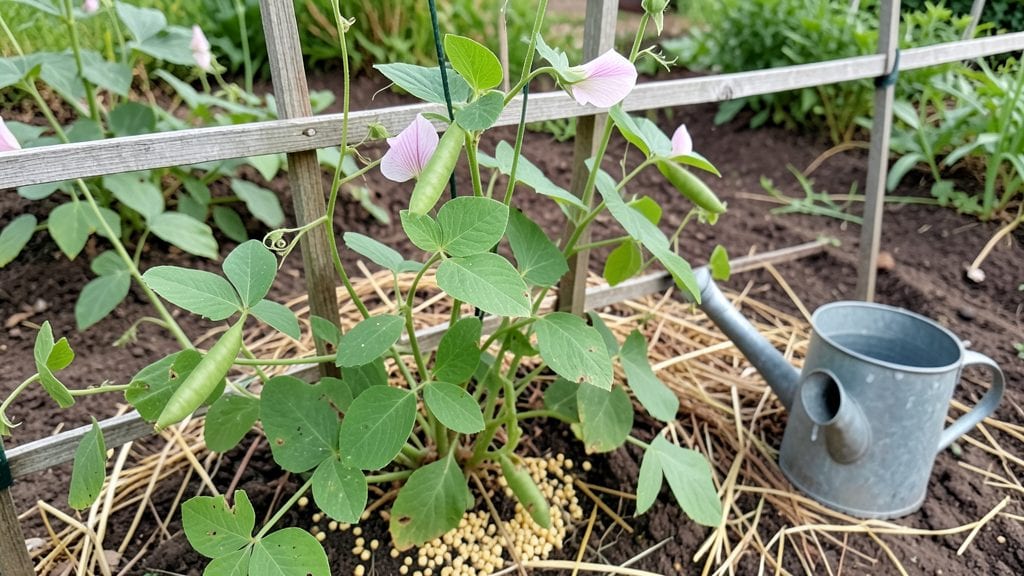
Choosing the right pea plant fertilizer can transform your garden into a bounty of tender, sugar-sweet pods instead of meager, shrunken ones.
Peas may be small, but their fertilizer needs are anything but simple—especially when comparing bush and pole varieties. Get the nitrogen-potassium balance wrong, and you’ll sacrifice yield or flavor, even with the best seeds and soil.
Too much nitrogen, and you’ll end up with leafy monsters and no pods. Too little potassium, and your vines will wilt under the weight of their own growth. The trick is finding that perfect balance for your specific variety.
In this guide, I’ll break down the best fertilizer types, when to apply them, and how to avoid common mistakes that leave your peas underperforming—so you can enjoy a bountiful harvest from March through June.
Optimal nitrogen-potassium fertilizer ratios for pea plants (bush vs pole breakdown)
Peas thrive when their nutrient needs align with their growth habits. Bush peas—compact and self-supporting—require a different N-P-K balance than pole peas, which climb and produce over extended seasons. The key? Nitrogen fuels leafy growth, while potassium strengthens vines and pod development.
Ignore this balance, and you’ll end up with either lush leaves and few pods or weak stems struggling to support harvests.
For both types, phosphorus (the "P" in N-P-K) is critical but often overlooked. It drives root development and flowering—the foundation for a bountiful harvest. However, the nitrogen-to-potassium ratio shifts based on whether you’re growing bush peas (which prioritize quick, dense production) or pole peas (which need sustained energy for vining).
Let’s break down the science-backed ratios to maximize your yield.
⚠️ Pro Tip: Always test your soil’s pH before fertilizing. Peas prefer a slightly acidic to neutral range (6.0–7.0). If your soil is too alkaline, the nutrients in even the best fertilizer will lock up, leaving your plants starving.
| Factor | Bush Peas | Pole Peas | Notes |
|---|---|---|---|
| Primary Growth Goal | Compact, dense foliage and pods | Long vines, extended pod production | Bush peas prioritize speed; pole peas need endurance. |
| Optimal N-P-K Ratio | 5-10-10 (Higher phosphorus) | 3-8-10 (Balanced potassium) | Pole peas need more potassium for vine strength. |
| Nitrogen Focus | Moderate (5%) for leafy growth | Lower (3%) to avoid leggy vines | Too much nitrogen delays flowering in both types. |
| Potassium Focus | Moderate (10%) for pod firmness | Higher (10%) for vine support | Potassium deficiency causes weak stems and poor pod set. |
| Best Organic Options | Bone meal (phosphorus) + compost | Wood ash (potassium) + worm castings | Wood ash raises pH; use sparingly in alkaline soils. |
| Synthetic Fertilizer Example | 10-20-20 (for phosphorus boost) | 5-10-15 (balanced for vining) | Avoid high-nitrogen synthetics; they burn roots. |
| Critical Application Time | At planting + 4 weeks later | At planting + every 6 weeks | Pole peas benefit from mid-season potassium top-ups. |
Bush peas, like ‘Little Marvel’ or ‘Green Arrow’, demand a higher phosphorus push early on to encourage rapid flowering and pod set. A 5-10-10 ratio ensures they don’t waste energy on excessive foliage.
Think of it as a sprint: you want pods, not marathon leaf growth. In contrast, pole varieties like ‘Sugar Snap’ or <
When and how to apply fertilizer for peas: step-by-step guide
Timing and method matter more than you might think when fertilizing peas.
Unlike heavy feeders like tomatoes, peas are legumes that fix their own nitrogen—but they still need phosphorus and potassium for strong roots and sweet pods. Bush peas (like 'Little Marvel') and pole peas (like 'Sugar Snap') have slightly different needs, especially during flowering and pod set.
I’ve learned the hard way that over-fertilizing peas leads to lush foliage but fewer pods. The key is balancing nutrients with light applications at the right stages. Start with well-composted soil, and you’ll only need to supplement 2-3 times per season.
For organic gardeners, bone meal and kelp meal are my go-to phosphorus and potassium sources.
Step-by-Step Fertilizer Application for Peas
- Pre-Planting Prep (2-3 weeks before sowing): Mix 2-3 inches of compost into the top 6 inches of soil. Add 1 tbsp bone meal per 10 sqft for phosphorus. Test soil pH—aim for 6.0-7.0.
- Planting Time (March-April or August-September): Apply a low-nitrogen fertilizer (5-10-10) at ½ the recommended rate (e.g., ½ tbsp per 10 sqft). Water deeply to activate nutrients.
- Early Growth (2-3 weeks after sprouting): For pole peas, side-dress with kelp meal (1 tbsp per plant) to support vining. Bush peas need less potassium—stick to compost tea.
- Flowering Stage (4-6 weeks after planting): Switch to a low-phosphorus fertilizer (10-10-20) to boost flowering. Avoid high nitrogen—it delays pod formation. Foliar spray with fish emulsion works well.
- Pod Development (6-8 weeks after planting): Apply a balanced fertilizer (5-5-5) lightly around plants. Pole peas may need an extra 1 tbsp potassium sulfate per 10 sqft for vine strength.
- Mid-Season Boost (if needed): If pods are small or leaves yellow, use a foliar feed (seaweed extract). Stop fertilizing 2 weeks before harvest to avoid bitter peas.
Signs you’re over-fertilizing include crispy leaf edges (too much potassium) or excessive leafy growth with no pods (too much nitrogen). Under-fertilized peas show up as stunted growth or pale, weak vines. I once saw my Sugar Snap peas produce only 10 pods per plant—turns out, I’d skipped the flowering-stage boost!
For container-grown peas, reduce fertilizer by half and use a slow-release granular mixed into potting soil. Water thoroughly after each application to prevent root burn. And remember: peas thrive in cool weather, so fertilize lightly in summer heat to avoid stress.
Pro tip: Save your pea vine clippings in a compost bin. They’re nitrogen-rich and perfect for next year’s pea patch! The more you grow, the easier it gets to fine-tune your fertilizer routine.