
Pests and Diseases
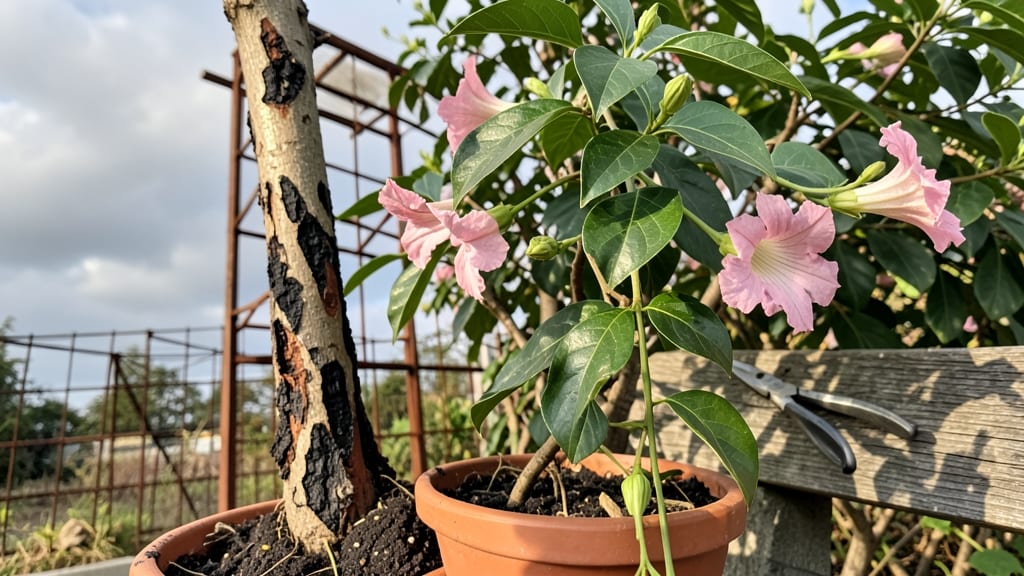
Mandevilla plant diseases can turn your stunning tropical climber into a sad, spotted mess if you don’t catch them early. 🌿 I’ve seen healthy vines go from vibrant to wilted in weeks—usually because the first signs were ignored.
The good news? Most of these fungal threats respond well once you know what to look for.
Overwatering, poor airflow, and high humidity create the perfect storm for fungal infections like powdery mildew or leaf spot. My mandevillas thrived until I moved them under a dense tree—suddenly, yellow spots appeared.
The key is acting fast: prune infected leaves immediately and adjust watering habits to keep roots dry but not stressed.
With the right treatment, you’ll save your plant and keep those glossy leaves thriving. We’re talking targeted fungicides for stubborn cases, neem oil sprays for prevention, and simple adjustments like better spacing between plants. Your mandevilla can bounce back stronger than ever.
This works for both container and in-ground mandevillas, whether you’re dealing with a single plant or a full trellis. Let’s get those vines healthy again—step by step.
Root Causes Of Mandevilla Struggles
Mandevilla plants, with their stunning blooms and glossy leaves, can quickly become a gardener’s pride—until disease strikes. But why do these tropical beauties fall prey to fungal threats? The answer lies in a mix of environmental factors, plant stress, and sometimes, simple human habits.
Understanding the real culprits behind Mandevilla diseases helps you take proactive steps to protect your plants. Let’s break down the science behind the suffering.
Fungal spores love stagnant, humid air—it’s their perfect breeding ground. Mandevilla plants, especially when grown in containers or crowded spaces, suffer from restricted airflow. Here’s why this happens:
- Dense foliage: Thick clusters of leaves trap moisture, creating a damp microclimate where fungi like Phytophthora or Botrytis thrive.
- Overpotting or root-bound stress: Roots struggle to absorb water efficiently, leading to soggy soil and fungal growth at the base.
- Shady or enclosed spaces: Without sunlight drying surfaces, humidity levels spike, giving fungi a foothold.
Pro tip: 🌿 Space plants 2–3 feet apart, prune to improve airflow, and avoid planting near walls or fences that block circulation.
Mandevilla roots are sensitive to excess moisture. When soil stays too wet, it creates the ideal conditions for root rot (often caused by Pythium or Phytophthora) and foliar diseases like Alternaria leaf spot. Here’s the breakdown:
| Cause | Why It Happens |
|---|---|
| Frequent watering without drying cycles | Oxygen is displaced in soil, suffocating roots and inviting fungal invaders. |
| Poor drainage (clay pots, compacted soil) | Water pools at the base, creating a fungal buffet for pathogens. |
| Watering from above | Splashing soil onto leaves spreads spores, leading to target spot or powdery mildew. |
Pro tip: 💧 Use well-draining soil mixes (add perlite or orchid bark) and water only when the top 1–2 inches of soil are dry. Bottom-watering or using drip irrigation reduces foliar contamination.
Fungi are everywhere, but they hitchhike into your garden via dirty tools, infected plants, or reused potting soil. Here’s how it spreads:
- Pruning shears or knives: Cutting infected leaves or stems can transfer spores to healthy parts of the plant.
- Reused containers or soil: Old potting mix may harbor dormant fungal spores that reactivate when conditions are right.
- Wind or splashing water: Spores from nearby infected plants can land on Mandevilla foliage, starting an outbreak.
Pro tip: ✨ Sterilize tools with 70% isopropyl alcohol or a bleach solution (1 part bleach to 9 parts water) before and after use. Always use fresh, sterile potting mix for new plantings.
Mandevilla plants are tropical—when they’re pushed beyond their comfort zone, their defenses drop, making them vulnerable to diseases like Anthracnose or Septoria leaf spot. Key stressors include:
- Cold drafts or sudden temperature drops: Below 50°F (10°C) slows growth and weakens the plant’s ability to fight off pathogens.
- Heat stress without hydration: Inconsistent watering during heatwaves causes wilting, opening doors for fungal entry.
- Nutrient deficiencies (especially nitrogen or potassium): Weak leaves are easier targets for fungal spores.
Pro tip: 🌡️ Keep Mandevilla in USDA zones 9–11 or bring potted plants indoors before frost. Use a balanced fertilizer (10-10-10) every 4–6 weeks to maintain vigor.
Sometimes, the real villain isn’t the fungus itself—it’s the pests that invite it in. Insects like aphids, whiteflies, or spider mites:
- Damage plant tissue, creating wounds where fungal spores can land.
- Excrete honeydew, a sticky substance that promotes sooty mold growth.
- Weaken the plant’s immune response through feeding.
Pro tip: 🐜 Monitor plants regularly for pests. Use neem oil or insecticidal soap to treat infestations before they compromise your Mandevilla’s health.
Quick Fixes for Mandevilla Troubles
When your Mandevilla shows signs of distress, acting fast can save the day! Below are targeted solutions for the most common fungal threats, paired with prevention tips to keep your plant thriving. Think of this as your emergency repair kit—no green thumb required!
Cause: Alternaria or Cercospora spores thrive in damp, humid conditions. Fix: 🔥 Remove infected leaves immediately – Snip off yellow/brown spots with clean pruners (sterilize with rubbing alcohol). 🍳 Fungicide spray – Mix 1 tsp baking soda + 1 quart water + a drop of dish soap (or use a store-bought copper fungicide like Bonide Copper Fungicide). Spray both sides of leaves every 7–10 days until new growth appears. 👨🍳 Boost airflow – Space plants 2–3 feet apart and prune overcrowded branches. A small pedestal or trellis elevates foliage for better air circulation. ⏰ Water in the morning – Wet leaves at night = fungal buffet. Use drip irrigation or water at the base.
💡 Pro Tip: Neem oil (1 tsp per quart of water) is a natural fungicide and insect repellent. Spray weekly as a preventative.
Cause: Erysiphe fungus loves shady, humid spots (think: greenhouses or dense foliage). Fix: 🔥 Wipe leaves with a damp cloth – Use mild soapy water (1 tsp castile soap per gallon) to physically remove white powder. 🍳 Hydrogen peroxide spray – Mix 1 tbsp 3% H₂O₂ per quart of water and spray leaves (test a small area first). Repeat every 5 days. 👨🍳 Increase sunlight – Mandevillas need 6+ hours of direct sun. Move potted plants to a sunnier spot or supplement with grow lights. ✨ Prevent recurrence – Reflective mulch (like white gravel) under pots reduces humidity near the soil.
💡 Pro Tip: Baking soda spray (1 tsp baking soda + 1 quart water + ½ tsp oil) works too—just avoid overusing it on acidic-loving Mandevillas.
Cause: Phytophthora or Pythium from overwatering or poor drainage. Fix: 🔥 Check the roots – Gently remove the plant from its pot. Healthy roots = firm and white; rotten roots = mushy and black. Trim away the bad with sterilized scissors. 🍳 Repot in fresh mix – Use a well-draining cactus/succulent blend (add perlite or orchid bark). Choose a pot with drainage holes. 👨🍳 Adjust watering – Let the top 1–2 inches of soil dry out between waterings. Stick your finger in the soil—if it’s damp, wait. 🌡️ Fungicide treatment – Soak roots in 1 part hydrogen peroxide (3%) to 10 parts water for 10 minutes before repotting. Follow up with copper fungicide weekly for 2 weeks.
💡 Pro Tip: Raise pots off the ground (use saucers with pebbles) to prevent soggy soil. Terracotta pots dry faster than plastic.
Cause: Xanthomonas or Pseudomonas bacteria enter through wounds (pruning cuts, storms). Fix: 🔥 Isolate the plant – Bacteria spread fast! Move it away from other Mandevillas. 🍳 Prune aggressively – Cut off all infected leaves (they won’t recover). Sterilize tools between cuts. 👨🍳 Copper-based bactericide – Spray copper hydroxide (e.g., Champ’s Bacterial Blight Control) every 7 days for 3 weeks. 🔪 Prevent future infections – Seal pruning cuts with horticultural sealant (like Tree Help). Avoid overhead watering.
💡 Pro Tip: Baking soda spray (as above) can help prevent bacterial buildup—use it monthly as a shield.
| Do This | Avoid This |
|---|---|
| Water at the base | Wetting leaves (especially at night) |
| Prune for airflow | Overcrowding plants |
| Sterilize tools | Reusing dirty pruners |
| Use fungicide preventatively | Skipping sprays in humid months |
| Repot every 2 years | Letting roots circle the pot |
Final Thought: Most Mandevilla diseases are manageable—but early action is key. Once you spot the first signs, act within 48 hours for the best chance of recovery. And remember: Happy plants = happy gardeners! 🌸
Frequently asked questions
What are the first signs of fungal infection in my Mandevilla?
Watch for yellow or brown leaf spots with dark borders (leaf spot), white powdery coatings (powdery mildew), or black mushy stems (root rot). These often appear on lower leaves first. Act fast—remove infected parts immediately and adjust watering to prevent spread.
Can I save a Mandevilla with root rot?
Yes, but you must act quickly! Remove the plant, trim all black, mushy roots with sterilized scissors, and repot in fresh, well-draining mix (add perlite). Soak roots in hydrogen peroxide solution (1:10 ratio) for 10 minutes before replanting. Afterward, avoid overwatering and use a copper fungicide for 2 weeks.
Why does my Mandevilla get diseases even when I water it correctly?
Poor airflow is often the culprit! Mandevillas need space between plants (2–3 feet apart) and pruning to improve circulation. Even with proper watering, humid, shaded conditions or crowded pots create fungal hotspots. Move plants to sunnier spots and thin dense foliage to help.
Is neem oil safe for treating Mandevilla diseases?
Neem oil is a natural fungicide and insect repellent. Mix 1 tsp neem oil per quart of water with a drop of dish soap, then spray leaves weekly as a preventative. It won’t cure advanced infections but helps prevent powdery mildew and leaf spot. Always test a small area first.
Should I throw away my Mandevilla if it gets bacterial leaf spot?
Not necessarily! Isolate the plant immediately and prune all infected leaves (they won’t recover). Use a copper bactericide (like Champ’s Bacterial Blight Control) every 7 days for 3 weeks. Sterilize tools between cuts to prevent spread. With early treatment, many Mandevillas bounce back.