
Fertilization
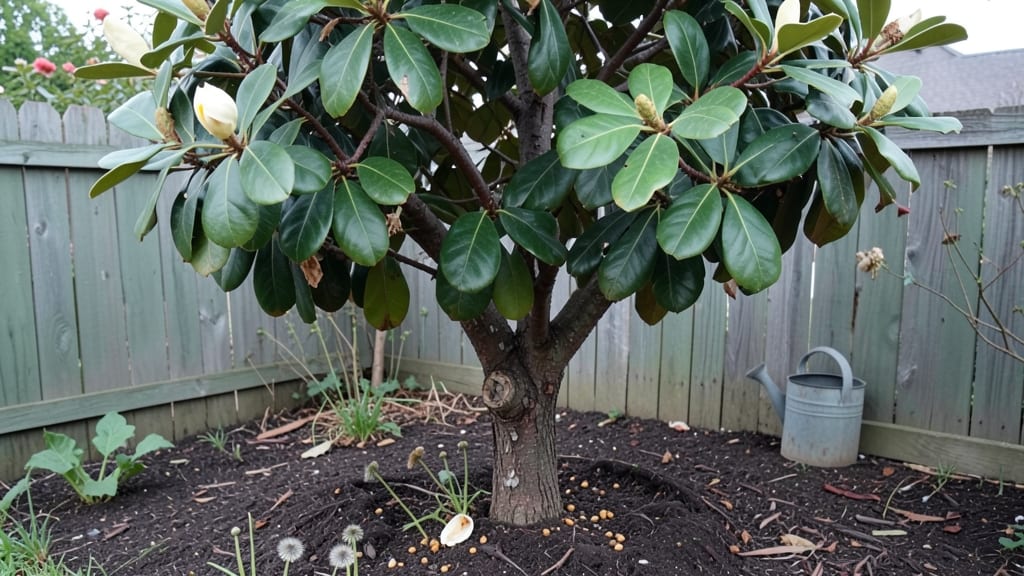
The right magnolia plant food transforms your garden, ensuring those glossy leaves and showstopping blooms return year after year—no guesswork involved. I learned the hard way that generic fertilizers leave magnolias hungry for the specific nutrients they crave, especially the slow-release kind that mimics natural forest conditions.
The right formula makes all the difference between a plant that struggles and one that thrives with bold, fragrant blooms every spring.
Magnolias need acid-loving soil and nutrients tailored to their slow, steady growth—think iron, manganese, and nitrogen in the right balance. Organic options like fish emulsion or cottonseed meal work wonders, while synthetic blends designed for acid-loving plants cut down on pH guesswork.
The key is feeding lightly in early spring and again after blooming, never overdoing it, because magnolias hate heavy hands.
You’ll see the payoff in darker green leaves, stronger stems, and blooms that open larger and more fragrant than before. The secret’s in consistency: a little food at the right times, not a big dose that burns roots.
Over-fertilizing shows up as yellow leaves or stunted growth, while under-feeding means weak wood and fewer flowers—neither is what you want.
Works for both southern magnolias and northern varieties, though timing shifts slightly based on your zone. Whether you’re feeding a young tree or a mature specimen, this approach keeps magnolias happy for decades. Let’s get those roots nourished the right way.
📚 In This Guide
- What you need
- Instructions
- Tips and common mistakes
- Wrapping up and next steps
What you need
- ● Balanced, slow-release fertilizer (e.g., 10-10-10 or 12-12-12 NPK ratio) – 1-2 lbs per 100 sq. ft. of soil
- ● Organic compost or well-rotted manure (e.g., cow, horse, or chicken manure) – 2-3 gallons per tree
- ○ Acid-loving plant fertilizer (e.g., azalea/camellia blend) – Optional but ideal for magnolias
- ● Garden gloves – For safe handling of soil and fertilizers
- ● Watering can or hose with a gentle spray nozzle – For even moisture distribution
- ● pH testing kit – To ensure soil pH is between 5.0–6.0 (magnolias love acidity!)
- ● Trowel or garden fork – For mixing fertilizer into the soil
- ● Mulch (pine bark or pine needles) – Helps retain moisture and acidity
- ● Epsom salt (magnesium sulfate) – 1 tbsp per gallon of water, applied monthly for extra greenery
- ● Slow-release fertilizer spikes – For hassle-free, long-term feeding
- ● Soil conditioner (peat moss or sulfur) – If your soil isn’t acidic enough
Step-by-step guide to feeding your magnolia for year-round health
Here’s how to nourish your magnolia so it thrives through every season—no guesswork, just science-backed results.
Understand Your Magnolia’s Nutritional Needs
Magnolias demand a balanced approach because they’re heavy feeders, especially when establishing roots or preparing for bloom. I focus on three key nutrients: nitrogen for leaf growth, phosphorus for root development, and potassium to support flowering. A 10-10-10 or 8-3-9 fertilizer ratio works best—this ensures steady growth without overloading one nutrient.
Young magnolias (under 3 years old) need more frequent feeding—every 4-6 weeks during spring and summer. Mature trees should get two feedings per year: once in early spring before new growth appears and again after flowering. Avoid high-nitrogen fertilizers in late summer; they encourage soft, vulnerable growth that struggles in winter.
Prepare the Soil for Optimal Nutrient Uptake
Before applying fertilizer, test your soil’s pH—magnolias thrive in slightly acidic to neutral soil (pH 5.0-7.0). If your soil is too alkaline, amend it with sulfur or peat moss to lower the pH gradually. I mix 2-3 inches of compost into the topsoil annually to improve texture and microbial activity, which helps roots absorb nutrients more efficiently.
Loosen the soil around the drip line (the edge of the tree’s canopy) with a garden fork to a depth of 6-8 inches. This aerates compacted soil and allows roots to spread deeper. Avoid disturbing the root flare—the swollen area at the base of the trunk—this can damage the tree’s stability.
Apply Fertilizer Correctly for Maximum Impact
Spread a slow-release granular fertilizer evenly over the soil surface, extending 2-3 feet beyond the drip line. Use ½ to ¾ cup per inch of trunk diameter—for example, a 3-inch diameter tree gets about 1-1½ cups. Water the area deeply before and after applying fertilizer to activate the granules and prevent root burn.
For container-grown magnolias, reduce the amount by half and apply every 6-8 weeks during the growing season. I always avoid fertilizing in extreme heat or drought—stressed trees can’t process nutrients properly. Instead, wait until the soil is moist and temperatures are moderate (50-75°F).
Monitor and Adjust for Seasonal Changes
After feeding, watch for signs of nutrient deficiency or excess. Yellowing leaves between veins signal iron or magnesium deficiency, while dark green, purplish leaves indicate too much phosphorus. If you see stunted growth or weak stems, your magnolia may need more nitrogen, but apply it sparingly—overfeeding can lead to fungal issues.
In late fall, switch to a low-nitrogen, high-potassium fertilizer to harden off the tree for winter. This helps it store energy for next year’s blooms. I also mulch with 2-3 inches of organic mulch (like pine bark or shredded leaves) to insulate roots and retain moisture. Keep mulch 6 inches away from the trunk to prevent rot.
Troubleshoot Common Feeding Mistakes
One mistake I see often is fertilizing too late in the season—after mid-August, new growth won’t harden off before winter. Another is using too much fertilizer, which can scorch roots. Always follow the label’s recommended rates, and if your magnolia is newly planted, wait 3-6 months before feeding to avoid stressing the root system.
If your magnolia’s leaves yellow and drop prematurely, it might be overwatered or underwatered—both issues can mimic nutrient deficiencies. Check the soil 2 inches deep; it should feel like a damp sponge, not soggy or bone-dry. Adjust your watering routine accordingly, and re-evaluate your fertilizer schedule.
Tips & tricks for perfect magnolia care
Mastering magnolia nutrition takes attention to detail—here’s how to optimize every step for vibrant growth and stunning blooms.
Nutrient Ratio Precision: The 10-10-10 or 8-3-9 fertilizer ratio isn’t just arbitrary—it reflects magnolias’ balanced needs. For young trees, I recommend sticking strictly to the 4-6 week feeding schedule during spring and summer, as their root systems are still developing. The key is consistency: too little nitrogen stunts growth, but too much in late summer creates weak, frost-sensitive branches that won’t survive winter.
Soil Preparation Technique: When loosening soil around the drip line to 6-8 inches deep, focus on horizontal aeration rather than vertical digging. Use a garden fork to create channels rather than turning the soil—this preserves beneficial soil microbes while improving drainage. I’ve found that adding 2-3 inches of compost annually makes a dramatic difference in nutrient availability, especially in heavy clay soils where roots often suffocate.
Fertilizer Application Strategy: The 2-3 feet beyond the drip line application zone might seem generous, but magnolia roots spread extensively. For a 3-inch diameter tree requiring 1-1½ cups of fertilizer, spread it evenly in this wider area rather than concentrating it near the trunk. This mimics natural nutrient distribution patterns and prevents root burn from overconcentration.
Seasonal Transition Timing: The switch to low-nitrogen, high-potassium fertilizer in late fall is critical for winter hardiness. I’ve seen magnolias with excessive spring growth fail to survive first frosts because they weren’t properly hardened off. Mark your calendar for mid-August as the absolute cutoff for high-nitrogen applications—anything after that risks creating tender new growth that won’t mature before winter.
Pro Tips for Magnolia Plant Food
- Mastering magnolia nutrition takes attention to detail—here’s how to optimize every step for vibrant growth and stunning blooms.
- Nutrient Ratio Precision: The 10-10-10 or 8-3-9 fertilizer ratio isn’t just arbitrary—it reflects magnolias’ balanced needs.
- Soil Preparation Technique: When loosening soil around the drip line to 6-8 inches deep, focus on horizontal aeration rather than vertical digging.
Frequently asked questions
Got questions about keeping your magnolia thriving with the right plant food? Here are some of the most common concerns—and straightforward answers to help you grow like a pro!
What’s the best time of year to fertilize magnolia trees?
Feed your magnolia twice a year: once in early spring (just as new leaves emerge) and again in late summer (after flowering). Avoid fertilizing in fall or winter, as the plant rests. For container magnolias, you can add a light dose every 4–6 weeks during the growing season.
Can I use regular lawn fertilizer on my magnolia?
Nope! Magnolias need low-nitrogen, high-phosphorus fertilizer to encourage blooms (like a 5-10-10 or 6-12-12 blend). Lawn fertilizer is too heavy on nitrogen, which promotes leafy growth but stunts flowers. Always check the label for "acid-loving plant" or "azalea/magnolia" formulations.
How do I know if my magnolia is over- or under-fertilized?
Over-fertilized:
Yellowing leaves, leaf drop, or burnt leaf edges (too much salt). Under-fertilized: Slow growth, sparse blooms, or pale foliage. Fix it: Flush the soil with water if overdone, or switch to a balanced formula like a 10-10-10 and water deeply after applying.
Are there organic alternatives to synthetic magnolia plant food?
Try these organic options:
- Fish emulsion (diluted to 1–2 tbsp/gallon) – great for nitrogen.
- Bone meal (3–4 tbsp per plant) – boosts phosphorus for blooms.
- Composted manure (well-aged, 1–2 inches around the base).
- Coffee grounds (sprinkled lightly) – adds acidity and nutrients.
Mix into the top 2–3 inches of soil in spring or summer.
Why aren’t my magnolia blooms as big or fragrant as they used to be?
Lack of phosphorus or potassium could be the culprit! Switch to a bloom-specific fertilizer (like 6-12-12) and ensure your magnolia gets full sun (6+ hours/day). Also, prune old wood in late winter—magnolias bloom on new growth, so removing last year’s branches encourages fresh, vibrant flowers.
Still stumped? Snap a photo of your plant’s leaves or blooms and ask your local nursery for a soil test—sometimes pH (aim for 5.0–6.0) is the hidden issue!
Wrapping up and next steps
Choosing the right magnolia plant food is the secret to vibrant blooms and thriving foliage year after year! 🌸 From organic compost to balanced synthetic fertilizers, the key is consistency—feed your magnolia just enough to fuel its growth without overdoing it.
Whether you’re a seasoned gardener or just starting, the right nutrients will reward you with stunning, fragrant flowers.
Ready to give your magnolia the love it deserves? Start by testing your soil and picking a fertilizer that matches your plant’s needs—then watch it flourish! 🌱