
Companion Plants
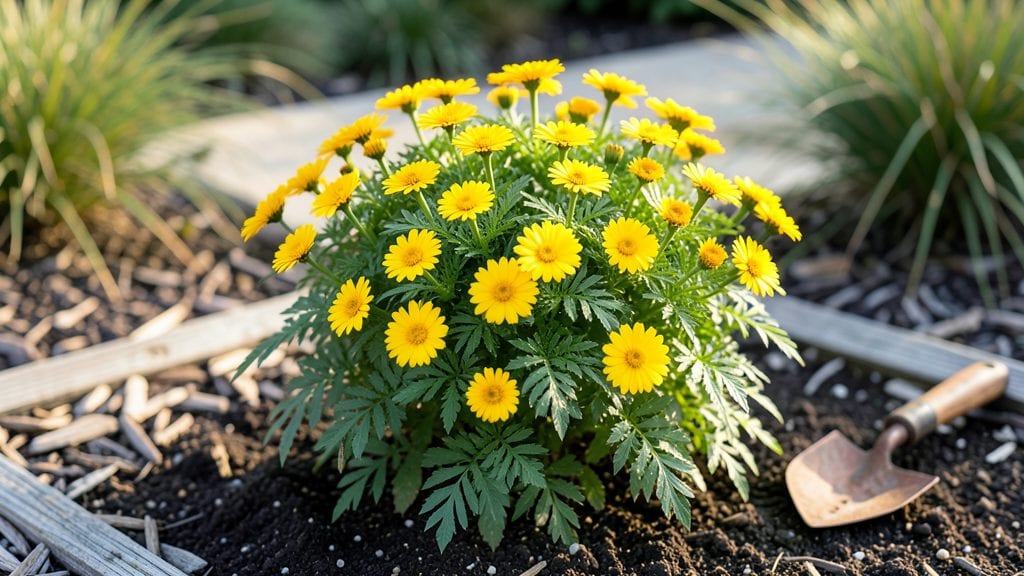
Lemon marigold plants bring sunshine and pest protection to your garden with their bright blooms and citrusy scent. 🌿 I fell in love with them after my tomato plants stopped getting munched by aphids—these little powerhouses work like nature’s bug spray.
Their fragrant foliage alone keeps pests away, but the cheerful yellow flowers add a pop of color that lasts all summer long.
The secret to happy lemon marigolds is simple: full sun, well-draining soil, and occasional watering. They thrive in containers or garden beds, making them perfect for small spaces or borders. Start seeds indoors 6-8 weeks before your last frost, or plant transplants after all danger of frost has passed.
Their drought tolerance means you won’t need to fuss over watering once they’re established.
By midsummer, your plants will be covered in blooms and humming with pollinators. The lemony aroma lingers on your fingers when you brush past them, and the pest-repelling magic works on everything from tomatoes to roses.
Prune spent flowers to encourage more blooms, and you’ll have a garden that’s both beautiful and functional.
These plants are hardy, low-maintenance, and perfect for beginners or busy gardeners. Whether you’re growing them for their scent, their pest control benefits, or just their cheerful look, lemon marigolds deliver year after year with almost no effort. Ready to add some citrusy charm to your garden?
📚 In This Guide
- What you need
- Instructions
- Tips and common mistakes
- Wrapping up and next steps
What you need
- ● Lemon marigold seeds or seedlings: 10–20 seeds (if starting from scratch) or 3–5 healthy seedlings (for faster results).
- ● Pro tip: Choose organic, non-GMO seeds for the best flavor and pest resistance! 🌱
- ● Well-draining potting mix: 5–10 gallons (for containers) or enough to fill garden beds 6–12 inches deep.
- ● Mix in: 20% perlite or sand + 10% compost for optimal drainage and nutrients.
- ● Containers or garden space: 5–10 inch diameter pots (for seedlings) or a sunny garden bed (6+ hours of light daily).
- ● Ensure pots have drainage holes to prevent root rot! 🚫💦
- ● Basic gardening tools: Trowel, pruners, and gloves (for planting and maintenance).
- ● Measuring tape or ruler (to space plants 12–18 inches apart).
- ● Watering can or hose with a gentle spray nozzle.
- ● Slow-release fertilizer: 1–2 tablespoons per plant (applied at planting and mid-season).
- ● Mulch (straw or shredded leaves): 1–2 inches thick to retain moisture and suppress weeds.
- ● Companion plant starters: Basil, thyme, or nasturtiums to enhance pest-repelling benefits!
- ● Grow lights (for indoor setups):**
Step-by-Step guide to growing lemon marigold plants
Here’s how I grow these fragrant, pest-repelling beauties—simple steps for vibrant, citrus-scented blooms.
🌱 Step 1: Choose the Right Location and Soil
Lemon marigolds thrive in full sun, so pick a spot with at least 6-8 hours of direct sunlight daily. I always test the soil first—these plants prefer well-draining soil with a slightly acidic pH (around 6.0-7.0). Amend heavy clay soil with a mix of compost and coarse sand to improve drainage.
If your garden soil is unknown, a simple test works: Grab a handful and squeeze. If it holds its shape tightly, it’s too dense. If it crumbles easily, it’s ready. Lemon marigolds hate soggy roots, so prioritize drainage over anything else. I also add a 2-inch layer of mulch around the base to retain moisture and keep roots cool.
🌱 Step 2: Plant Seeds or Transplants at the Right Time
Start seeds indoors 8-10 weeks before your last frost date or sow directly outdoors after all danger of frost has passed. Lemon marigolds are sensitive to cold, so don’t rush—wait until soil temperatures reach at least 60°F. Plant seeds ¼ inch deep and 1 inch apart in rows spaced 12 inches apart for airflow.
For transplants, dig holes slightly deeper than the root ball and space plants 10-12 inches apart. Press soil gently around the roots to eliminate air pockets. Water deeply right after planting to help roots establish. I always water at the base, avoiding the leaves to prevent fungal issues.
☀️ Step 3: Water and Fertilize for Healthy Growth
Water lemon marigolds deeply once a week, ensuring the top 2 inches of soil dry out between waterings. Overwatering is their biggest enemy—it causes root rot and weakens plants. I check moisture by sticking my finger into the soil; if it feels dry, it’s time to water.
Feed plants with a balanced, water-soluble fertilizer (10-10-10) every 4-6 weeks during the growing season. Stop fertilizing once blooms appear to encourage flowering. Lemon marigolds also appreciate a light side-dressing of compost in early spring for extra nutrients.
✂️ Step 4: Prune and Deadhead for Longer Blooms
Pinch back the tips of young plants to encourage bushier growth. Once flowers start appearing, deadhead spent blooms regularly—this redirects energy to producing more flowers instead of seeds. I use clean, sharp scissors to snip just above a set of leaves or a new bud.
If plants look leggy or overcrowded, trim back overgrown stems by ⅓ to promote new growth. Avoid cutting into old wood, as lemon marigolds struggle to regrow from hardened stems. This pruning keeps plants compact and flowering heavily through the season.
🪴 Step 5: Protect and Maintain Through the Season
Lemon marigolds naturally repel pests like nematodes and aphids, but they still need protection from harsh weather. In hot climates, provide afternoon shade to prevent wilting. In cooler areas, mulch heavily to insulate roots during temperature swings.
Watch for signs of stress—yellowing leaves often mean overwatering, while brown edges signal underwatering or too much sun. I rotate plants occasionally to ensure even growth and prevent them from leaning toward the light. With proper care, lemon marigolds will reward you with vibrant blooms and that signature citrus scent all season long.
Tips & tricks for perfect lemon marigold plants
These simple yet game-changing tips will help you grow lemon marigolds that burst with fragrance and repel pests like clockwork.
Sunlight Secret: The 6-8 hours of direct sunlight mentioned in Step 1 is non-negotiable for vibrant blooms. I've learned the hard way that even partial shade can result in leggy plants with fewer flowers. If you're in a hot climate, provide afternoon shade to prevent wilting while still ensuring those critical morning sun hours. Trust me, your plants will thank you with that signature citrus scent.
Soil Test Hack: That soil squeeze test in Step 1 is your best friend. If your soil holds its shape tightly, it's too dense for lemon marigolds. The key is to amend with compost and coarse sand to achieve that perfect crumbly texture. I like to mix in a handful of perlite too—it improves drainage without changing the soil structure dramatically.
Planting Precision: When planting seeds at ¼ inch deep in Step 2, use a toothpick to create small holes—it gives you better control than just dropping seeds on top. For transplants, that 10-12 inch spacing is crucial for airflow. I always mark planting spots with small sticks before digging to ensure proper spacing, especially when planting in rows.
Watering Wisdom: The once-a-week deep watering in Step 3 works best when done in the morning. This gives plants moisture for the day while preventing fungal issues from evening dampness. I use a rain gauge to measure water—aim for about 1 inch per week, including rainfall. The finger test is great, but this gives you a more consistent approach.
Pro Tips for Lemon Marigold Plants
- These simple yet game-changing tips will help you grow lemon marigolds that burst with fragrance and repel pests like clockwork.
- Sunlight Secret: The 6-8 hours of direct sunlight mentioned in Step 1 is non-negotiable for vibrant blooms.
- Soil Test Hack: That soil squeeze test in Step 1 is your best friend.
Frequently asked questions
Got questions about growing and using lemon marigolds?
Here are some of the most common ones—and their answers—to help you get the most out of these citrus-scented, pest-repelling powerhouses.
How fast do lemon marigold plants grow?
Lemon marigolds are fast growers! From seed, you can expect seedlings to sprout in 7–14 days, and mature plants (ready for blooms and pest-repelling action) in about 6–8 weeks. If starting with transplants, they’ll bloom even sooner—often within 3–4 weeks of planting.
When is the best time to plant lemon marigolds?
For warm climates, plant them in early spring (after the last frost) or late summer to enjoy fall blooms. In cooler zones, wait until after the soil warms to 55°F (13°C)—they’re sensitive to cold! For year-round growth in mild areas, succession planting every 2–3 weeks keeps pests at bay continuously.
Do lemon marigolds really repel pests, and which ones?
Yes! Their strong citrus scent deters aphids, whiteflies, mosquitoes, and even rabbits. They’re especially effective near vegetable gardens, roses, and citrus trees. For best results, plant them close to vulnerable plants (within 1–2 feet) and let them bloom continuously.
How often should I water lemon marigolds?
Keep soil consistently moist but not soggy—about 1 inch of water per week, including rainfall. Young plants need more frequent watering (every 2–3 days), while established ones tolerate slight drought. Overwatering can lead to root rot, so ensure well-draining soil.
Can I grow lemon marigolds in containers?
They thrive in 5–6 inch pots or larger, making them perfect for balconies or patios. Use well-draining potting mix and place containers in full sun. Just be mindful of watering—containers dry out faster. Pro tip: Add a slow-release fertilizer to boost blooms!
What can I do if my lemon marigolds aren’t blooming?
Lack of blooms often signals over-fertilizing (too much nitrogen), shady conditions, or overcrowding. Try this: Deadhead spent blooms, move to full sun, and switch to a low-nitrogen, high-phosphorus fertilizer. Prune leggy stems to encourage bushier growth.
Wrapping up and next steps
Growing lemon marigold plants is a rewarding way to add fragrant beauty to your garden while keeping pests at bay naturally! 🌿 These vibrant blooms thrive with minimal effort, offering both aesthetic charm and functional benefits—whether you’re a seasoned gardener or just starting out.
Ready to transform your outdoor space? Start by planting a few seeds or seedlings this season and watch your garden flourish with color, scent, and pest-free harmony!