
Planting
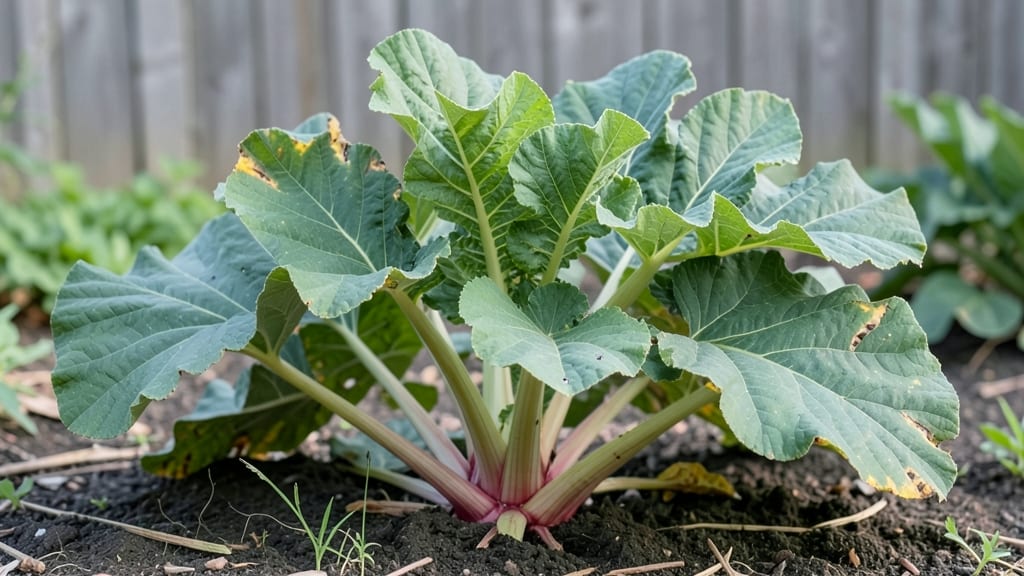
A large rhubarb plant starts with patience and a sunny corner of your yard—something I learned after my first attempt produced only sad, stunted stalks. The key isn’t fancy tricks but giving it space, rich soil, and consistent care.
Once established, a single plant can feed your family for years with minimal work.
Rhubarb thrives in zones 3-8, where winters chill the crown and summers stay cool. Plant crowns in fall or early spring, spacing them 3-4 feet apart—crowding stunts growth.
Amend heavy clay soil with compost to improve drainage, and mulch heavily in winter to protect roots from freeze-thaw cycles.
Water deeply once a week (more in drought) and fertilize lightly in spring with 10-10-10. The real secret? Pruning only after harvest. Cut stalks at the base when they’re 8-12 inches tall, leaving the leaves to feed the plant.
By year three, you’ll harvest pounds of tart stalks with almost no effort.
This plant rewards neglect—just watch for crown rot in soggy soil or Japanese beetles chewing leaves. A simple neem oil spray keeps pests at bay. With proper care, your rhubarb will outlive you and still produce.
📚 In This Guide
- What you need
- Instructions
- Tips and common mistakes
- Wrapping up and next steps
What you need
- ● Rhubarb Crown: 1 healthy, disease-free crown (preferably organic, 2–3 years old for faster growth)
- ● Pro tip: Look for crowns with multiple stalks and vibrant green leaves—this means it’s ready to thrive! 💡
- ● Well-Draining Soil: 6–10 bags (2–3 cubic feet each) of loamy soil with a pH of 6.0–6.5
- ○ Optional: Mix in compost (1–2 bags) for extra nutrients
- ● Fertilizer: 1 bag of balanced 10-10-10 fertilizer (or organic alternatives like bone meal or composted manure)
- ● Mulch: 3–5 bags of straw or wood chips (to retain moisture and suppress weeds)
- ● Garden Tools: 1 shovel or spade (for digging)
- ● 1 garden fork (to loosen soil)
- ● 1 pruning shears (for trimming leaves/stalks)
- ● 1 watering can or hose (with a gentle spray nozzle)
- ● Location: A sunny spot with at least 6 hours of sunlight daily
- ● Space for the plant to spread: 3–4 feet in diameter (rhubarb loves room to grow!)
- ● 1 garden trellis or stakes (if you want to train stalks vertically for easier harvesting)
- ● 1 pH testing kit (to monitor soil acidity)
- ● 1 drip irrigation system (for consistent watering)
- ● 1 plant protector or row cover (to shield from late frosts or pests)
Instructions for cultivating a thriving large rhubarb plant
Here’s how to establish a robust, low-maintenance rhubarb plant that rewards you with harvests for years.
Select and Prepare the Planting Site
Rhubarb thrives in cool climates and needs a permanent home—it dislikes being transplanted later. Choose a spot with full sun to partial shade (at least 6 hours of sunlight daily) and well-draining soil. Avoid low-lying areas where frost lingers, as rhubarb’s crowns can rot in soggy conditions.
Test your soil’s drainage by digging a 12-inch-deep hole and filling it with water. If it drains in under 30 minutes, your soil is suitable. Amend heavy clay with 2 inches of compost mixed into the top 6 inches of soil. Rhubarb prefers slightly acidic to neutral soil (pH 6.0–7.0), so add lime if your soil tests higher than 7.5.
Plant the Crown Correctly for Long-Term Growth
Purchase a bare-root rhubarb crown from a nursery, ensuring it has 3–5 sturdy stalks and no signs of disease. Plant in early spring or fall, when temperatures are cool. Dig a hole twice as wide as the crown but only 6 inches deep—rhubarb roots spread horizontally, not vertically.
Place the crown so the buds face upward and spread the roots evenly. Cover with soil, leaving the top of the crown 1 inch above ground level. Press gently to remove air pockets but avoid compacting the soil. Water deeply to settle the roots, then mulch with 2 inches of straw or wood chips to retain moisture and suppress weeds. This mulch layer also protects the crown from extreme temperature swings.
Water and Fertilize for Optimal Early Growth
Keep the soil consistently moist (not soggy) for the first 30 days after planting. Rhubarb’s deep roots need 1–1.5 inches of water per week, delivered at the base to avoid wetting the leaves. Use a drip irrigation system or water early in the morning to prevent fungal diseases. Avoid overhead sprinklers, which can spread mildew.
Fertilize lightly in early spring with a balanced 10-10-10 fertilizer, applying ½ cup per plant. Rhubarb is a heavy feeder but doesn’t tolerate excess nitrogen, which promotes leafy growth at the expense of stalks. Side-dress with compost tea in mid-summer for a gentle nutrient boost. Never fertilize in fall, as it encourages late-season growth that won’t harden off before winter.
Prune Strategically to Encourage Stalks Over Leaves
Wait until the third year before harvesting stalks to allow the plant to establish a strong root system. In early spring, remove any dead or diseased leaves with clean pruners, cutting ½ inch above the crown. This prevents pests and diseases from spreading. Avoid cutting into the crown itself—rhubarb’s growth originates there, and damage can stunt the plant.
Harvest stalks by twisting them gently at the base, starting with the outer stalks and working inward. Never cut more than ⅓ of the stalks in a single season, and avoid harvesting in the first two years. After harvest, apply a 2-inch layer of mulch to protect the crown and retain moisture. In late fall, cut back all leaves to 2 inches above the crown to reduce winter dieback and improve next year’s yield.
Protect and Maintain for Year-Round Productivity
Rhubarb is hardy to Zone 3, but young plants benefit from winter mulch in colder climates. After the first frost, add 4–6 inches of straw or leaves over the crown and remove it in early spring. This insulation prevents crown heave and protects against temperature fluctuations. In late winter, check for signs of crown rot (soft, mushy tissue) and remove any affected areas immediately.
Monitor for rhubarb curculio (a pest that lays eggs in stalks) by inspecting new growth in spring. If you spot small holes or sawdust-like frass, handpick affected stalks and destroy them. For organic control, apply neem oil in early spring before pests emerge. With minimal pruning and consistent care, your rhubarb plant will produce stalks for 10–15 years, making it one of the most rewarding perennials in the garden.
Tips & tricks for cultivating a thriving large rhubarb plant
These practical insights will help you avoid common pitfalls and maximize your rhubarb's productivity for decades to come.
Soil Preparation Insight: When testing your soil's drainage in Step 1, pay special attention to how quickly water disappears. If it drains too fast (under 15 minutes), your soil may lack organic matter—consider adding an extra inch of compost to improve moisture retention. This is particularly important during the first 30 days after planting when roots are establishing themselves. The goal is to mimic rhubarb's natural cool, moist habitat.
Crown Planting Precision: In Step 2, the 1-inch crown elevation above soil level is critical—this prevents rot while allowing easy access for future harvesting. I've learned the hard way that burying the crown too deeply can lead to crown rot, while leaving it too exposed risks winter damage. Use a level to ensure consistent depth across multiple plants if you're establishing a large patch.
Watering Strategy: The 1–1.5 inches of water per week mentioned in Step 3 should be delivered consistently, but timing matters just as much. Early morning watering prevents fungal diseases by allowing foliage to dry completely before evening. I've found that drip irrigation systems work best—overhead sprinklers can actually spread mildew by keeping leaves wet for extended periods, which rhubarb particularly dislikes.
Long-Term Harvest Planning: Remember that the third-year harvest restriction in Step 4 isn't arbitrary—it's about building a robust root system. I've seen gardeners impatiently harvest in the second year only to watch their plants struggle for years afterward. The patience pays off with larger stalks and more reliable production in subsequent years. Mark your calendar now to remember this crucial milestone.
Pro Tips for Large Rhubarb Plant
- These practical insights will help you avoid common pitfalls and maximize your rhubarb's productivity for decades to come.
- Soil Preparation Insight: When testing your soil's drainage in Step 1, pay special attention to how quickly water disappears.
- Crown Planting Precision: In Step 2, the 1-inch crown elevation above soil level is critical—this prevents rot while allowing easy access for future harvesting.
Frequently asked questions
Got questions about growing a large rhubarb plant? You’re not alone! Here are answers to the most common queries to help you cultivate a thriving, low-maintenance harvest.
How long does it take for a rhubarb plant to reach full size?
A large rhubarb plant typically reaches maturity in 3–4 years, but you can harvest small stalks as early as the second year. Patience pays off—healthy plants produce for decades! Choose a well-drained spot with partial shade to speed up growth.
When is the best time to harvest rhubarb stalks?
Harvest in early spring (March–April) when stalks are at least 10–12 inches tall and 1-inch thick. Avoid cutting leaves—they feed the plant! For year-round harvests, space cuts 2–3 weeks apart during the growing season. Never harvest after frost.
Why is my rhubarb plant not producing stalks?
Common culprits include over-pruning, poor soil, or too much shade. Ensure your plant gets 6+ hours of sunlight and rich, well-draining soil. If established (3+ years old), add compost or balanced fertilizer in early spring. Never harvest leaves!
Can I grow rhubarb in containers or small spaces?
Yes! Rhubarb thrives in 18–24-inch-deep containers with drainage holes. Use a high-quality potting mix and place in partial sun. Dwarf varieties like ‘Little Ruby’ are ideal for small gardens. Just ensure the container doesn’t dry out—rhubarb loves moisture!
What’s the best way to store harvested rhubarb?
Wrap stalks in a damp paper towel and store in the crisper drawer of your fridge for 2–3 weeks. For longer storage, blanch and freeze stalks (peeled, chopped) for up to 1 year. Avoid washing before storage—excess moisture speeds up spoilage.
Wrapping up and next steps
Growing a large rhubarb plant is a rewarding journey that yields delicious, homegrown harvests with surprisingly little effort! With the right soil, spacing, and minimal pruning, you can enjoy plump stalks for years—even in cooler climates.
Whether you're a seasoned gardener or just starting, this hardy perennial makes gardening effortlessly satisfying.
Ready to dive in? Start by prepping your soil this fall or early spring, then plant your crowns with confidence. Soon, you’ll be savoring fresh rhubarb straight from your garden—no green thumbs required! 🌱✨