
Pruning
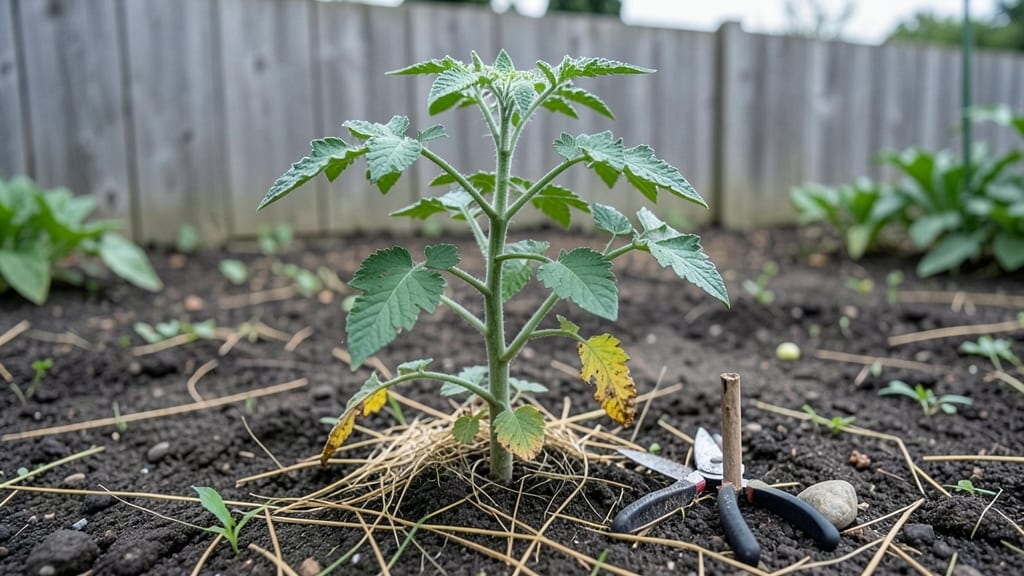
Pruning young tomato plants might seem scary, but those three strategic cuts can double your harvest. ✂️ I used to avoid it completely—until I saw my neighbor’s plants bursting with fruit while mine struggled.
The secret isn’t complicated: focus on removing suckers, shaping the plant, and keeping energy flowing to where it matters most.
You’ll need sharp pruners (or clean scissors in a pinch), a sunny morning to work, and about 10 minutes per plant. Start when plants are 12–18 inches tall, and always cut just above a leaf node where new growth can sprout.
The goal? A sturdy, open plant that lets air circulate and sunlight reach every fruit.
After pruning, you’ll notice thicker stems and more blossoms within weeks. The plants become stronger, disease-resistant, and packed with fruit instead of wild, tangled vines. It’s the difference between a handful of tomatoes and a bucketful—and the best part? Even beginners get it right after the first try.
Works for both determinate (bush) and indeterminate (vining) varieties, though the cuts differ slightly. Let’s get those plants shaped for maximum flavor and yield!
📚 In This Guide
- What you need
- Instructions
- Tips and common mistakes
- Wrapping up and next steps
What you need
- ● Pruning shears or sharp bypass pruners: Choose a pair with sterilized, sharp blades (avoid dull tools—they crush stems instead of cutting cleanly). A 5-inch to 7-inch blade works best for tomato plants.
- ● Disinfectant (rubbing alcohol or bleach solution): Mix 1 part bleach to 9 parts water to sterilize tools before and after pruning (prevents disease spread).
- ○ Gloves (optional but recommended): Wear nitrile or garden gloves to protect hands from thorns and sap.
- ● Small bucket or bag: Collect pruned leaves/stems to compost or dispose of (avoid leaving debris near plants).
- ● Watering can or hose: Keep one handy to hydrate plants after pruning (reduces stress).
- ● Handheld magnifying glass: Helps spot hidden pests or early signs of disease on stems.
- ● Plant tie or soft twine: Secure tall stems to stakes if your tomato plants need support after pruning.
- ● Garden twine or bamboo stakes: Prep supports before pruning if your plants are top-heavy.
- ● Epsom salt (magnesium sulfate): Sprinkle lightly around the base post-pruning to boost growth (1 tbsp per plant in 1 gallon of water).
Step-by-Step guide to pruning young tomato plants
Here's the simple method I use to boost fruit production and keep plants healthy.
🌱 Step 1: Identify and Remove Suckers Early
Suckers are the small shoots that grow in the crotch between the main stem and branches. These compete with your fruit for energy, so I remove them as soon as they're 1-2 inches long. Use your thumb and forefinger to gently pinch them off at the base—no need for shears. You'll find them near the base of the plant first, then higher up as the plant grows.
Real talk: I used to wait until suckers got bigger, but that just wastes energy your plant could be putting into tomatoes. The key is to check for suckers every 5-7 days during active growth. If you see a sucker starting to grow near a flower cluster, remove it immediately—this ensures all energy goes to fruit development.
✂️ Step 2: Prune Lower Leaves for Airflow
Once your plant reaches 18-24 inches tall, start removing the bottom leaves that touch the soil. Use clean, sharp pruning shears to make a clean cut just above the leaf stem. Remove leaves within 6 inches of the ground first, then work your way up as the plant grows. This prevents soil-borne diseases and improves airflow around the plant.
Don't go overboard—I only remove about 10-15% of the foliage at a time. You're not trying to turn your tomato into a bare stem; you want to maintain enough leaves for photosynthesis. Watch for leaves that look yellow or diseased—remove those immediately, even if they're higher up.
☀️ Step 3: Balance Growth with Strategic Cuts
When your plant reaches 3-4 feet tall, focus on maintaining a strong central stem. Remove any suckers that appear above the first flower cluster, but leave the ones below—these can develop into strong branches later. For indeterminate varieties (the ones that keep growing), I stop pruning suckers once the plant hits 5-6 feet tall to let it focus on fruit production.
Here's the thing—if your plant starts looking top-heavy with too many leaves at the top, it's time to trim back the top growth by 1/3 to 1/2. This encourages the plant to put energy into existing fruit rather than growing more foliage. You'll know you've done it right when you see new growth starting from lower branches within 7-10 days.
🌿 Step 4: Maintain Through the Season
Throughout the growing season, keep an eye out for any branches that grow inward or cross over each other. These compete for sunlight and can lead to disease. Remove them immediately with clean shears. I also check for any leaves that show signs of disease—yellow spots, brown edges, or unusual growth patterns—and remove them right away.
Don't forget to water at the base after pruning. Your plant will need a drink to recover from the stress of cutting. I like to water in the morning so any moisture on the leaves has time to dry before evening, which helps prevent fungal issues. Prune in the morning too—it gives the plant time to recover before nightfall.
Tips & tricks for perfect tomato plant pruning
A few simple strategies will help you maximize your tomato harvest and keep plants thriving all season.
Timing is Everything: The 5-7 day check schedule in Step 1 is crucial for catching suckers early. I always do my pruning in the morning when plants are turgid and diseases are less likely to spread. If you're short on time, aim for at least every 10 days—just don't wait until suckers reach 3 inches or more, as they'll start competing seriously with your fruit.
Tool Selection Matters: While you can pinch off suckers with your fingers, invest in a good pair of clean, sharp pruning shears for the leaf removal in Step 2. I use titanium-coated shears that stay sharp for years. Always sterilize your tools with rubbing alcohol between plants to prevent disease spread. For larger branches, I keep a small pair of bypass pruners handy—they make clean cuts without crushing stems.
Visual Growth Cues: When your plant reaches 3-4 feet tall (Step 3), watch for these signs: the top leaves should be slightly darker green than lower ones, and you'll see new growth starting from lower branches within 7-10 days after trimming. If you don't see this new growth, you may have trimmed too aggressively. Remember, you're aiming for a balanced plant—not a bare stem.
Seasonal Maintenance Strategy: Throughout the season, I keep a small spray bottle of water and a sanitizing solution on hand. After each pruning session, I give the plant a light misting at the base—this helps it recover faster. For disease prevention, I always remove any leaves showing signs of trouble immediately, even if they're higher up. The key is consistency: a little maintenance every few days prevents major issues later.
Pro Tips for Prune Young Tomato Plants
- A few simple strategies will help you maximize your tomato harvest and keep plants thriving all season.
- Timing is Everything: The 5-7 day check schedule in Step 1 is crucial for catching suckers early.
- Tool Selection Matters: While you can pinch off suckers with your fingers, invest in a good pair of clean, sharp pruning shears for the leaf removal in Step 2.
Frequently asked questions
Got questions about pruning young tomato plants? You’re not alone! Here are answers to the most common concerns—so you can confidently shape your plants for a bountiful harvest.
When is the best time to start pruning young tomato plants?
Prune after your tomato plants have developed their first 5-7 sets of true leaves (not the initial seed leaves). This ensures they’re strong enough to handle the stress. For indeterminate varieties, begin pruning when they’re 12-18 inches tall. For determinate (bush) tomatoes, minimal pruning is needed—just remove suckers if desired. Timing tip: Wait until morning so wounds have time to heal before evening moisture sets in.
What if I accidentally prune too much off my tomato plant?
Don’t panic! Tomato plants are resilient. If you’ve removed too many leaves or stems, your plant may slow growth temporarily, but it’ll recover. Focus on watering consistently and fertilizing lightly (with a balanced 10-10-10 or compost tea) to support regrowth. Avoid over-fertilizing nitrogen-heavy products, as this can stress the plant further. Pro tip: Prune in stages if you’re unsure—better to do less than overdo it!
Can I prune tomato plants in hot or humid weather?
Pruning in extreme heat (above 90°F/32°C) or high humidity can stress plants, increasing disease risk (like blight) or slowing recovery. If you must prune, do it early in the morning or late afternoon, and avoid pruning during peak sun. Opt for cooler days (60-75°F/15-24°C) for best results. Humidity hack: Sterilize your pruners with rubbing alcohol to prevent fungal spores from spreading.
Do I need to prune determinate (bush) tomato plants?
Determinate tomatoes don’t require heavy pruning like indeterminate varieties. Focus on removing only the suckers (shoots in the leaf axils) if you want to slightly improve airflow or fruit size. Otherwise, skip pruning entirely—they’re bred to produce fruit all at once without needing structural support. Exception: Trim lower leaves touching the soil to prevent disease. Quick rule: Less is more for bush tomatoes!
What should I do with the pruned branches I remove?
Never toss pruned branches into the compost pile if your tomato plants have diseases like blight or wilt. Instead, bag and dispose of them in the trash to prevent reinfection. Healthy prunings can be chopped and used as mulch around the base of other plants (not tomatoes!) or added to a separate compost bin to break down. Bonus: Save a few suckers to root in water for new plants!
Wrapping up and next steps
Pruning young tomato plants might feel intimidating at first, but with these three key cuts, you’re already setting the stage for a bountiful, healthy harvest! 🌱 Remember, the goal is to encourage strong growth, better airflow, and more energy for fruit production—not perfection.
Now that you’re armed with the right tools and techniques, grab those shears and get pruning.
Ready to take it further? Monitor your plants weekly—adjust pruning as they grow, and soon you’ll be enjoying homegrown tomatoes that taste like summer in every bite. Happy gardening! 🍅✨