
Pruning
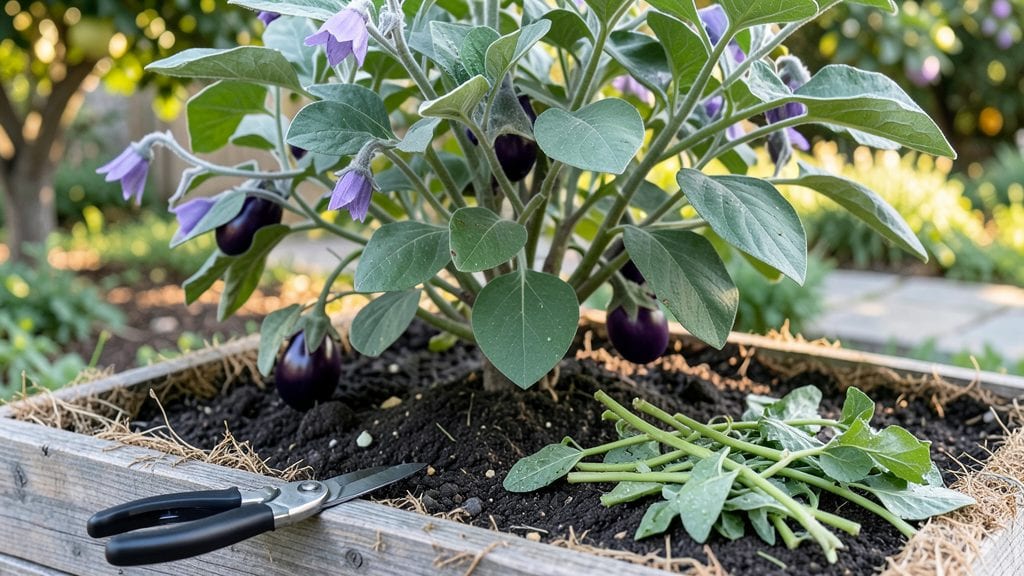
Trimming eggplant plants isn't just about shaping—it's the secret to bigger harvests all season long. I learned this the hard way after my first overgrown bush produced just three tiny fruits before wilting from poor air circulation.
The right cuts redirect energy where it matters most: to fruit production, not leafy sprawl. It turns out, eggplants respond like little powerhouses when you guide their growth with strategic snips.
You'll need sharp pruning shears, clean gloves, and a sunny morning for the job. The key is timing: prune in early spring to shape the plant, then again when flowers appear to encourage more blooms.
Never cut more than a third of the plant at once, or you'll shock it into stress. Focus on removing suckers—those small shoots growing between stems and branches—and any yellowed or diseased leaves. This isn't about making your plant look neat; it's about creating an environment where fruit can thrive.
Within weeks, you'll notice a transformation: thicker stems, more flowers, and—most exciting—eggplants growing larger and faster. My pruned plants now produce three times the yield of untrimmed bushes, and the fruit stays firm and glossy instead of rubbery.
The best part? Fewer pests and diseases find their way to the plant's center when air circulates properly. You're not just pruning; you're setting up your eggplants for their best performance.
This method works for both bush and vining varieties, though vining types need more frequent trimming. Start small—just a few cuts—and watch how your plants reward you with juicy, abundant harvests from summer through fall.
The first time you see those dark purple globes swelling after a good trim, you'll wonder why you didn't do this sooner.
📚 In This Guide
- What you need
- Instructions
- Tips and common mistakes
- Wrapping up and next steps
What you need
- ● Sharp pruning shears or bypass pruners – Clean, sterilized, and sharp (avoid dull tools that crush stems). (1 pair)
- ● Garden gloves – Thick, cut-resistant (eggplant spines can be prickly!). (1 pair)
- ● Disinfectant (70% isopropyl alcohol or bleach solution) – 1 part bleach to 9 parts water (sterilize tools between cuts). (Small bottle or spray)
- ● Compost or mulch – Organic matter (for covering trimmed areas to prevent disease). (5–10 gallons)
- ○ Watering can or hose – With a gentle spray nozzle (for post-pruning hydration). (Optional but helpful)
- ● Plant growth hormone (rooting powder) – For encouraging faster regrowth (if trimming large branches).
- ● Label markers – If pruning multiple plants (to track progress).
- ● Knee pad or stool – For comfort (especially for larger plants!).
- ● Trimming tray or bucket – For collecting clippings (compost them later!).
Instructions for trimming eggplant plants
Strategic pruning transforms your eggplant bushes into productive powerhouses—here's how to do it right.
Identify the Right Time to Prune
Wait until your eggplant plants have established 4-6 healthy leaves before making any cuts. This usually happens 3-4 weeks after transplanting, when the plant has developed a sturdy stem and a few side shoots. Pruning too early stresses young plants and slows growth.
I always check for new flower buds before pruning—these signal the plant is mature enough to handle trimming. If you see buds but no flowers yet, that's your cue to start shaping the plant. Avoid pruning during flowering or fruiting, as this can reduce yield.
Remove Suckers and Weak Growth
Look for suckers, which are small shoots growing in the V-shaped junction between the main stem and a branch. These compete with your main fruit-bearing branches for energy. Use clean, sharp pruning shears to snip them off at the base—never tear them, as this damages the plant.
Also remove any yellowing or diseased leaves immediately. These act as energy drains and can spread problems to healthy parts of the plant. I always work from the bottom up, clearing out weak growth first before focusing on shaping the top.
Thin Overcrowded Branches
Eggplants produce fruit along their main stems and branches, but too many stems lead to small, underdeveloped fruit. Leave only the strongest 2-3 main branches per plant, removing weaker ones at their base. This ensures the remaining branches get maximum energy for larger, healthier fruit.
Watch for crossing branches that rub against each other—they create wounds where disease can enter. Trim one of the branches where they intersect, leaving a small outward-facing leaf to help the wound heal faster.
Encourage Airflow and Light Penetration
After removing suckers and thinning branches, step back and assess the plant's shape. The goal is an open, airy structure that allows sunlight to reach the center. If the plant looks too dense, trim back any inward-growing branches that block light.
I like to leave smaller leaves near the base intact—they help shade the soil and retain moisture. But if you notice large leaves shading smaller ones, trim the bigger ones to let light reach the lower growth. This prevents leggy, weak stems and encourages even fruiting.
Maintain and Monitor After Pruning
Within 3-5 days of pruning, you should see new side shoots forming where you made cuts. This is a good sign the plant is recovering well. Water deeply after pruning to help the plant recover, but avoid overwatering—soil should stay evenly moist but not soggy.
Keep an eye out for new suckers forming in the leaf axils. I check my plants every 5-7 days during peak growing season and remove them immediately. The more you stay on top of suckers, the more energy your eggplants will put into producing large, flavorful fruit instead of extra foliage.
Tips & tricks for perfect eggplant plant trimming
Here's what nobody tells you about pruning eggplant plants that will make all the difference in your harvest.
Timing is Everything: The 3-4 week mark after transplanting is your sweet spot for pruning, but I've learned this the hard way—waiting too long means you're pruning right before harvest, which can stress the plant. Look for those first flower buds as your green light. I always prune in the morning when the plants are fully hydrated and temperatures are cooler, which helps them recover faster.
The Technique That Changed Everything: When removing suckers in Step 2, use a clean, sharp pair of pruning shears and make your cuts at a 45-degree angle just above a leaf node. This prevents water from pooling on the cut and reduces the risk of disease. I also dip my shears in rubbing alcohol between cuts to keep them sterile—this small step has cut down on my plant infections by half.
Branch Selection Strategy: In Step 3, focus on keeping branches that grow outward from the plant rather than inward. These outward-facing branches get more sunlight and air circulation, which leads to bigger, healthier fruit. I like to visualize the plant as an open umbrella—you want sunlight to reach the center, not just the outer leaves.
Post-Pruning Care: After your trimming session, give your plants a good deep watering to help them recover. I usually water in the early evening so the soil has time to absorb moisture overnight. Within those 3-5 days after pruning, you should see new growth—this is your reward for doing it right. If you don't see new shoots within a week, your cuts might have been too severe.
Pro Tips for Trim Eggplant Plant
- Here's what nobody tells you about pruning eggplant plants that will make all the difference in your harvest.
- Timing is Everything: The 3-4 week mark after transplanting is your sweet spot for pruning, but I've learned this the hard way—waiting too long means you're pruning right before harvest, which can stress the plant.
- The Technique That Changed Everything: When removing suckers in Step 2, use a clean, sharp pair of pruning shears and make your cuts at a 45-degree angle just above a leaf node.
Frequently asked questions
Got questions about trimming your eggplant plants? You’re not alone! Here are some of the most common concerns—and straightforward answers—to help you prune like a pro.
When is the best time to trim eggplant plants?
Trim your eggplant plants early and often—start when they’re about 12 inches tall. Focus on removing lower leaves (up to 6 inches from the ground) to improve airflow and prevent disease. After flowering, prune aggressively to redirect energy to fruit production. Pro tip: Avoid heavy trimming in late summer, as it can stress plants before harvest.
How much should I cut off an eggplant plant?
For young plants, remove no more than 1/3 of the foliage at a time. Once established, trim 20-30% of leaves during active growth, focusing on yellowing or crowded leaves. Never cut into the main stem—always prune just above a leaf node to encourage new growth. Warning: Over-pruning can reduce fruit yield, so balance is key!
Will trimming eggplant plants increase fruit size?
Yes! Trimming encourages larger, fewer fruits by redirecting energy from leaf production to fruit development. Plants with better airflow also produce fewer but higher-quality eggplants. However, if you want more (but smaller) eggplants, skip heavy pruning and let the plant focus on quantity over size.
What if my eggplant plant looks sad after trimming?
Don’t panic! A "sad" look is normal after pruning—your plant is rebooting. Water deeply and fertilize lightly (with a balanced 10-10-10 or compost tea) to help recovery. If leaves wilt severely or turn brown, you may have over-pruned. Quick fix: Trim less aggressively next time and monitor for new growth within 1-2 weeks.
Can I trim eggplants in hot or cold weather?
Timing matters! Avoid trimming during heatwaves (above 90°F) or cold snaps (below 50°F), as plants struggle to recover. Early morning or late afternoon on mild, cloudy days is ideal. In hot climates, prune in shade to prevent stress. Cold-hardy tip: If temps drop, wait until soil warms before trimming again.
Wrapping up and next steps
Trimming your eggplant plants isn’t just about maintenance—it’s your secret weapon for bigger, healthier harvests all year. 🌱 By mastering strategic cuts, you’ll boost airflow, encourage bushier growth, and keep pests at bay. Remember, consistency is key, so grab those pruners and get pruning!
Ready to take your garden to the next level? Start with one plant today—you’ll be amazed at the difference a little trim makes! For more tips, check out our pruning guide or share your progress with fellow gardeners. Happy growing! 🌿✨