
Companion Plants
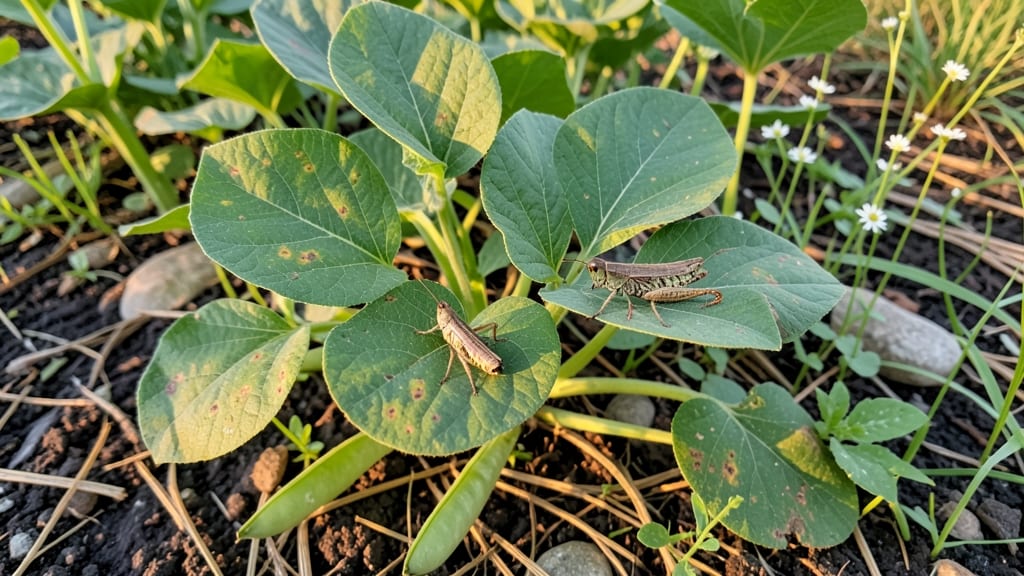
Grasshoppers on plants destroy foliage by relentlessly chewing leaves, stems, and flowers, which stunts growth and slashes harvests. Their jagged bite patterns leave unmistakable damage, so spotting them early gives your plants the best chance at survival.
Grasshoppers aren't just annoying—they're plant predators with powerful jaws designed to strip away plant tissue like a lawnmower. 🌱 Their feeding creates unsightly holes and can even expose plants to fungal infections through open wounds.
The worst part? They target young, tender shoots first, which means your garden's future growth gets derailed before it even starts.
When you notice irregular notches along leaf edges or skeletonized foliage (where only veins remain), that's your cue to act fast. These pests multiply quickly, so combining physical barriers like row covers with natural repellents such as neem oil gives you the best defense without harming beneficial insects.
💡 In This Article
- How Grasshoppers Destroy Plant Tissue
- Natural and Chemical Solutions to Repel Grasshoppers
How grasshoppers destroy plant tissue
Grasshoppers attack plants using powerful mandibles that act like scissor blades, capable of exerting 200-300 psi of force—enough to slice through plant cell walls with ease.
Their feeding mechanism involves a chewing motion where the upper and lower mandibles move in opposite directions, creating jagged tears rather than clean cuts.
This isn't just surface damage; their saliva contains enzymes that break down plant tissues, making it easier to consume the softer inner cells while leaving the tougher veins behind—hence the characteristic "skeletonized" appearance.
The damage escalates when grasshoppers target young plants, where the tender meristem tissue (growth points) is most vulnerable. A single adult can consume up to 16 times its body weight daily, and nymphs (baby grasshoppers) are equally destructive despite their smaller size.
What's worse is that their feeding creates open wounds, which act as entry points for fungal pathogens like Alternaria or bacterial infections. These secondary infections often kill plants faster than the grasshoppers themselves by disrupting the plant's vascular system.
Here's what happens at the cellular level: Grasshoppers' mandibles puncture plant cells, releasing sap that attracts more pests. The plant responds by allocating energy to wound repair instead of growth, leading to stunted shoots and reduced flowering.
In severe cases, the plant's photosynthetic capacity drops by 30-50% when more than 25% of foliage is damaged, directly impacting yield. The key difference between young and mature plants is resilience—young plants often die from stress, while mature ones may survive but produce fewer fruits or seeds.
Grasshoppers also exhibit preference feeding, targeting plants with high nitrogen content first. Legumes, corn, and wheat are particularly attractive because their soft leaves offer easy access to nutrients. The damage pattern is diagnostic: irregular holes with uneven edges (unlike clean cuts from deer) and frass (excrement) nearby.
This selective feeding can create patchy damage across fields, making it harder to spot early unless you're monitoring closely.
What most gardeners overlook is the systemic harm beyond visible damage. Grasshoppers trigger a plant's defense response, which diverts resources from root development and nutrient uptake. Studies show that chronically stressed plants have 20-40% weaker root systems, making them more susceptible to drought and nutrient deficiencies.
The cumulative effect over weeks can turn a healthy crop into a shadow of its potential—even if the grasshoppers are gone by harvest time.
To visualize the impact, imagine a 100-square-foot garden with 50 grasshoppers: they could consume enough foliage to reduce your tomato yield by 15-25% in just two weeks. The damage compounds when multiple generations hatch during the growing season, turning a minor infestation into a full-blown crisis. 🌿