
Diseases
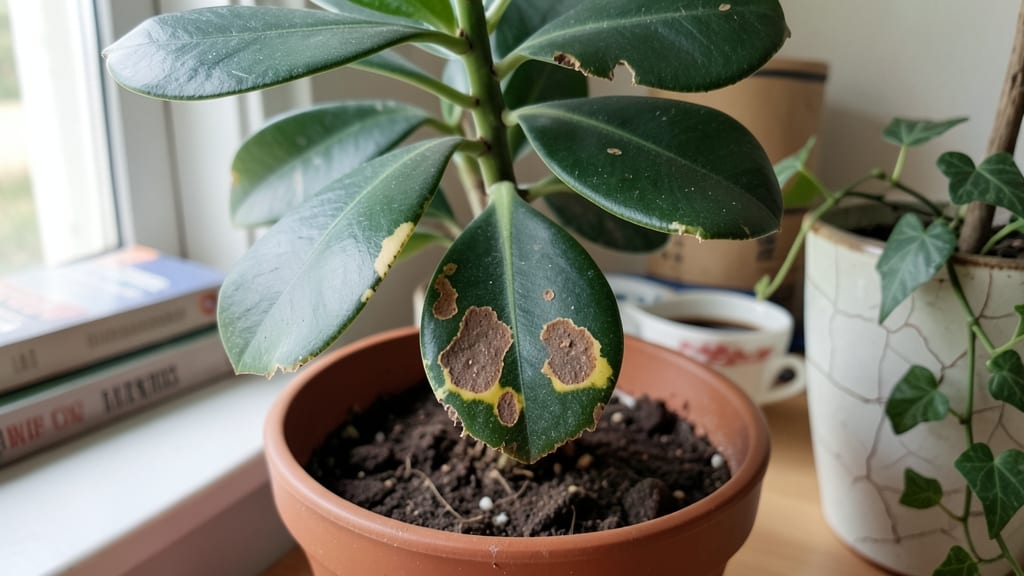
"Ficus plant diseases can turn your leafy centerpiece into a sad, brown mess if you don’t catch them early. 🌿 I’ve nursed back more ficus plants than I’d like to admit after ignoring those first weird spots or droopy leaves—don’t make the same mistake.
The key is spotting symptoms before they spread, and knowing which natural fixes actually work without killing your plant in the process.
Most ficus problems start with overwatering or poor airflow, creating the perfect breeding ground for fungus and bacteria. Yellowing leaves? Probably root rot. Black spots with yellow halos? That’s likely a fungal infection.
The good news is that once you recognize these warning signs, you can act fast—pruning affected areas, adjusting water habits, and using simple organic sprays to stop the rot in its tracks.
By the time you finish this guide, you’ll know exactly what to look for and how to treat it before your ficus turns into a sad, crunchy skeleton.
We’re talking saving your plant in days, not weeks—just trim the damaged parts, adjust care, and watch it bounce back with fresh, vibrant leaves. Trust me, your ficus will thank you.
Works for every ficus variety, from weeping figs to rubber plants, and even covers those tricky cases where store-bought solutions just don’t cut it. Let’s get your plant healthy again—no chemicals required.
Understanding Root Causes
Ficus plants are resilient, but their health can quickly decline when environmental or biological factors throw them off balance. Let’s break down the why behind common ficus plant diseases—so you can spot the warning signs and act before it’s too late.
Ficus plants thrive in well-draining soil and moderate moisture, but when they’re overwatered, their roots suffocate. Here’s what happens:
- Root Rot (Fungal Infection) 🍄 - Why it happens: Ficus roots need oxygen.
When soil stays soggy, fungi like Phytophthora or Pythium multiply, breaking down root tissue. - The science: These fungi block water and nutrient uptake, causing wilting, yellowing leaves, and a foul smell from the soil. - Actionable fix: Let the top 1-2 inches of soil dry out before watering again.
Use pots with drainage holes and a mix of perlite or orchid bark to improve aeration.
- Waterlogged Stress
- Why it happens: Even without fungi, excess water displaces oxygen in the soil, leading to anaerobic conditions—roots can’t respire properly.
- Signs: Leaves turn yellow or brown at the edges, and the plant feels heavy and mushy when lifted.
Ficus plants (like Ficus elastica or Ficus benjamina) are tropical—they hate drafts, cold snaps, and dry air. Here’s how extremes trigger disease:
- Cold Stress & Shock - Why it happens: Below 55°F (13°C), ficus growth slows, and cell membranes rupture, making the plant vulnerable to bacterial or fungal infections. - The science: Cold weakens the cuticle (plant’s protective layer), allowing pathogens like Erwinia (a bacterial soft rot) to invade. - Actionable fix: Keep ficus in 65–80°F (18–27°C) ranges.
Avoid placing near AC vents, windows, or doors.
- Low Humidity & Spider Mites 🕷️ - Why it happens: Dry air weakens the plant’s defenses, making it a snack for pests like spider mites, which then spread fungal or viral diseases. - The science: Spider mites inject toxins while feeding, causing yellow stippling—a stress signal that invites secondary infections. - Actionable fix: Maintain 40–60% humidity with a pebble tray or humidifier.
Wipe leaves with neem oil to deter mites.
Ficus plants are not immune to pathogens—once they breach the plant’s defenses, diseases spread fast. Here’s how:
| Disease | Culprit | How It Starts | Trigger Conditions |
|---|---|---|---|
| Leaf Spot | Cercospora fungus | Spores land on wet leaves → brown spots with yellow halos. | High humidity + poor airflow. |
| Anthracnose | Colletotrichum fungus | Fungal spores infect young leaves → sunken, dark lesions. | Overhead watering + warm, damp air. |
| Bacterial Blight | Xanthomonas bacteria | Bacteria enter through wounds → water-soaked spots that ooze. | Contaminated tools + excessive moisture. |
- Actionable fix:
- Prune infected leaves immediately (sterilize shears with rubbing alcohol).
- Space plants for airflow (fungi love stagnant air).
- Water at the base (never overhead) to keep leaves dry.
Pests don’t just eat ficus leaves—they create entry points for diseases. Here’s the domino effect:
- Scale Insects 🐛
- Why it happens: These sap-suckers excrete honeydew, a sticky sugar that attracts sooty mold (a black fungal growth).
- The science: Sooty mold blocks sunlight, reducing photosynthesis and stressing the plant.
- Mealybugs 🐜
- Why it happens: Their woolly secretions trap moisture, creating ideal fungal conditions (like powdery mildew).
- Actionable fix:
- Quarantine infested plants to stop spread.
- Spray with insecticidal soap (1 tsp per quart of water) or rub off pests with alcohol-soaked cotton.
- Introduce beneficial insects (like ladybugs) for natural control.
Ficus plants crave balance—too much or too little of certain nutrients can trigger disease-like symptoms.
- Nitrogen Deficiency (💡 Yellowing Lower Leaves)
- Why it happens: Nitrogen fuels leaf growth. Without it, older leaves chlorosis (lose chlorophyll), weakening the plant’s immune response.
- Fix: Use a balanced fertilizer (10-10-10) every 4–6 weeks in spring/summer.
- Salt or Chemical Burn (🚨 Crispy Leaf Edges)
- Why it happens: Over-fertilizing or tap water with high minerals causes osmotic stress, where roots can’t absorb water.
- Fix: Flush soil with distilled water every 2 months. Use rainwater or filtered water if possible.
Even non-infectious issues can mimic diseases. Here’s how:
- Transplant Shock
- Why it happens: Repotting without root disturbance or using compacted soil restricts growth, making the plant susceptible to infections.
- Fix: Repot in spring, use well-aerated potting mix, and water lightly for 1 week post-transplant.
- Light Stress (🔥 Sunburn or ❄️ Leggy Growth) - Why it happens: Too much direct sun causes bleached patches, while low light weakens the plant, making it prone to pests/diseases. - Fix: Bright, indirect light (east or north-facing windows).
Rotate the plant weekly for even growth.
Many ficus diseases start with one issue (like overwatering) and escalate when other factors pile on. For example:
- Overwatering → Root rot.
- Weak roots → Can’t support leaves → Yellowing.
- Stressed plant → Pests attack.
- Pests spread → Fungal infections.
Prevent the chain reaction by monitoring soil moisture, airflow, and pest activity regularly!
How to Fix Ficus Plant Troubles
When your ficus plant shows signs of distress, acting quickly can save it from irreversible damage. Below are practical, step-by-step solutions tailored to the most common ficus plant diseases and issues. Follow these fixes to nurse your plant back to health—and keep it thriving long-term!
Signs: Yellowing leaves, mushy stems, foul-smelling soil, wilting despite watering.
🔥 Step 1: Remove the Plant from the Pot
Gently slide your ficus out of its container. If the roots are black, slimy, or crumbling, root rot has set in.
🍳 Step 2: Trim the Damaged Roots
- Use sterilized scissors or pruning shears (wipe with rubbing alcohol).
- Snip away soft, dark roots—only keep firm, white/light tan roots.
- Pro Tip: 💡 If more than 50% of roots are rotten, your plant may not survive, but you can still try propagation.
👨🍳 Step 3: Repot in Fresh, Draining Soil
- Choose a clean pot with drainage holes (terracotta works best).
- Use a well-draining mix: Combine cactus/succulent soil (50%) + perlite/pumice (30%) + orchid bark (20%).
- Let the roots dry for 1–2 hours before repotting to prevent further rot.
🥘 Step 4: Adjust Watering Habits
- Wait until the top 1–2 inches of soil are dry before watering again.
- Water deeply but infrequently—ficus plants hate soggy roots!
- Prevention Tip: ✨ Avoid overwatering—stick your finger in the soil to check moisture.
Signs: Brown/black spots with yellow halos, white powdery patches, or leaf drop.
🔪 Step 1: Prune Infected Leaves
- Snip off leaves with spots, holes, or powdery mildew using sterilized tools.
- Dispose of infected foliage in the trash (not compost)—fungus spreads easily!
🌡️ Step 2: Apply a Natural Fungicide
Mix 1 tsp baking soda + 1 quart water + a few drops of dish soap (mild surfactant).
Spray both sides of leaves every 7–10 days until symptoms fade. - Alternative: 💡 Neem oil spray (1 tsp neem oil + 1 tsp mild soap + 1 quart water) is highly effective against fungal spores.
🎯 Step 3: Improve Air Circulation
- Move the plant to a bright, indirect spot (but avoid direct sun).
- Space plants apart—crowding traps humidity and fungus.
- Use a small fan on low setting for 2–3 hours daily to keep leaves dry.
✨ Prevention Tips:
- Water in the morning so leaves dry by night.
- Avoid wetting leaves when watering—use a self-watering pot or drip irrigation if needed.
- Quarantine new plants for 2–4 weeks before introducing them to your ficus family.
Signs: Uniform yellowing (not just edges), slow growth, or limp stems.
📊 Step 1: Check Watering Practices
- Ficus plants prefer slight drought—let soil dry completely between waterings.
- Test soil moisture: Stick your finger 2 inches deep—if damp, wait 3–5 more days before watering.
💪 Step 2: Feed with the Right Fertilizer
- Use a balanced, water-soluble fertilizer (e.g., 10-10-10 or 20-20-20) diluted to half strength.
- Fertilize every 4–6 weeks in spring/summer only (skip fall/winter).
- For yellowing from deficiency:
- Iron deficiency? Use chelated iron supplement (follow package instructions).
- Magnesium deficiency? Sprinkle Epsom salt (1 tbsp/gal water) monthly.
🥗 Step 3: Adjust Light Exposure
- Too little light? Move to a brighter spot (but avoid harsh sun).
- Too much sun? Filter light with sheer curtains or move a few feet back.
🌱 Prevention Tip:
- Use a moisture meter to avoid guesswork.
- Repot every 2–3 years—compacted soil loses nutrients.
Signs: Sticky residue (aphids), white cottony webs (mealybugs), or tiny black specks (scale).
🔥 Step 1: Isolate and Inspect
- Move the plant away from others to prevent spread.
- Check undersides of leaves, stems, and soil line for pests.
🍳 Step 2: Wipe Down Leaves
- Dab pests with a cotton swab dipped in rubbing alcohol (70% isopropyl).
- For heavy infestations, spray with soapy water (1 tsp mild soap + 1 quart water).
👨🍳 Step 3: Apply Organic Pest Control
| Pest | Natural Treatment | Frequency |
|---|---|---|
| Aphids | Neem oil spray or insecticidal soap | Every 3–5 days (3x) |
| Mealybugs | Rubbing alcohol wipes + horticultural oil | Weekly until gone |
| Scale | Scrape off with a dull knife + neem oil | Every 5 days |
| Spider Mites | Blast with water + diatomaceous earth | Every 2–3 days |
🥘 Step 4: Strengthen Plant Resilience
- Boost humidity with a pebble tray (fill a tray with water + pebbles, place pot on top).
- Introduce beneficial insects like ladybugs or lacewings (available at garden centers).
🎯 Prevention Tips:
- Inspect new plants before bringing them home.
- Keep your ficus dust-free—wipe leaves monthly with a damp cloth.
- Avoid chemical pesticides—they harm beneficial insects and residue can hurt your ficus.
Final Thought: 🌟 With the right care, most ficus plant issues are reversible! The key is early action—don’t wait until the problem spreads. Now that you’ve got the fixes, give your ficus the TLC it deserves and watch it bounce back to full, lush glory!
Frequently asked questions
What are the first signs my ficus plant might be sick?
Watch for yellowing leaves (especially lower ones), black or brown spots with yellow halos, or sticky residue on leaves. Drooping stems or a foul soil smell are also red flags. These often signal root rot, fungal infections, or pest infestations—act fast by checking soil moisture and inspecting leaves.
Can I save a ficus with root rot?
Yes, but you must act quickly! Remove the plant from its pot, trim away black, mushy roots with sterilized shears, and repot in fresh, well-draining soil with perlite. Water only when the top 1-2 inches are completely dry. If over 50% of roots are rotten, survival is unlikely, but you can still try propagating healthy stems.
Why does my ficus keep getting fungal infections?
Fungus thrives in high humidity + poor airflow. Overhead watering, crowded plants, or stagnant air create the perfect breeding ground. Improve airflow by spacing plants apart, using a small fan, and watering at the base only. Prune infected leaves immediately and spray with a baking soda solution (1 tsp per quart of water) every 7-10 days.
Is it safe to use chemical pesticides on my ficus?
Chemical pesticides can harm your ficus and beneficial insects. Stick to organic solutions: neem oil (1 tsp + 1 quart water), insecticidal soap (1 tsp mild soap + 1 quart water), or rubbing alcohol wipes for pests. For severe cases, isolate the plant and treat with horticultural oil—always test sprays on a small leaf first.
How often should I fertilize a sick ficus?
Skip fertilizing until your ficus shows new growth—usually 4-6 weeks after treating diseases or pests. Once recovered, use a balanced fertilizer (10-10-10) diluted to half strength every 6-8 weeks in spring/summer only. Over-fertilizing stresses weak plants and worsens nutrient burn.