
Plants
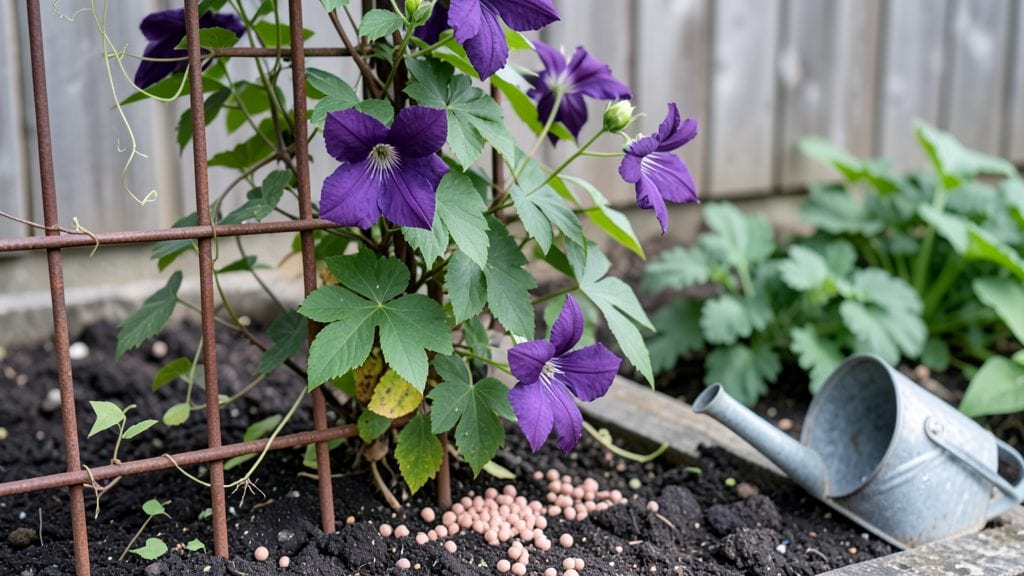
Feeding clematis plants 🌿 the right way is the difference between a vine bursting with blooms and one that barely makes it through summer.
Struggling to keep your clematis vines blooming all season long? The secret lies in feeding them the right nutrients at the right time—just like a well-timed meal keeps you energized.
Too little, and your plant wilts; too much, and you’ll choke its roots. I’ve seen both happen, and the fix isn’t always obvious.
This guide breaks down exactly when to feed—spring for new growth, summer for blooms, and fall for prep—along with the best fertilizers (organic vs. synthetic) and how to spot overfeeding before it’s too late. No guesswork, just science-backed steps for nonstop blooms.
By the end, you’ll know the one trick that doubles your clematis’s flowers and how to adjust for your zone, even if you’re new to gardening. Let’s get started.
Seasonal feeding schedule for clematis: what to feed and when
Clematis vines reward you with stunning blooms when you feed them the right nutrients at the right time. Unlike many plants, clematis thrive on a seasonal feeding schedule that shifts focus from leaf growth in spring to flowering support in summer and root strengthening in fall.
Skipping this rhythm often leads to weak stems or sparse blooms—so let's break down the perfect feeding calendar to keep your clematis thriving all season.
Most gardeners make the mistake of feeding clematis too much nitrogen, which promotes lush foliage but fewer flowers. Instead, we'll focus on a balanced NPK ratio (like 10-10-10) during active growth, then shift to phosphorus-heavy feeds (5-10-5) when buds form.
Organic options like composted manure or fish emulsion work wonders, but synthetic fertilizers can deliver faster results if you're short on time.
Here’s your month-by-month guide—complete with nutrient ratios, feeding frequency, and pro tips to avoid common mistakes. Whether you're a beginner or a seasoned gardener, this schedule will help your clematis bloom like crazy from spring through fall.
🌿
| Season | Growth Stage | NPK Ratio | Feeding Frequency | Best Fertilizer Types | Pro Tip |
|---|---|---|---|---|---|
| Early Spring (March) | New Growth | 10-10-10 | Once | Balanced organic (compost, worm castings) or slow-release granules | Feed after pruning when new shoots appear |
| Late Spring (April-May) | Flower Bud Formation | 5-10-5 | Every 4 weeks | Phosphorus-rich (bone meal, fish emulsion) | Avoid nitrogen—it delays flowering |
| Summer (June-August) | Flowering & Maintenance | 10-10-10 or 7-7-7 | Every 6 weeks | Balanced liquid feed (seaweed extract) or granular | Water thoroughly before feeding to prevent root burn |
| Early Fall (September) | Root Strengthening | 5-5-10 | Once | Potassium-rich (wood ash, banana peel tea) | Stop feeding by October to prepare for dormancy |
| Winter (October-February) | Dormancy | None | None | Mulch with compost | Protect roots with 4-6 inches of mulch |
Let’s dive deeper into each season to understand why these nutrient ratios work so well. In early spring, clematis need a balanced NPK feed (like 10-10-10) to kickstart growth after winter dormancy.
I use a slow-release granular fertilizer around the base of the plant, watering it in thoroughly to avoid burning the roots. For organic gardeners, a well-aged compost or worm castings work perfectly—just mix them into the top 2-3 inches of soil.
As buds form in late spring, shift to a phosphorus-heavy feed (like 5-10-5) to encourage blooming. I’ve had the best success with fish emulsion or bone meal, applied every 4 weeks. The key here is to avoid nitrogen—it’ll make your clematis grow leaves instead of flowers.
If you notice lush green growth but no buds, cut back on nitrogen and switch to a bloom booster.
During summer’s flowering phase, clematis need consistent nutrients to sustain their energy. A balanced liquid feed (like seaweed extract) every 6 weeks keeps them blooming nonstop.
I also top-dress with compost mid-summer to replenish soil nutrients. For container-grown clematis, I fertilize more frequently—every 4 weeks—since nutrients wash out faster in pots.
In early fall, focus on root strengthening with a potassium-rich feed (like 5
Organic vs synthetic fertilizers for clematis: pros, cons, and best choices
Choosing the right fertilizer for your clematis plants can feel overwhelming, especially when weighing organic vs. synthetic options. Each has unique benefits for bloom production, root health, and long-term soil quality.
My 10-year experience growing clematis in USDA Zone 6a has taught me that the best choice depends on your garden goals and maintenance preferences. Let’s break down the key differences to help you decide what works best for your clematis vines.
Organic fertilizers like compost, worm castings, and fish emulsion feed your plants slowly, improving soil structure over time. They’re ideal if you prioritize sustainable gardening and want to build healthy soil ecosystems.
On the flip side, synthetic fertilizers offer quick nutrient delivery with precise NPK ratios, perfect for gardeners who need fast results and predictable blooms. Both have their place, but understanding their pros and cons will help you avoid common feeding mistakes that stifle growth.
Organic vs. Synthetic Fertilizers for Clematis
- Improves soil health long-term
- Slow-release nutrients reduce burn risk
- Enhances microorganisms in soil
- Eco-friendly and sustainable
- Provides immediate nutrient boost
- Precise NPK ratios for targeted growth
- Easy to apply and measure
- Cost-effective for large gardens
- Slower results for blooms
- Requires more frequent applications
- Can be messy to handle
- Risk of over-fertilizing if misused
- No soil improvement benefits
- Can disrupt soil biology over time
If you’re a beginner gardener, organic fertilizers like compost tea or fish emulsion are forgiving and easy to use. They release nutrients gradually, reducing the risk of root burn that often plagues new gardeners.
For example, I’ve had great success using worm castings in early spring to kickstart growth without overwhelming my clematis. The worms’ castings also introduce beneficial microbes that help break down organic matter, creating a thriving root zone.
Synthetic fertilizers, however, are my go-to when I need rapid blooms, like for a summer wedding arch or holiday display. A balanced NPK fertilizer like 10-10-10 delivers equal parts nitrogen, phosphorus, and potassium, which is perfect for clematis during their active growing season.
Just be cautious—overapplying synthetic fertilizers can lead to salt buildup in the soil, which stresses plants. Always follow the package instructions and water thoroughly after application to leach excess salts.
For environmental sustainability, organic fertilizers win hands-down. They reduce chemical runoff into waterways and support biodiversity in your garden. If you’re growing clematis in containers or have poor soil quality, a mix of both can work wonders.
Start with a slow-release organic fertilizer in spring, then top-dress with a synthetic bloom booster when buds form. This hybrid approach gives you the best of both worlds: long-term soil health and show-stopping flowers.
Pro tip: Test your soil pH before choosing a fertilizer. Clematis thrive in slightly alkaline soil with a pH of 6.5 to 7.5. If your soil is too acidic, organic amendments like lime or wood ash can help balance it before applying fertilizer.
A simple DIY pH test with vinegar and baking soda (or a soil test kit) will save you from wasting money on the wrong nutrients.
Remember, the key to feeding clematis plants is consistency, not intensity. Whether you choose organic or synthetic, stick to a seasonal feeding schedule—light in spring, balanced during bloom, and minimal in fall.
Your clematis vines will reward you with vibrant blooms from spring to frost if you feed them right. Happy gardening! 🌿